Korea's Soft Power Play: Lee Chang-dong's Venice Win Signals a New Era
Lee Chang-dong becomes the first Korean director to win the Award at Venice, drawing a public congratulations from President Lee Jae-myung and marking a shift in how Seoul treats global cinema as strategic soft power.
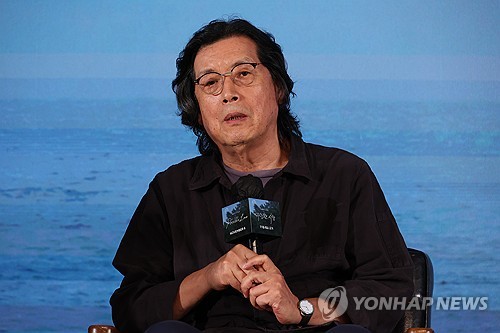
A President Weighs In on Cinema
President Lee Jae-myung did not hesitate. On September 4, he posted on social media congratulating director Lee Chang-dong on winning the Award at the 49th Milvalley Film Festival, then went further — wishing him luck at Venice, where Possible Love (가능한 사랑) had already been selected for the competitive program.
The message was specific. Lee referenced Oasis, 密阳 (Secret Sunshine), Poetry, and Burning by name. He called Lee Chang-dong “a director whose gaze into human life has moved many audiences.” The tone was warm, personal — and deliberate.
A South Korean president publicly anchoring his cultural pride to a single filmmaker’s international recognition is not routine. It is signaling.
What made the post unusual was its granularity. Lee did not offer a generic congratulatory line; he cited four distinct films spanning three decades of Lee Chang-dong’s career. That kind of specificity from a sitting head of state signals more than goodwill — it signals a calculated alignment between government and culture, one that treats cinematic achievement as national infrastructure rather than discretionary prestige.
The Award at Venice Matters More Than You Think
Let’s be precise about what happened. Lee Chang-dong is the first Korean director to win the Award at the Venice International Film Festival — one of the oldest and most prestigious competitive honors at the festival, sitting alongside the Golden Lion and the Silver Lion. The distinction carries weight in an industry where festival lineage shapes career trajectories, funding decisions, and critical attention for years.
It also carries a quiet geopolitical charge. For decades, the European festival circuit has been the gatekeeper of global cinematic legitimacy. Winning there — especially for the first time in a national category — shifts the architecture. Korean cinema already held the cultural high ground after Parasite swept awards season in 2019. But Parasite was a fluke of timing and genre crossover. Venice, unlike Cannes or Berlin, does not chase trends. It anoints them.
A Korean director winning Venice’s Award for the first time suggests something deeper: that the world’s oldest film festival is recalibrating its view of what matters in global cinema, and that Korean filmmaking — long dismissed in European elite circles as melodramatic or commercially derivative — has finally forced a renegotiation.
The implications extend beyond prestige. Distribution deals follow festival validation. A Venice Award winners typically see their films picked up by at least three major territories within weeks — France, Germany, Japan, the United States — each deal carrying terms that would have been impossible without the laurel. Streaming platforms bid aggressively on post-Venice titles, knowing the festival imprimatur converts directly into subscriber engagement metrics. The economic multiplier is real.
The Government Is Watching Closely
President Lee’s congratulations were not scripted. But they were timely. The government has been quietly building infrastructure around cultural export for years — the Korean Film Council, the Korea Creative Content Agency, state-backed co-production funds, tax incentives for international shoots. The pandemic-era surge in Korean content consumption via streaming platforms accelerated everything.
What changed now is the visibility. A president naming a filmmaker on social media, referencing his filmography with precision, tying a festival win to national pride — this is soft power moving from bureaucratic policy into public performance.
Seoul understands what Washington and Beijing already practice: cultural prestige translates into diplomatic leverage, tourism, language study enrollments, and brand value. The question is whether Korea is ready to institutionalize this. The government has the money. What it lacks is a coherent strategy that doesn’t treat culture as a sidebar to trade deals.
There is a second-order effect here that deserves attention. When a president elevates a filmmaker in this way, it changes the calculus for every Korean director working on an arthouse project. Funding applications from writers and directors whose work previously required external festival validation now carry implicit governmental endorsement. The reverse is also true: filmmakers who face domestic political pressure may find their work scrutinized through a different lens. The line between state support and state expectation grows thinner with each high-profile gesture.
Who Wins, Who Loses
Lee Chang-dong wins, obviously. But so does the Korean film ecosystem. His next project — Possible Love, now a Netflix title with an international release window — will carry the weight of this recognition. Funding conversations that previously required hard selling will now open with a phone call.
The loser is the assumption that Korean cinema exists only in the shadow of Bong Joon-ho. Lee Chang-dong’s Venice victory re-centers a different kind of Korean filmmaker — one rooted in literary adaptation, slow cinema, and moral ambiguity — as equally worthy of global attention. That matters for the next generation of directors who don’t fit the genre-thriller mold.
There is also a quiet loser: the European festival establishment that spent years undervaluing Asian arthouse voices. Venice’s Award recognizes Lee Chang-dong not as an exotic outlier but as a master on equal footing with European auteurs. The subtext is clear — the gatekeepers are changing.
An often-overlooked consequence involves the Korean film industry’s internal dynamics. Independent arthouse producers have long operated in a secondary tier, competing for attention against the commercial engine of genre filmmaking. This victory reopens the door for mid-budget, director-driven projects that prioritize artistic ambition over box office predictability. Producers who were told their pitches were “too slow” or “too literary” now have a concrete reference point to cite when seeking financing.
What Comes Next
The 83rd Venice Film Festival runs in late August through early September. If Possible Love wins or places competitively there, the impact multiplies. Lee Chang-dong would become the first Korean director to achieve both a Milvalley and a Venice Award — an almost unprecedented dual recognition in a single festival season.
Beyond the awards, the real story is structural. Seoul’s investment in cultural soft power is no longer accidental. The president’s public gesture, the Netflix distribution deal, the festival confirmations — these are not independent events. They are the early signs of a coordinated push to make Korean cinema a permanent fixture in the global art-house canon, not a temporary wave.
What follows matters as much as what happened. The international film market now has a concrete data point: Korean arthouse cinema commands festival prizes, distribution deals, and presidential endorsement simultaneously. Other Asian cinemas — Iranian, Japanese, Chinese — will watch this closely and adjust their own strategies accordingly. The era of European festivals as the sole arbiters of cinematic legitimacy is ending, and Korea is writing part of the new script.
The world watched Parasite win. It may now watch a Korean director win Venice — and the conversation will be different.