Korea's Steel Gambit in Louisiana
Hyundai Steel and POSCO are breaking ground on a $5.8 billion electric-arc steel plant in Louisiana. The move reshapes how Korea's auto giants plan to navigate US tariffs and carbon rules — and who gets left behind.
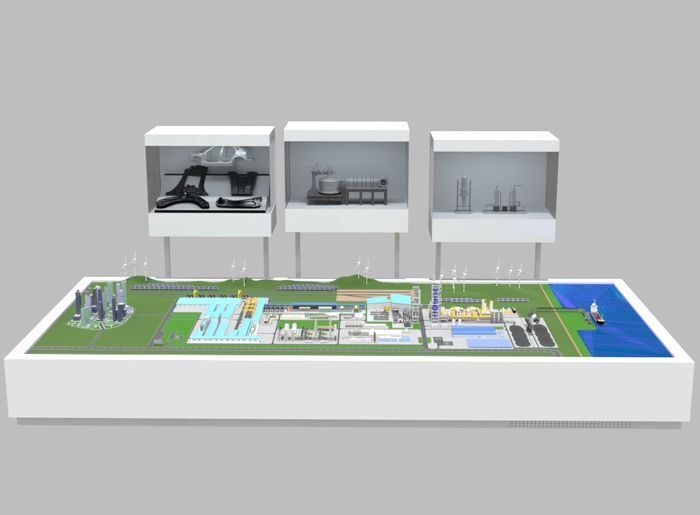
The ground broke in Donaldsonville, Louisiana — and it matters far beyond the Mississippi River basin.
Hyundai Steel and POSCO, Korea’s two largest steelmakers, are pouring $5.8 billion into an electric-arc steel plant that will produce 2.7 million tons of automotive-grade steel annually. The ceremonial groundbreaking this week, attended by South Korea’s Minister of Trade, Industry and Energy Kim Jeong-gwan and Louisiana Governor Jeff Landry, is the visible tip of a much larger strategic shift.
This is not a typical foreign direct investment play. It is a hedge against two converging pressures: US tariff walls that make exporting Korean steel to America increasingly untenable, and carbon regulations that will punish high-emission steel within a few years. The plant sits at the intersection of both.
Why Louisiana, why now
The United States produces 81.9 million tons of steel annually but consumes 90.9 million tons — a gap of nearly 9 million tons that has to be filled by imports. That deficit is the economic reason this plant exists. But the political timing is what makes it notable.
The project was announced as part of Hyundai Motor Group’s broader $26 billion US investment plan revealed at the White House last year. The Louisiana steel plant is its industrial anchor — the piece that ensures the automaker’s own US factories in Alabama and Georgia, and their Mexican partners, have a domestic source of high-quality automotive steel.
Location was chosen deliberately. The plant sits near the Mississippi River, within shipping distance of major US auto production hubs in the South and Mexico. Supplying steel across the Gulf rather than importing it from Busan or Pohang cuts transit time from weeks to days and insulates the supply chain from Pacific disruptions.
The carbon angle most analysts are missing
The electric-arc furnace (EAF) technology chosen for this plant is not merely a production method — it is a compliance strategy. EAF steelmaking cuts carbon emissions roughly 70% compared with traditional blast furnaces, according to the companies. That figure matters because the US is moving toward carbon border adjustments and emissions disclosure rules that will favor low-carbon steel in procurement, especially for government projects and OEM supply contracts.
The companies have already flagged a second transition: swapping the natural gas currently used in the EAF process for clean hydrogen once the economics work. South Korea’s own hydrogen strategy and its partnerships with US energy producers make this a plausible roadmap, not a distant fantasy.
What this means in practice: the plant is being built to survive regulatory environments that do not yet fully exist. By the time US carbon pricing tightens — whether through EPA rules, state-level standards, or corporate net-zero commitments — HPLS will already be compliant. Competitors relying on blast-furnace steel, whether domestic or imported, will face a cost penalty.
Who wins, who loses
Hyundai Motor and Kia win first. Their US factories get a local, low-carbon steel source, reducing exposure to Section 232 tariffs and supply disruptions. The plant makes their North American vehicles cleaner to produce and cheaper to insure against trade policy shifts.
Louisiana wins second. The project brings capital, jobs, and industrial diversification to a state that has courted foreign manufacturers aggressively. Governor Landry’s presence at the ceremony signals how seriously the state is taking this.
Korean consumers may win last — or not at all. The capital outflow is significant, and the question of whether domestic capacity gets squeezed is real. But that is a secondary concern while the export market is under threat.
Who loses is harder to name precisely, but the direction is clear. Steel producers in the US South who rely on conventional blast-furnace or legacy EAF processes will face stiffer competition from a new, efficient, low-carbon plant situated next to their biggest customers. Japanese steelmakers with existing US operations will feel the pressure differently — they already have American production, but much of it is older technology. The competitive gap may widen.
The geopolitical layer
Minister Kim’s meeting with Governor Landry before the groundbreaking included a request to ease tariffs on factory equipment and materials that are difficult to source domestically in the US. That detail is telling. It reveals the fragility underneath the partnership: even this jointly celebrated project depends on US trade policy exceptions.
The deeper story is Korea’s recalibration. For decades, Seoul’s industrial strategy assumed American openness. Tariffs on Korean autos and steel were manageable because Washington prioritized alliance politics over trade enforcement. That assumption no longer holds.
The Louisiana plant is Korea’s answer: embed so deeply in the American industrial base that decoupling becomes politically costly. It is a strategy of interdependence, not isolation.
What happens next
Construction timelines have not been fully disclosed, but steel plants of this scale typically reach full output within three to five years. By the time HPLS is running, several things will likely be in motion: tighter US steel import rules, potentially higher Section 232 tariff adjustments, and early stages of US carbon regulation for heavy industry.
If hydrogen substitution proceeds on schedule, the plant could become a reference model for other Korean manufacturers considering US FDI. The template — locate near customers, use low-carbon technology, secure government support — is already being tested here.
One uncertainty remains: how the plant’s output will be allocated between export-bound automotive steel and domestic US sales. If tariffs force more production into the American market, it could dampen Korea’s overall steel export revenues. If it stays export-oriented, the strategic value to Hyundai and Kia is maximized but the local economic benefit is reduced.
The groundbreaking in Donaldsonville was a symbolic moment. The real test will be whether this plant can deliver cheap, clean steel in an expensive, regulated market — and whether Washington rewards that effort or penalizes it further.
Korea bet on embedding itself in America’s industrial future. The ground has been broken. Now comes the build.