Korea's Market Crash Signals Asian Vulnerability
South Korea's KOSPI and KOSDAQ both hit circuit breakers for the first time since July, prompting emergency government meetings and contingency planning. The selloff reveals how quickly global macro pressures can overwhelm even the region's most resilient economies.
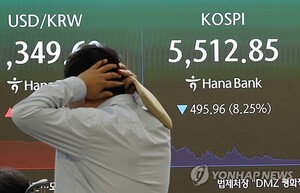
A market under pressure
South Korea’s main bourses triggered simultaneous circuit breakers on the 15th — a development not seen since July. The KOSPI and KOSDAQ fell hard enough to halt trading entirely, an event that immediately elevated this from a routine correction to a signal worth watching across Asia.
The Financial Services Commission moved quickly. Chair Lee Ui-tak convened an emergency meeting with the Financial Supervisory Service, the Korea Exchange, the Korea Depository & Settlement, the Korea Financial Investment Association, and research heads from KB and Shinhan Securities. The message was blunt: a contingency plan would be activated swiftly if conditions deteriorate further.
That urgency matters more than the headline number alone.
Why the sell-off deepened
The official diagnosis points to three converging pressures. Global interest rate expectations shifted higher, the outlook for AI-related semiconductor investment and earnings grew cloudier, and international oil prices climbed. Together, they created a one-two-three combination that no emerging Asian equity market can easily shrug off.
The semiconductor sector is particularly sensitive here. Korea’s largest exporters live on global demand cycles, and any whiff of earnings disappointment in the AI chip complex reverberates through the entire KOSPI weightings. The market appears to be pricing in a worse-than-expected scenario — or at least, far more uncertainty than investors absorbed in recent months.
Foreign and institutional investors pulled back, amplifying the domestic selloff. That dynamic is familiar in Korea: when foreign flows reverse, local institutional participants tend to follow rather than absorb the shock. The result is a feedback loop that moves prices faster than fundamentals justify.
Officials see an overreaction
Not everyone in the room agreed the market had sold into chaos for no reason. Experts at the meeting acknowledged that the speed and magnitude of the decline exceeded what supply and demand fundamentals warranted. The consensus, as summarized by regulators, was that the market had overreacted.
The case for that view is partly defensive but not without merit. Korea’s fundamentals remain comparatively strong. Foreign exchange reserves are adequate. The current account balance is positive. Major financial institutions are well-capitalized. And domestic champions in semiconductors, defense, and shipbuilding continue to post solid results with global competitiveness intact.
But fundamentals do not stop a margin-driven sell-off. When leverage unwinds, prices detach from balance sheets — at least temporarily. That disconnect is exactly why regulators worry about panic spreading beyond the initial trigger.
What the contingency plan signals
The most consequential development from the meeting is not the reassurance but the admission that the government is preparing to intervene. The contingency plan — a mechanism kept ready for exactly this scenario — would allow authorities to inject liquidity, coordinate with brokerages, and stabilize execution if the market gaps down further.
The FSC also warned it would apply a zero-tolerance standard to rumor-mongering, market manipulation, and illegal short selling. That is a standard line after crashes, but the specificity matters. If authorities follow through, they may deter the kind of predatory behavior that turns a correction into a freefall.
Lee Ui-tak also targeted domestic investors directly, warning against debt-fueled speculation and urging financial companies to restrain reckless credit extension. That is a pointed message. Retail leverage has been a recurring source of fragility in Korean markets, and it tends to surface precisely when volatility rises.
The broader Asian implication
What happens in Seoul rarely stays in Seoul. Korea’s markets are deeply linked to regional equity flows, and the semiconductor complex ties Korean performance directly to global tech demand. If this selloff spreads, it will likely find sympathetic weakness in Taiwan, Japan, and elsewhere in the region — not because fundamentals deteriorated simultaneously, but because capital moves as a herd.
The circuit breaker itself changes the calculus for algorithmic and quantitative strategies that operate across multiple Asian exchanges. Halts create gaps. Gaps create forced positioning as systems re-evaluate risk. That mechanical transmission is often more dangerous than the original trigger.
Who wins, who loses
In the immediate term, leveraged investors lose. Domestic retail participants who financed positions with borrowed funds face margin calls precisely when liquidity dries up. International hedge funds that shorted Korean equities on the way down may find the contingency plan narrows their exit window.
Long-term value investors, however, gain access. If the government’s assessment that the market overreacted holds, the dip creates an entry point for positions in companies with strong fundamentals and global competitiveness. The question is whether investors have the stomach to act against prevailing panic — and whether Korean households, which have been cautious savers for years, are willing to step in now.
What comes next
The contingency plan being readied suggests authorities expect more volatility ahead, not less. The market may stabilize if foreign flows pause their exit, but the three structural headwinds — higher-for-longer rates, semiconductor uncertainty, and oil prices — are not going away. Each one remains capable of reigniting selling pressure.
International observers should watch for two things. First, whether the contingency plan is actually deployed, which would signal that the decline has crossed a threshold regulators find unacceptable. Second, whether Korean institutional investors begin buying the dip publicly, which would provide the domestic counterforce the market currently lacks.
Until then, the KOSPI crash is a reminder that even the most resilient emerging markets in Asia can move sharply when global risk appetite turns.
The circuit breaker bought time. It did not solve the problem.