Korea's Three AI Consortiums Are Racing Toward a National Agent Strategy
South Korea has selected three telecom-platform consortia — SK Telecom, Kakao, and KT — to build a domestic AI agent platform under a government-backed program. The unusual triple-consortium model bets that competition and collaboration can produce an AI service that rivals American and Chinese offerings.
The three-way bet
South Korea has done something unusual for a national AI initiative. Instead of picking one champion, it chose three.
The Science and ICT Ministry recently selected three consortiums — led by SK Telecom, Kakao, and KT — under a program called Everyone’s AI (모두의 AI). The goal is to build a domestic AI agent platform that lives inside the channels Koreans already use daily: messaging apps, phone lines, search engines, and internet TVs.
This is not a typical top-down grant. It is a structured competition, with an explicit expectation that rivalry will sharpen the service while shared infrastructure goals keep the ecosystem from fracturing.
Why three, not one
Most countries backing national AI projects try to pick winners early. South Korea is doing the opposite. The ministry said the selected consortia scored similarly on evaluation criteria, and the decision prioritized service stability, ecosystem expansion potential, and each company’s willingness to invest. Deputy Prime Minister and Science and ICT Minister Byeon Hugun warned explicitly that if the service launches and looks no different from existing offerings, users will be disappointed on first contact.
The calculus is understandable. Korea’s AI industry lacks the massive pre-trained model advantage held by American and Chinese companies. But it has deep penetration in consumer communication — KakaoTalk alone has near-universal adoption among Korean adults. By distributing development across three groups, the government reduces the risk of a single failure killing the entire initiative while creating parallel innovation paths.
What each consortium is building
The three approaches differ in emphasis, and those differences matter.
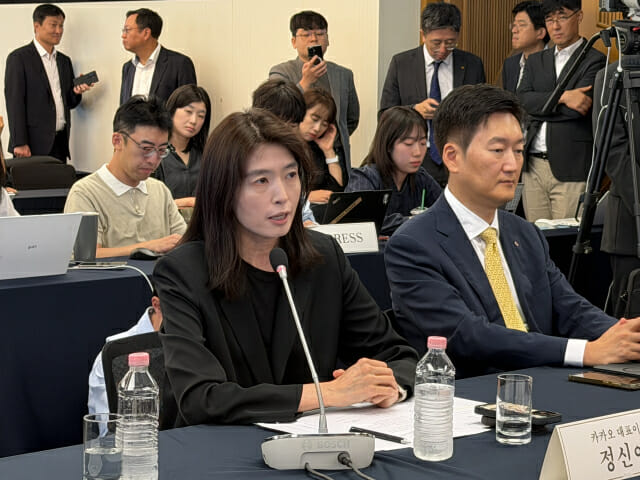
Kakao is betting on the messaging layer. Its consortium — which includes LG Uplus and LG AI Research — will let users interact with AI directly inside KakaoTalk and phone services without downloading a separate app. It combines Kakao’s own Kanana model with LG’s K-Exaone to handle tasks ranging from public document applications to reservations and payments. A beta launch is planned for mid-October, with an initial monthly active user target of 5 million and a stretch goal of 10 million by the end of 2027. CEO Jeong Sin-a announced a longer-term target of 30 million users by 2030 and described the ambition as building an open ecosystem where multiple specialized agents collaborate for each person — what she called a one-person, N-agent model.
KT is pursuing cross-channel consistency. Its Ieum project will embed AI into apps, web, internet TV, and search, linking Naver search results directly to recommendations and purchases. Internal testing of its Naver-integrated service began in late September, with a beta expected around early October depending on development progress. The company is reviewing an initial MAU target of around 5 million and has committed to scaling its infrastructure to support up to 20 million users by 2027. CEO Park Yoon-young framed the goal as solving real problems, not just answering questions — what he termed a “solving AI” that reaches the offline world as well.
SK Telecom is focusing on proactive, action-capable agents. Its plan layers a general-purpose chatbot, a public-service agent using government and medical data, and execution-type agents that anticipate needs and handle follow-up work. It will combine SK’s own AiDAX K2 model with several domestic large language models — Upsage, K-Exaone, and MoTeef — and integrate with health platform GoodDok and mapping app T-Map to guide users from hospital searches to waiting-time checks to directions. A basic chatbot and search-linked feature will debut in October, with the full public service following in December after security and stability reviews. The MAU targets mirror the others: 5 million by year-end, 10 million by end of 2027.
The domestic-model play
A central thread across all three proposals is the heavy reliance on homegrown language models. The SK consortium explicitly mixes multiple domestic LLMs rather than relying on a single provider. Kakao and KT both reference K-Exaone from LG AI Research alongside their own or partner models.
This is where the geopolitical subtext becomes visible. American models dominate globally, and Chinese models are closing gaps in several markets. Korea cannot compete on sheer parameter scale or compute budget against either. But it can compete on localization — understanding Korean administrative procedures, medical systems, and daily routines better than any foreign service would.
SK Telecom CEO Jung Jae-hun put it plainly: domestic AI has reached a level where it functions without confusing Korean language or local institutional contexts. He warned that reliance on foreign AI services creates a vulnerability — if those services encounter restrictions or failures, Korean daily life built on top of them could stall.
That argument carries weight in a country that sits between two AI superpowers and depends heavily on digital infrastructure for public services, healthcare navigation, and financial transactions.
The timeline pressure
The schedule is tight. Beta testing starts as early as mid-October for some features, with full public launches targeted for December. That means roughly two months from announcement to live service for core functionality. The government plans to validate security and system stability before opening to the general public, and some beta details remain pending those reviews.
The 5-million-MAU target by December is aggressive for a new AI agent service in any market. Korea’s population is about 51 million, so that represents roughly 10 percent of the total population adopting a new AI tool within months of launch. If successful, it would signal something notable: that a non-Western country can build high-engagement AI services rooted in local context without depending on American infrastructure.
Who wins, who loses
The immediate winners are the three consortia and their partners. LG AI Research, Upsage, MoTeef, GoodDok, T-Map, Naver — all benefit from being embedded in national-scale AI workflows. Smaller domestic AI model providers gain distribution channels they would not otherwise access at this scale.
Foreign AI services face indirect pressure. Google, OpenAI, and other Western providers already serve Korean users, but a well-executed domestic alternative that handles local government forms, hospital appointments, and payment flows natively could capture the segment of usage where convenience and familiarity outweigh raw capability gaps.
The biggest question mark is whether three competing national AI platforms will strengthen Korea’s position or fragment resources. The government says it will manage the relationship to ensure cooperation alongside competition, but past experience with Korean industrial policy suggests that coordination between major conglomerates is never effortless.
Why this matters outside Korea
Korea’s experiment matters because it tests a third path in the global AI landscape. The two dominant narratives are American dominance through frontier labs and Chinese dominance through state-directed scale. Korea is attempting a hybrid: market competition among established tech firms, guided by government targets, focused on domestic utility rather than global model leadership.
If the approach produces a widely used, reliable AI agent service, it could offer a template for mid-sized countries that lack the compute or capital to train foundation models but want AI capabilities embedded in public and private infrastructure. If it falters — and three-way coordination always carries execution risk — it will still generate useful data about what works and what does not in national AI deployment.
The next twelve months will make that clear. Beta launches begin this autumn, full services follow in December, and the first real test will be whether Koreans actually keep using these agents after the novelty wears off.
The bottom line
South Korea is not trying to win the global AI arms race. It is trying to ensure that its version of daily life — government services, healthcare navigation, shopping, messaging — runs on AI it can trust and control. That is a narrower goal than building the next GPT, but in a world where AI dependence is becoming infrastructure dependence, narrowing the goal may be the smarter move.