Korea's $200B US Bet Stalls Over Nuclear Pride
Seoul's $200 billion investment pledge to Washington is hitting a wall over nuclear reactor technology — and the fallout could reshape how Korea positions itself in global energy and semiconductor supply chains.
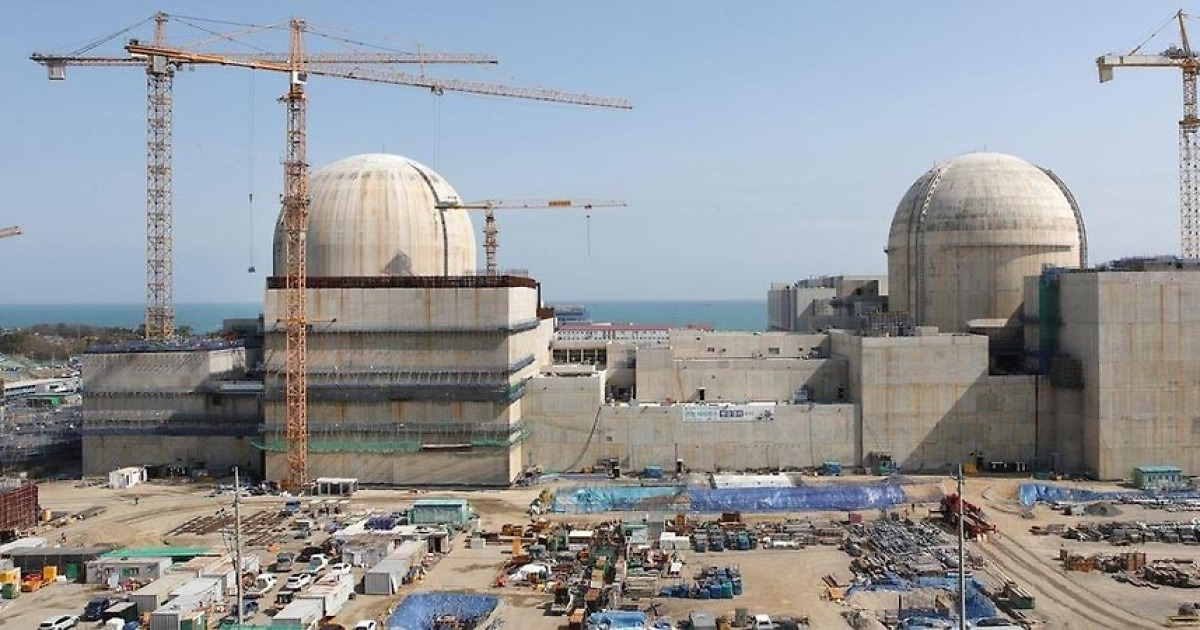
The $200 Billion Stall
South Korea has put its biggest-ever investment pledge to the United States on ice. What was supposed to be a landmark memorandum of understanding — up to $200 billion in American infrastructure, energy, and technology projects — now faces an unexpected obstacle: a disagreement over which nuclear reactor design gets built on US soil.
The core conflict is simpler than it sounds. Korea wants to construct two of its own APR1400 reactors out of a planned eight-unit package. The Americans, through Westinghouse and the US government, would prefer all eight be AP1000 models — the same reactor type Westinghouse has been trying to sell in the United States for over a decade with limited success.
This isn’t just about reactor specifications. It’s about who controls the technology, who profits from it, and whether Korea can emerge from this deal as a technology partner rather than a passive investor.
Why the APR1400 Matters
The APR1400 is Korea’s crown jewel in nuclear technology. Developed domestically by KHNP and Doosan Enerbility, it powers reactors like Hanul Unit 3 and 4, and has won contracts in the UAE and Poland. It passed US Nuclear Regulatory Commission design certification in 2011 — the first foreign reactor design to do so. The technical credibility is there.
What’s missing is access.
Westinghouse owns the North American licensing rights to the APR1400 following a long-running dispute over technology ownership. The company holds exclusive marketing and construction rights in the US, Canada, and parts of Latin America. Korea cannot simply ship an APR1400 to Texas without Westinghouse’s cooperation. And Westinghouse has every incentive to block it.
If an APR1400 enters the US market, it directly competes with Westinghouse’s own AP1000. The company has struggled to secure new orders globally — a portfolio that includes a stalled project at Virgil C. Summer and limited progress at V.C. Summer and Alvin W. Vogtle in Georgia. Every APR1400 built in the US is one less AP1000 sale Westinghouse can claim.
The US knows this. That’s why the reluctance is structural, not personal.
The Equity Fight
Seoul’s deeper objective goes beyond reactor placement. Korea wants actual influence over Westinghouse — specifically, a 20 percent stake with board representation and voting rights.
The US is pushing back, offering only 5 to 10 percent — a financial seat with no real say. Korea’s position makes strategic sense. When Korea lost the Czech Republic nuclear contract in 2023 after a contentious renegotiation, it learned that equity without control leaves you exposed. The lesson was clear: if you’re putting up capital, you need a voice in how that capital is deployed.
Westinghouse itself is a complicated counterparty. It is majority-owned by Korean Electric Power Corporation, but the controlling shareholder is now a Canadian investment fund, Brookfield Infrastructure. The US Nuclear Energy License Act gives the American government ultimate veto power over technology transfers and major decisions, regardless of who holds the shares. This means even if Korea buys into Westinghouse, its voting rights would be constrained by Washington.
That reality makes the equity discussion even more thorny. Korea is negotiating for influence that may not fully exist inside the legal framework the US has built around its nuclear sector.
The Infrastructure Web
The nuclear disagreement sits inside a much larger package of infrastructure investments, and each piece introduces its own risk.
The Texas Ensinol gas combined-cycle power plant — part of the broader investment — is designed to sell electricity to data centers. But demand-side commitments remain incomplete. Korea is insisting the US government guarantee offtake agreements with major tech companies before breaking ground. Washington appears hesitant to lock in those commitments, preferring to let the market develop organically.
The Alaska LNG project adds another layer of uncertainty. The initial pipeline and liquefaction infrastructure could cost hundreds of billions, with returns that depend on global LNG pricing cycles and US export policy — both of which are volatile. Some analysts estimate that if Korea accepts all the US demands across nuclear, gas, and LNG, the total investment could exceed the original $200 billion ceiling.
Perhaps most structurally unfavorable is the profit-and-loss arrangement. The US has proposed separate accounting for each project rather than a consolidated pool. Under the current structure, once a project repays its principal, 90 percent of net profits flow to the US side. Ring-fencing profits means high-performing assets quickly shift their surplus to Washington, while underperforming projects — like the Alaska LNG — leave Korea holding the loss.
It is, in effect, a asymmetric risk transfer: Korea absorbs downside, the US captures upside.
The Semiconductor Connection
The energy debate may seem distant from semiconductors, but the link is direct. Korea’s largest semiconductor investors — Samsung Electronics and SK Hynix — are expanding US operations and need reliable, affordable power. The Texas gas plant, the Alaska LNG, and the nuclear units are all part of the same equation: energy security for the chip industry.
If the investment stalls, Korean fabs in Texas and elsewhere face uncertainty about long-term power supply and cost. If the investment goes through on unfavorable terms, Korea subsidizes American energy infrastructure without securing the reliability it needs for its most strategic industry.
Both outcomes hurt.
What Happens Next
The immediate practical consequence is delay. The South Korean government had scheduled a report to the National Assembly’s Finance and Economy Committee and the Information and Communication Committee for September 17. That has been postponed, possibly to September 22. The MOU signing, originally planned for September 18, is now unlikely to proceed on schedule.
The longer-term consequence depends on whether Seoul and Washington can find a compromise on three fronts simultaneously: reactor mix, equity structure, and risk allocation.
A likely path forward involves some combination of concessions. Korea might accept a smaller equity stake in Westinghouse in exchange for securing a role in APR1400 deployment — perhaps in a third country rather than the US itself. The US might agree to a bundled profit-and-loss arrangement or offer guaranteed offtake for the Texas plant. Both sides could agree to defer the Alaska LNG decision until market conditions improve.
But each concession carries political cost. In South Korea, a deal that looks like financial extraction without technology transfer will anger lawmakers and industry leaders who expected this investment to elevate Korea’s position in global nuclear markets. In the US, any deal that gives Korea real influence over Westinghouse faces scrutiny from legislators who view nuclear technology as a strategic asset not to be shared.
The stalemate reflects a broader tension in the alliance: Korea wants to be treated as a technology peer, not just a capital source. The US wants Korean investment without Korean control. Until those expectations align, the $200 billion deal remains stuck — and both sides lose time they may not have.