Korea's Won Faces Its Stress Test as Fed Eyes First Rate Hike in Three Years
The dollar index is closing in on 100 and the 10-year Treasury yield has breached 5%—the tightest global financial conditions since 2007. Yet the Bank of Korea's governor insists the won has developed "immunity" to external shocks. A September Fed hike will be the first real test.
The Fed Is Coming. Again.
For three years, the Federal Reserve held rates steady through the steepest inflation shock since the 1980s. Now, the calculus has flipped. Probability markets at the Chicago Mercantile Exchange assign a 92% chance that the FOMC raises rates by 25 basis points at its September 15–16 meeting, pushing the federal funds rate to 3.75–4.00%. A week ago, that probability sat at 59%. A month ago, it was 33%.
The shift did not come from a single report. It arrived in a cascade: August’s non-farm payrolls came in hotter than expected, followed by rising producer and consumer price indices. Oil prices—already surging past $100 a barrel on the back of an extended Middle East conflict—added fuel. The S&P 500 and other global equities have gapped down on the data, and bond markets are repricing risk with every release.
American ten-year Treasury yields traded above the 5% psychological threshold for the first time since October 2023. The dollar index—measuring the greenback against six major currencies—hovered in the high 90s, within striking distance of the century mark. Global liquidity is tightening faster than most portfolios have priced in.
And across the Pacific, the one question hanging over every emerging-market desk is whether the Korean won can survive it.
Korea’s Governor Says the Won Has Immunity
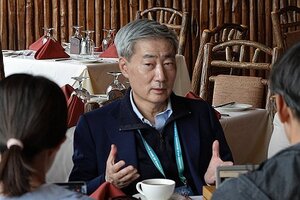
Shin Hyun-song, the Bank of Korea governor, did not say this quietly. Speaking to correspondents at the Jackson Hole symposium in late August, Shin described the won as having gained what he called “immunity” to external shocks.
His reasoning was structural. Over the past two years, the BOK has moved ahead of the curve, hiking rates twice—from 2.50% to 2.75%, and then to 3.00%—while the Fed was still cutting. Korea’s current account surplus has swelled. Economic growth forecasts have been revised upward. The won’s “fundamental value,” in Shin’s framing, is now anchored by domestic fundamentals rather than exposed to the whims of Fed policy.
The implication is provocative: a Fed rate hike would no longer trigger the kind of desperate dollar rush that used to sap EM currencies. The won should hold.
Some market participants agree. One seasoned FX dealer at a major Korean securities firm told Yonhap that a Fed hike would actually stabilize the dollar–won rate, while a surprise hold could send it lower again. The logic is counterintuitive but clear—if the Fed delivers exactly what the market expects, the won’s recent defensive positioning pays off. If the Fed hesitates, the very uncertainty that once broke EM currencies could resurface.
But Immunity Is Not Invincibility
Korea’s won has indeed shown surprising resilience. The won traded near 1,300 per dollar throughout much of 2024—a remarkable performance for an emerging-market currency amid sustained global dollar strength. The BOK’s early rate hikes created a positive interest-rate differential that attracted flows. Korea’s persistent current account surplus—boosted by semiconductor exports and energy import savings—provides a natural buffer against sudden stops.
But the won’s immunity narrative deserves scrutiny. Korea remains a net importer of energy. Oil above $100 a barrel directly compresses the trade balance, even as chip exports remain robust. Korea’s financial account is dominated by portfolio flows that can reverse with alarming speed when global risk appetite deteriorates. And the BOK’s policy space is narrower than Shin’s rhetoric suggests—rates at 3.00% already carry weight in a domestic economy where household debt remains elevated and real growth is fragile.
The won’s so-called immunity may be partial immunity. It could hold through a single 25-basis-point hike. But the historical record cuts against it. Since the 1990s, the Fed has rarely raised rates just once. The sole exception was 1997—a year coinciding with the Asian financial crisis, when the US economy was entering a mild recession and the Fed was cautious about overtightening. In every other cycle, rate hikes came in measured sequences: 1994 (six hikes), 1999 (two), 2004–2006 (twelve), 2015 (one, then a long pause), 2018 (three).
If the Fed enters a multi-hike cycle—as markets now seem to anticipate—it will test the won’s foundations repeatedly. Each hike reinforces dollar strength. Each iteration of higher US rates pulls capital away from EM bonds and equities. Korea’s structural buffers matter, but they are not impenetrable.
Who Wins and Who Loses
For Korean exporters, a stronger dollar and a stable or weakening won is a double-edged sword. The won’s stability reduces translation risk on overseas earnings. But it also means Korean goods become less price-competitive against Japanese and Southeast Asian rivals if the won fails to weaken further. Samsung Electronics and Hyundai Motor already benefit from the current won level—its stability helps with budgeting—but a continued appreciation would squeeze margins.
For Korean investors, the calculus shifts sharply. A Fed cycle that keeps US rates higher for longer means American bonds offer attractive real yields. Capital that might have flowed into Korean government bonds or KOSPI equities could instead rotate toward dollar-denominated assets. The BOK’s 3.00% policy rate looks less compelling when risk-free US Treasuries pay 5%.
For emerging markets more broadly, Korea’s experience matters disproportionately. Korea is the canary in the EM coal mine—a highly developed, trade-dependent economy with deep capital-market integration. If the won withstands a full Fed tightening cycle without breaking, it sends a powerful signal that structural reforms and prudent monetary policy can insulate advanced EMs from dollar shocks. If the won falters, it suggests the immunity narrative was premature and that Korea’s financial vulnerabilities remain as real as any EM peer’s.
What Happens Next
The September FOMC meeting is the immediate trigger. But the real story is what follows. Markets are pricing in not just one hike but a path. The CME FedWatch data will shift daily with each new US economic print. If inflation holds firm and labor markets stay tight, the Fed could signal two or even three more increases before year-end. If data cools unexpectedly—as it has in some recent readings—the narrative could pivot back to a pause.
For Korea, the critical variable is the BOK’s response. If the Fed hikes and the BOK follows, the won should stabilize. If the Fed hikes and the BOK holds, the won comes under fresh pressure. If the Fed hawks and the BOK pivots to cuts, the immunity thesis unravels rapidly.
Shin Hyun-song’s Jackson Hole comments were a signal of confidence. But confidence is not a policy tool. The won’s immunity is real but limited—it reflects Korea’s improved fundamentals, not immunity from the laws of global capital flows. As the Fed ends its three-year pause, the test begins.