Korea’s Surging Won Signals a Semiconductor Boom and an Asian FX Problem
The Korean won just hit its strongest level in 13 months against the dollar, fueled by rate hikes, rising growth forecasts, and massive semiconductor-related dollar selling. The implications stretch far beyond Korea’s borders.
The Won’s Sudden Strength Has a Specific Origin Story
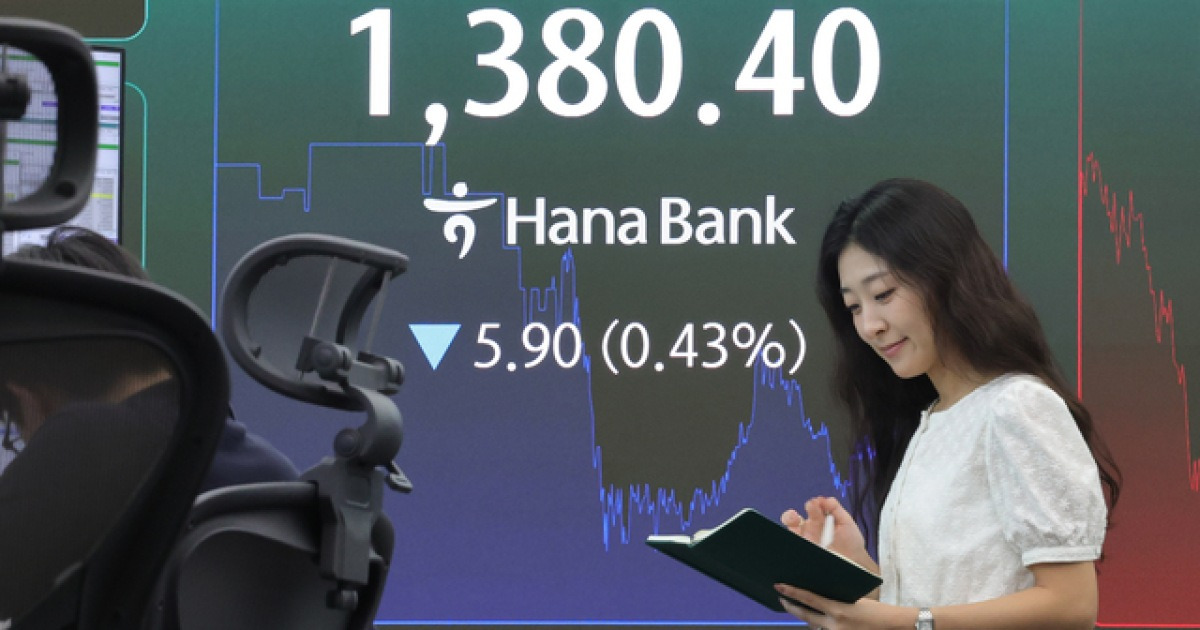
The Korean won traded at 1,372.5 per dollar on Monday, its lowest level since July 2025. That represents a drop of more than 183 won from the 1,555.8 reading just two months earlier. The speed of the move is what catches the eye. Most currency adjustments of this magnitude take a year or more to play out. Korea compressed it into eight weeks.
The driver isn’t abstract capital flow rotation. It’s concrete corporate behavior. SK Hynix’s American depositary receipt listing in the United States brought in dollars that were promptly converted. Corporate tax mid-year payments triggered further dollar selling as exporters converted their proceeds to pay levies. Both flows moved simultaneously, creating a wave of supply that the market wasn’t positioned for.
This is a narrow but potent kind of strength. It says more about Korea’s specific corporate and fiscal calendar than it does about broad international appetite for the won. But markets don’t always distinguish between the two, and the ripple effects are already visible across Asia.
Why the Won Kept Falling Past the Usual Breaking Point
Currency moves like this rarely have a single cause. In Korea’s case, three forces layered on top of each other.
First, the Bank of Korea raised its benchmark rate by 25 basis points in back-to-back meetings, bringing it to 3.0 percent. The gap with the US Federal Reserve’s policy rate narrowed to 75 basis points. Interest rate differentials still matter in emerging Asia, and the convergence trend favors the won.
Second, the central bank revised its growth forecasts upward in the same breath—raising this year’s estimate from 2.6 percent to 3.3 percent and next year’s from 2.1 percent to 2.9 percent. That is a unusually sharp two-year revision for a Korean institution that tends toward caution. It signaled confidence that the domestic economy wasn’t just stabilizing but accelerating.
Third, and perhaps most important, the dollar itself weakened on structural grounds that have little to do with Korea. The dollar index has stayed below 100 despite geopolitical turbulence in the Middle East. Historically, regional crises sharpen dollar demand. This time they didn’t. LS Securities researcher Choi Gwang-hyeok noted that the dollar’s rise following the current geopolitical shocks was “significantly smaller” than during the previous oil crisis triggered by events in the Middle East.
The message is that the dollar’s structural weaknesses—a widening US fiscal deficit, uncertainty around Treasury markets, and a mature growth cycle—are outweighing its traditional safe-haven appeal. That environment lifts all Asian currencies. Korea’s simply rose faster.
The Semiconductor Connection That Everyone Misses
Here is what English-language coverage of this story tends to skip: the won’s strength is a direct readout of Korea’s semiconductor sector competing successfully in a hyper-demand environment.
SK Hynix and Samsung Electronics dominate the high-bandwidth memory market that powers AI training clusters. When those companies raise capital in dollars, the transaction is real. When they convert those dollars, the pressure on the won is real. The ADR listing is not a symbolic financial maneuver—it is the market recognizing that Korean memory chip producers are the ones capturing value from the global AI buildout.
This matters because it reframes the currency story. The won isn’t strengthening because foreign investors are cheerfully buying Korean bonds. It’s strengthening because a handful of mega-cap industrial exporters are turning dollar revenue into local-currency reality at an accelerated pace. That is qualitatively different from portfolio inflows, and it carries different risks.
Portfolio money can reverse overnight. Export revenue conversion follows a corporate schedule. The current wave of dollar selling is front-loaded around tax deadlines and listing proceeds. Once those events pass, the downward pressure could ease quickly—or intensify, depending on what the September export numbers show.
The Fallout for the Rest of Asia
A stronger won creates winners and losers among Korea’s neighbors, and the lines aren’t always where you’d expect.
Japan’s yen and China’s yuan face indirect pressure. When the won strengthens on fundamentals that other Asian currencies can’t match, traders begin repricing the entire region. Exporters in Thailand, Vietnam, and Indonesia suddenly find their currencies appearing expensive by comparison, even if their own central banks haven’t moved.
But the most immediate impact falls on Korea’s own export landscape. A move from 1,555 to 1,370 represents roughly a 12 percent appreciation in two months. That cuts into the margin of every company that bills in dollars but incurs costs in won. Textile manufacturers, shipbuilders, and consumer electronics assemblers that compete with Chinese and Vietnamese producers see their price competitiveness erode almost overnight.
Semiconductor companies are largely insulated. Their margins are wide enough to absorb currency swings, and their products have few substitutes. The rest of the export sector does not enjoy that luxury.
What Comes Next
Markets are pricing in a further drop to the 1,340 range by year-end. That assumes the dollar’s structural weakness holds and Korean supply-side flows remain steady. Both are reasonable assumptions but neither is certain.
Volatility is already expanding. The quarterly range widened from 109.4 won in the second quarter to 160.2 won in the third—a 50.8 won increase. Annual volatility sits at 176.2 won. Shinhan Investment researcher Lee Jin-kyung warned that the pace of decline could slow as the market digests the current move.
The Jackson Hole symposium this week introduces another variable. Any hawkish surprise from the Federal Reserve could reverse the dollar’s weakness within days. US September ISM manufacturing data and the employment report will shape whether the Fed’s path stays dovish or hardens.
Domestic flows could also shift. Korean households have been increasing overseas investment at a clip that puts additional sell pressure on the won. AI-related dollar settlement demand remains a steady bid. Neither force disappears quietly.
The Real Story Isn’t the Number
The won at 1,372 is a headline. The story behind it is that Korea’s semiconductor industry is converting technological advantage into currency advantage in real time, and the rest of Asia is adjusting to the shock.
Other emerging markets in the region watch closely. Some will intervene. Some will let their currencies absorb the pressure. All of them will recalibrate trade and monetary policy assumptions that were built on a weaker won.
The direction is clear. The timing and magnitude are still being written. What’s certain is that the next move won’t come from Korea alone.
Data from Seoul Foreign Exchange Brokers and the Bank of Korea. Research perspectives from LS Securities and Shinhan Investment.