How a $28 Korean Rice Roll Conquered the US Open
A $28 Korean bulgogi gimbap sold out at the US Open fanzone, proving K-food's quiet ascent into Western premium markets. The story behind the rice roll reveals who's really driving Korea's soft-power expansion.
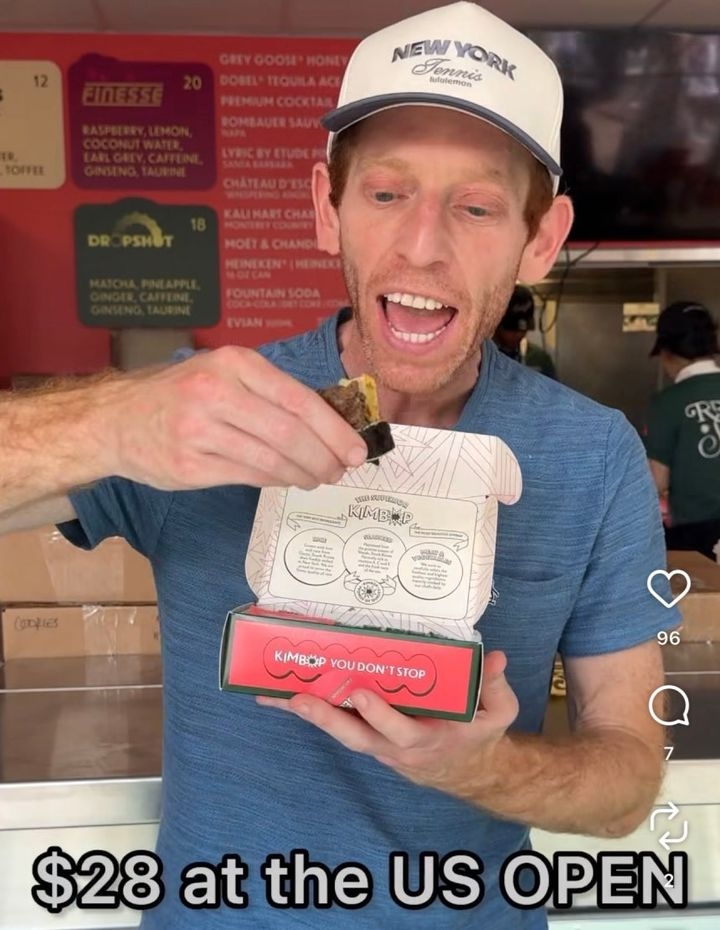
A $28 Rice Roll at Flushing Meadows
It arrived at the US Open fanzone without fanfare, dressed in seaweed and rice, priced at 28 dollars per roll. By the third day, American food influencers were lining up. By the end of the tournament, the story had quietly become one of the event’s most talked-about culinary moments — not because it was cheap, but precisely because it was expensive.
The Korean bulgogi gimbap sold at the Arthur Ashe Stadium fanzone was not a compromise version made for unfamiliar palates. It contained seasoned beef, daikon radish, spinach, burdock root, and carrots — ingredients most first-time buyers had never encountered in a single roll. The price reflected that. At 37,400 won, it cost roughly what a full-course meal would run in Seoul’s Gangnam district.
That it sold out anyway says something about where Korean food has landed in the American consciousness.
Who Made It and Why It Matters
The gimbap was a collaboration between two people whose careers trace the exact path K-food has taken across the Atlantic.
Simon Kim, 46, is the restaurateur behind COTE — a Korean BBQ and American steakhouse hybrid that opened in Manhattan and became a fixture of New York’s fine-dining scene — and COQODAQ, a fried chicken chain that has expanded across the United States. He appeared on the Korean variety show “Crazy Rich Korean” to discuss his business model, which essentially takes the comfort foods of his childhood and repositions them at prices that rival French bistros.
Park Eun-jo, known in Korean media as the “godmother of gimbap,” spent years working at Michelin-starred restaurants including Per Se and Momofuku Ko before turning her attention to the humble rice roll. Her involvement is the kind of credential that transforms a street food into a culinary statement.
Together they built something unexpected: a gimbap stand at one of the world’s most prestigious tennis tournaments, alongside a chicken counter selling 100-dollar caviar-topped nuggets from COQODAQ.
This is not accidental. It is a deliberate strategy — one that Kim has been refining for years.
The Quiet Expansion
What makes this story worth watching extends far beyond a viral food stand at a sports event. The gimbap’s success at the US Open illustrates a pattern that has been developing quietly across American food culture: Korean cuisine is being accepted at the premium tier without requiring sanitization or reinterpretation.
A decade ago, a Korean restaurant in New York that charged 28 dollars for a rice roll would have been dismissed as arrogant. Today, it is considered bold. The difference is not in the product — it is in the audience.
American consumers now associate Korean food with quality rather than novelty. Bulgogi is no longer exotic; it is familiar. Gochujang appears on menus from Brooklyn to Beverly Hills without explanation. The infrastructure for this acceptance was built restaurant by restaurant over fifteen years, starting with figures like Kim who proved that Korean flavors could operate at fine-dining price points without losing their identity.
The US Open gimbap is simply the latest data point in a longer trend.
What the Numbers Reveal
Let us look at what actually happened at the stand.
The fanzone opened on August 23 ahead of the tournament’s August 31 start date. The gimbap became a话题 within the first 48 hours, driven largely by American food influencer Sam Goldberg, who filmed himself trying the roll and shared the video online. Within days, the post had accumulated hundreds of thousands of views and spawned multiple reaction videos from other creators.
Kim’s third US Open outlet — this is not his first appearance at the event — indicates that the model works commercially. A single stand generating consistent sell-outs at that price point during a two-week tournament represents significant revenue. Add in the COQODAQ counter with its premium chicken nuggets, and the total daily takings become substantial.
But the real metric is not revenue. It is normalization. When a Korean rice roll becomes a must-try item at an American sporting event, the cultural barrier has effectively dissolved.
Who Wins, Who Loses
Kim wins — financially and reputationally. His strategy of positioning Korean food as premium rather than ethnic has paid off repeatedly. The US Open platform amplified a brand he already owned.
Park wins too, though more quietly. Her gimbap received attention it would never have found through traditional restaurant channels. A chef who specializes in a dish historically considered street food has now been validated by one of the most visible food stages in the United States.
American diners win by getting access to a product they might not otherwise encounter — especially at a sporting event, where food options traditionally skew toward burgers, hot dogs, and overpriced beer.
Traditional Korean-American restaurants may lose slightly. The gimbap at the US Open was not homemade in a suburban kitchen; it was designed by a trained chef and marketed by a celebrity restaurateur. The gap between institutional Korean food and entrepreneurial Korean food has widened.
What Comes Next
The gimbap phenomenon at the US Open will not disappear when the tournament ends. Kim has already indicated he plans to return. The question is what he brings next.
More broadly, the episode suggests that Korean food’s next phase of expansion will not come through government cultural programs or diplomatic initiatives. It will come through individual entrepreneurs who understand both cuisines well enough to create something that tastes authentic and commands premium prices. The state did not make this happen. A man who remembered his mother’s lunchbox at a school sports day did.
That is perhaps the most important detail in the entire story. The gimbap at the US Open succeeded because it was personal, not manufactured. It carried the memory of a Korean mother’s cooking into a setting where no one expected to find it — and the fact that people wanted it proved that the memory resonated beyond its origin.
Korean food’s expansion into Western premium markets has always worked this way: quietly, individually, and without announcement. The US Open gimbap was simply the most expensive roll yet to prove the point.