KOSPI Sidecar Signals Deeper Asian Semiconductor Stress
A 4% KOSPI plunge triggered South Korea's rarely-used sell-side sidecar mechanism — a flashing warning that risk pricing in Asian semiconductors has shifted fundamentally after the Anthropic shock.
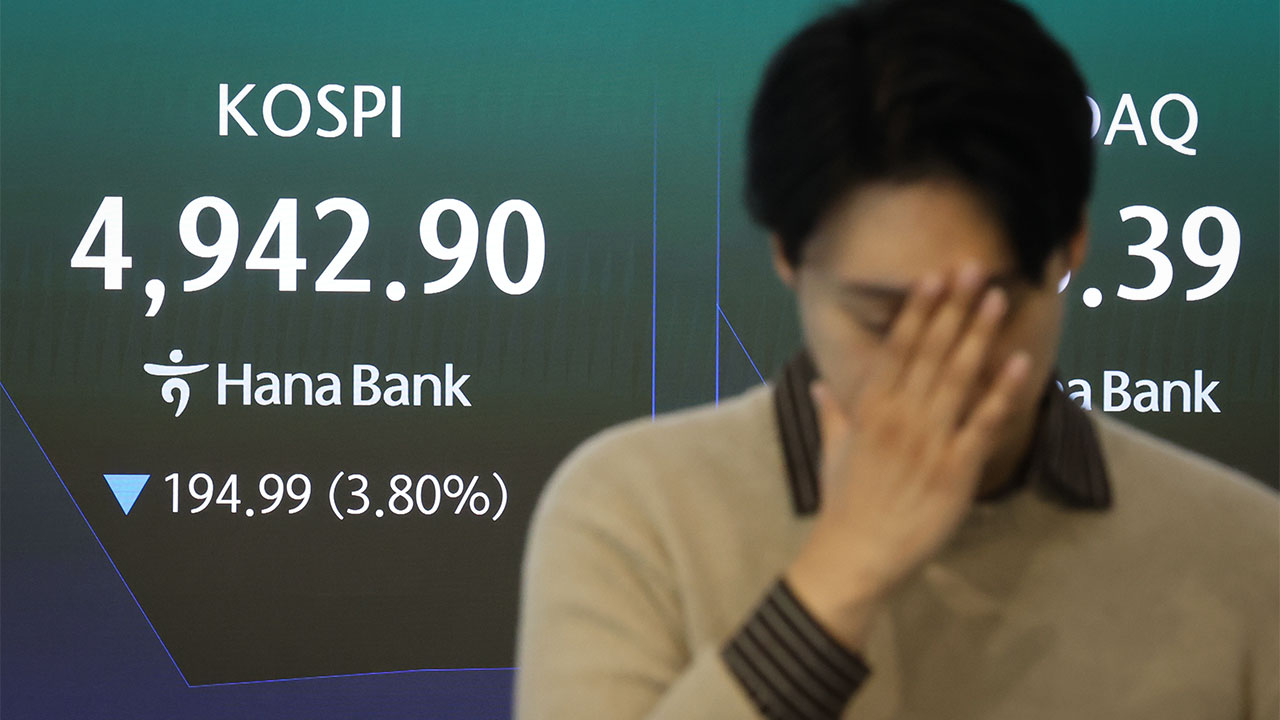
A sidecar firing in Seoul is a better signal than most headlines realize
The KOSPI dropped more than 4 percent on Friday morning, and among the cascading reactions one detail stood out beneath the noise: the sell-side sidecar mechanism activated.
South Korea’s stock exchange uses sidecars differently than the circuit breakers familiar in US markets. Instead of a full market halt, a sidecar triggers a 10-minute pause only on individual stocks that move beyond a preset threshold — usually 15 percent for large caps like Samsung Electronics — while trading in the rest of the market continues.
Friday’s activation meant multiple heavyweight names hit their individual downside limits almost simultaneously. That is not normal volatility. That is a coordination signal.
The trigger chain is straightforward but consequential. News from the Anthropic AI camp sent its own shares tumbling in New York, which rippled through every market positioned on the assumption that big-language-model spending would keep compounding. Asian semiconductor suppliers — the companies that build memory and advanced packaging for that entire stack — got re-assessed first. By the time algorithms and portfolio managers in Seoul had priced the revision, the KOSPI had already lost ground equivalent to roughly a half-point drop per hour over several sessions.
What the sidecar adds to that picture is specificity. When a sell-side sidecar fires, it means a cluster of high-weight stocks crossed their individual kill-zones within the same trading window. That clustering narrows the blame. It is not a single earnings miss or one name’s guidance cut. It is a systematic rotation away from a theme.
Hana Financial Group’s research team, one of the few local shops tracking sidecar activations in real time, flagged the event on social media shortly after the 10:10 a.m. window opened. Their note was short but direct: the sell-side sidecar had been triggered, adding pressure to an already stressed semiconductor complex. Hana also pointed out that the mechanism itself acts as a self-reinforcing signal — when institutions see their peers trapped in a pause, the fear moves faster than the order flow.
That dynamic explains part of why a 4 percent index drop felt structurally different from routine pullbacks. In prior semiconductor sell-offs, the KOSPI absorbed shocks through gradual distribution. Friday’s move compressed weeks of unwinding into hours. Sidecars forced stops at the exact moments where sellers needed liquidity most, which thinned the book precisely when buyers were supposed to step in.
Who gets hurt first
The heaviest named exposures are the usual suspects, but the mechanism now assigns different penalties than it did six months ago.
Samsung Electronics carries the largest single-stock weight in the KOSPI and sits at the center of the memory-cycle bet. Any sidecar activation involving Samsung shifts index futures, pension fund mandates, and option gamma all at once. SK Hynix, which supplies HBM memory for the very models Anthropic trains, faces the same mechanical squeeze. When both names pause together, the index loses its two anchoring pillars simultaneously.
Smaller players in the same ecosystem — Foundry names, equipment suppliers, PCB makers shipping to Chinese ODMs — saw sharper percentage moves because their floats are thinner. A sidecar in a mid-cap chip stock can wipe out a day’s range in minutes, then resume with a gap down. That whipsaw pattern punishes retail traders hardest and rewards algorithms that front-run the pause.
Foreign investors are net sellers across most of the semiconductor block right now. Local institutions are holding, but they are not buying aggressively either. The gap between them and domestic retail — who have historically been the KOSPI’s last line of support — is widening. Retail commentary on community boards ranged from desperate calls to buy the dip to flat-out anger at what some called governmental indifference. That emotional spread matters. When the last willing buyer in a closed market steps back, there is no external liquidity to call upon.
What the sidecar warns about next
Sidecar activations are informative because they are rarely used under calm conditions. When the KRX engineer the threshold adjustments, they do not want to trigger false positives. A cluster of sell-side sidecars therefore implies genuine stress, not algorithmic overreaction alone.
That stress has three directions to track over the coming days.
First, whether Samsung and SK Hynix resume trading with filled books or reopen into renewed selling. A successful resumption depends on institutional bid depth, which is thin when macro headlines like Anthropic’s selloff dominate global screens.
Second, whether the sidecar effect spreads to related exchanges. Korean semiconductor names often leadTaiwan and Japan on memory-cycle sentiment. If the same clustering appears in those markets within a session or two, the story moves from a Korea problem to a regional positioning reset.
Third, whether authorities intervene with the kind of stabilization tools discussed informally by retail posters online. Korea has used market-stabilization funds before, though usually for targeted support rather than broad index defense. Any official move would change the supply-demand calculus immediately, but relying on that expectation is dangerous timing advice.
Why global investors should watch this closely
The KOSPI has become a leading indicator for Asian tech demand in ways that are easy to dismiss until the data contradicts you. When Korean semiconductor names rotate sharply, it often precedes similar rotations in Taiwan’s AI supply chain and Japan’s equipment exporters. Friday’s sidecar was not an isolated Korean event. It was the KOSPI flagging that the market’s internal model for AI-driven memory demand has changed.
The change is not necessarily permanent — memory cycles do turn — but the speed of the repricing matters more than the direction. A four-percent drop with coordinated sidecar triggers compresses what normally takes a week into a single morning session. That compression changes position sizing, hedging costs, and the cost of capital for the sector.
For global portfolios, the practical takeaway is blunt. Watch the sidecar, not just the headline number. A 4 percent decline is loud; a 4 percent decline that activates a rare sell-side mechanism tells you exactly where the pain is concentrated and how thin the bid has become underneath it. That distinction separates traders reacting to prices from traders reacting to structure.
Friday gave the second signal. The question is whether the rest of Asia reads it the same way.