Krafton's India Gambit Is Bigger Than PUBG
Krafton's $500 million India bet and a meeting with PM Modi signal a shift: South Asian studios are becoming global content engines, not just markets. What that means for India's tech policy and rivals like Riot and Epic.
Krafton Met with Modi. The Real Story Is Where the Games Are Made Now.
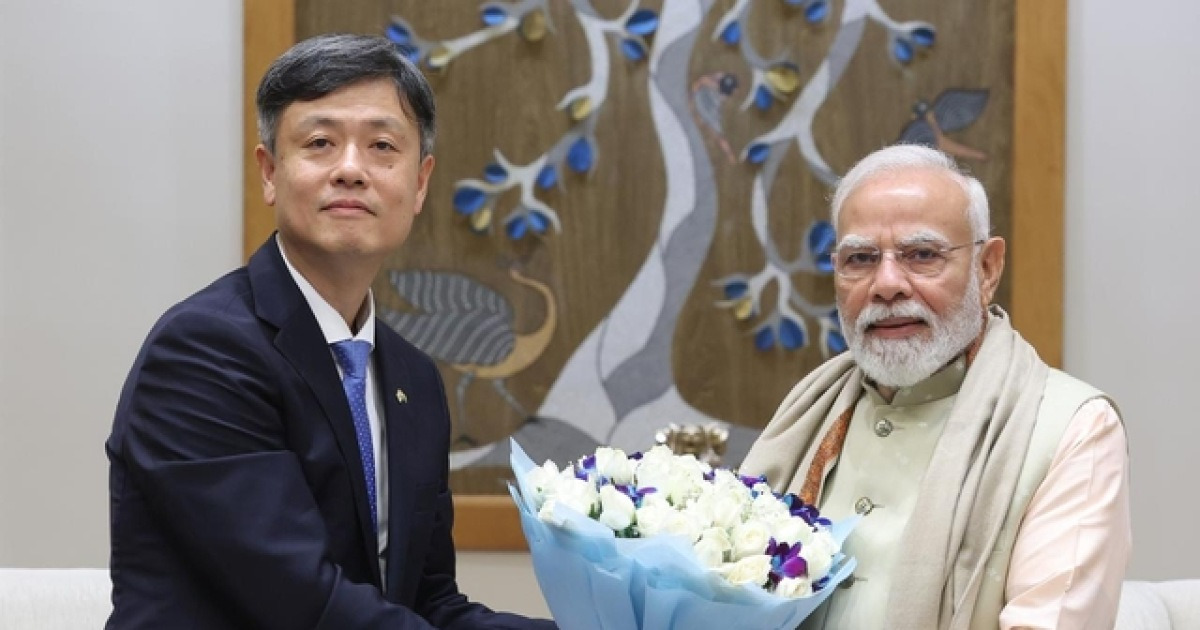
On September 4, Krafton chairman Jang Byung-gyu sat across from Prime Minister Narendra Modi in New Delhi. The photo op was predictable for anyone who follows South Korea-India relations. The substance behind it was not.
Krafton laid out a half-billion-dollar commitment to India—another $250 million on top of what it has already invested, bringing the total to roughly $500 million over the next three to four years. Beyond that, Krafton joined Naver and Mirae Asset in creating a $670 million Unicorn Growth Fund aimed at Indian game IP and startups. They announced plans to expand beyond gaming into AI, robotics, and deep tech. And they unveiled the KIGI Academy, a university-industry collaboration program designed to train India’s next generation of game developers and digital creators.
This is not a company scouting a new consumer market. This is a company building a production engine.
The Shift No One Is Naming Explicitly
For years, the dominant narrative around India’s gaming boom has been about consumption. India has more than 450 million gamers—the largest gaming population on Earth—and Western publishers have flocked to capture ad revenue and microtransaction spending from mobile-first players. Riot, Epic, and Activision have all courted Indian audiences with localized titles, regional servers, and Hindi-language marketing.
Krafton is doing something different. It is treating India as a place where globally competitive games are designed, built, and shipped from—not just consumed.
The acquisition of Nautilus Mobile, the studio behind the Real Cricket series, is the clearest signal. Real Cricket is not a minor curiosity. It has tens of millions of active users and has proven that an Indian studio can build a title that resonates across the subcontinent and beyond. Acquiring Nautilus gives Krafton not just a hit property but an existing team that understands local sensibilities, seasonal sports cycles, and the monetization patterns of Indian mobile gamers.
The KIGI Academy extends that logic. It is an explicit bet that India’s talent pipeline—its engineers, artists, narrative designers, and producers—can rival what Seoul, San Francisco, or Tokyo produces. That is a bold claim, and it needs to be measured against the reality that India’s game development education infrastructure is still nascent compared to established hubs.
What This Means for India’s Tech Policy
Modi’s government has long promoted the Viksit Bharat vision and the slogan “Create in India, Create for India, Create for the World.” Krafton’s announcement is a concrete data point that this policy framework is starting to attract serious private capital. But attracting investment and retaining it are different challenges.
India’s regulatory environment for gaming remains uneven. The sudden imposition of a 28 percent GST on online gaming in 2023 created chaos for operators and investors alike. Several states have imposed their own restrictive rules, including outright bans on real-money gaming in certain jurisdictions. A company making a half-billion-dollar commitment needs policy predictability—not just political rhetoric.
The government’s response to Krafton’s announcement will be telling. If India moves to clarify its gaming tax framework and create a coherent national digital entertainment policy, it signals that the country is serious about being a production hub, not just a consumption market. If the regulatory patchwork continues, even a $500 million commitment may prove to be a one-year announcement rather than a decade-long strategy.
The Competitive Implications
Riot and Epic are not standing still. Riot has been investing heavily in Team Fortress-style mobile titles for India and has built a substantial esports presence with Valorant’s Indian scene. Epic’s Unreal Engine is widely used by Indian indie studios, and its publishing arm has been quietly acquiring talent. But neither has made a move as structurally ambitious as Krafton’s—the combination of direct studio investment, an M&A into an established Indian publisher, a dedicated academy, and a co-investment fund with major financial institutions.
The gap between Krafton’s approach and its rivals’ is the gap between treating India as a market and treating it as a source. Companies that treat India only as a market will find their margins compressed as local competitors mature and consumer expectations rise. Companies that build production capacity in India can ship globally competitive titles at lower cost structures while capturing local IP ownership.
That last point matters most. For decades, the global games industry has operated on a simple hierarchy: Western and Japanese studios create IP; emerging markets consume it. Krafton’s bet is that the hierarchy is flattening. If Nautilus Mobile or a KIGI-trained team ships a hit that originates in India and plays everywhere, the entire industry’s value chain shifts.
Who Wins, Who Loses, and What Comes Next
India wins if it can convert this moment of investor enthusiasm into durable policy infrastructure—clear taxation, stable regulation, and support for creative education that outlasts any single announcement.
Krafton wins if it can replicate the Nautilus model: identify high-potential Indian studios, acquire or fund them, and give them the resources to build for global audiences rather than local ones. The $670 million fund with Naver and Mirae Asset suggests they are preparing for exactly this kind of portfolio play.
Riot, Epic, and other Western publishers lose only if they continue to view India solely as a revenue destination. The companies that build studios, acquire local IP, and invest in training will be the ones shaping the next decade of global gaming.
The photo of Jang and Modi is a headline. The half-billion-dollar commitment and the academy program are the story. India’s place in the global gaming economy is being rewritten—not by policy documents, but by investment decisions made in boardrooms from Seoul to New Delhi.
The question now is whether India’s policymakers will write the supporting script.