The Left-Handed Molecule Breakthrough Rewriting Drug Making
The 2026 Nobel Chemistry Prize goes to Henri Kagan and Kenso Soai for cracking asymmetric autocatalysis — the secret behind why life chooses one molecular handedness. The implications for pharmaceutical manufacturing and sustainable chemistry run deep.
The Nobel That Matters for Your Next Prescription
The 2026 Nobel Prize in Chemistry sounds like pure laboratory curiosity — two men explaining why life insists on left-handed molecules. But the practical implication is staggering: it changes how every major pharmaceutical company will manufacture drugs for the next half-century.
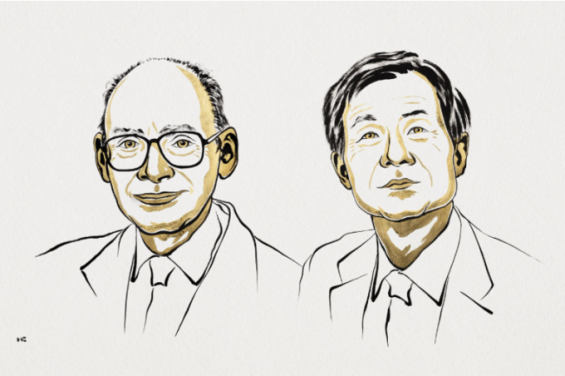
Henri Kagan, 95, of Paris-Sud University, and Kenso Soai, 76, of Tokyo Science University, shared the 12 million Swedish kronor prize for work that spans nearly two decades of independent discovery. Kagan published his foundational insight in 1986. Soai followed with his own breakthrough in 2003. Neither man worked in the other’s shadow. Both solved the same problem from different angles — and both were right.
The problem, simply put, is handedness. Many molecules that matter in biology come in two mirror-image versions, called enantiomers. One may be medicine; the other may be inert or harmful. The question the Nobel Committee highlighted is why nature itself picks just one. Life uses left-handed amino acids and right-handed sugars with relentless uniformity, and chemists had no good explanation for how that preference arises in a test tube.
What Asymmetric Autocatalysis Actually Means
Kagan’s 1986 paper described a way to bias a chemical reaction so it produces more of one enantiomer than the other — a catalytic process that translates a small initial imbalance into a large product selectivity. The method gave industrial chemists a practical handle on asymmetric synthesis that did not exist before.
Soai took the logic further. In 2003, he demonstrated a reaction that generates essentially a single enantiomer from scratch — no pre-existing chiral bias needed. The product catalyzes its own formation in the preferred handedness. This is autocatalysis with a memory: the molecule made today determines what tomorrow’s batch will look like. Before Soai’s experiment, no one had achieved this outside of biology.
The Nobel Committee’s language was careful but emphatic: the two discoveries together provide “a decisive foundation” for designing reactions that produce only the useful molecular form. That is a foundation, not a finished building. The prize recognizes a conceptual breakthrough, not a completed industrial process.
Who Wins When Drug Makers Get This Right
The pharmaceutical industry stands to gain the most immediately. Roughly half of all prescription drugs today are chiral molecules, and regulatory bodies in the United States, Europe, and increasingly Asia require developers to demonstrate the safety and efficacy of each individual enantiomer. That means manufacturers must either separate mixed products — a costly and wasteful step — or build them selectively from the start. Asymmetric catalysis makes the second option viable.
Kagan’s method already influenced how some companies design synthetic routes. Soai’s autocatalytic system remains more of a scientific proof than a factory floor reality, but the principle is now established. Anyone building a new asymmetric synthesis pathway can point to both papers as legal and technical precedent.
The financial math is notable. The prize — 12 million Swedish kronor, about 1.6 billion won, a 1 million kronor increase over last year — is modest compared with the commercial value of the underlying chemistry. A single enantioselective process running at scale can save a company hundreds of millions in wasted intermediates, additional purification steps, and regulatory risk. That is why major drugmakers have quietly been tracking asymmetric catalysis for years, and why this award will only accelerate investment.
Why a Japanese Chemist Changes the Calculus
Soai’s recognition matters beyond the science. Asymmetric synthesis has long been dominated by Western institutions — particularly those in the United States and Switzerland. A Japanese researcher sharing the top chemistry prize for a purely conceptual breakthrough signals that the center of gravity in organic methodology is broadening.
Tokyo Science University, where Soai is based, is not a household name in global chemistry rankings the way some American or European institutions are. The appointment of a researcher from this university to the Nobel stage may nudge funding, collaboration, and talent flows toward Japanese laboratories in ways that are hard to quantify but impossible to ignore.
It also reframes the narrative around “left-handed chemistry” in a market that already takes molecular handedness seriously. Japan’s pharmaceutical sector — home to Takeda, Astellas, and Daiichi Sankyo — has invested heavily in chiral drug development. This prize reinforces the strategic relevance of that investment at a moment when Chinese and Indian generic manufacturers are moving up the value chain into complex chiral APIs.
The Sustainability Angle Everyone Is Missing
There is a quieter implication that deserves more attention. The traditional approach to making chiral drugs involves synthesizing both enantiomers and discarding the unwanted one — sometimes at ratios as bad as 50:50. That is not just expensive; it is environmentally costly. Extra solvents, extra energy, extra waste.
Asymmetric autocatalysis offers a path toward genuine green chemistry in drug manufacturing: fewer steps, less waste, lower solvent use. The European Green Deal and similar regulatory frameworks are already pressuring pharma to reduce their environmental footprint. Techniques that intrinsically avoid producing the wrong enantiomer in the first place will only grow in value as carbon accounting becomes part of drug pricing and procurement.
What Happens Next
Expect a surge of academic and industrial projects built on the Kagan-Soai framework over the next five years. The prize itself does not solve every synthetic challenge — autocatalytic asymmetric reactions remain difficult to scale and apply broadly — but it gives researchers and executives a clear signal that this direction is legitimate, funded, and important.
For drug patients, the delay between prize and product means nothing changes today. For the companies designing next-generation therapies, the calculation just shifted. The question is no longer whether asymmetric catalysis matters. It is who builds the best process first.