How LG Energy Solutions Just Rewrote the Rules on Next-Gen Batteries
LG Energy Solution and Seoul National University have solved a critical obstacle in LMR battery commercialization — gas generation and capacity fade in large-format cells. The finding could slash EV battery costs and weaken cobalt dependency.
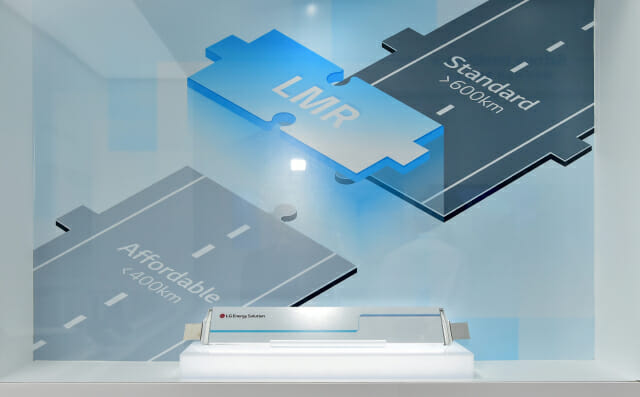
The oxygen trick that changes everything
LG Energy Solution and Seoul National University have been working on something most EV buyers will never hear about in a press release. But the work, published in Nature Communications, could reshape how cheap electric cars become.
The problem they tackled is simple to describe and nearly impossible to solve: lithium-manganese-rich (LMR) cathode materials hold far more energy per gram than anything currently mass-produced. They store it partly through a mechanism most commercial batteries don’t use — by tapping into the oxygen atoms inside the material itself. The tradeoff is that those same oxygen atoms can escape their bonds during charging, react unpredictably, and generate gas that swells the cell and kills capacity over time.
For years, that has been the wall between LMR research papers and LMR products.
What the researchers actually did
The joint team — led by Prof. Im Jong-woo at SNU’s Department of Chemistry — didn’t discover a new material. They discovered how to run the existing one without self-destructing.
Through precise analysis of oxygen oxidation and reduction behavior across charge-discharge cycles, they identified a variable that had been largely overlooked: the discharge cutoff voltage matters almost as much as the charge cutoff. Most engineers focus on how high you can push the voltage during charging. The LG-SNU team showed that how deep you let the cell discharge is equally decisive for oxygen recovery.
Lowering the upper charge limit from 4.6V to 4.3V pushed oxygen reduction efficiency from 86 percent to 97 percent. Running discharge down to 2.0V instead of the conventional 3.0V completed the recovery cycle, bringing oxygen back to near its original state.
That alone would be notable. But the real test for any battery breakthrough is whether it survives at scale. The team applied these findings to redesign the voltage window and formation — the initial conditioning — process for a 40Ah large-format cell. They specifically lowered temperatures during the formation stage, which is where gas generation tends to be most acute in large cells because of slower ion transport and tighter internal geometries.
The result: after 883 full charge-discharge cycles, the optimized 40Ah cell retained 92.2 percent of its initial capacity.
That is a meaningful data point because it proves LMR stability isn’t just a lab-scale curiosity. A 40Ah cell is the format that goes into production vehicles, not coin cells or 2Ah research samples.
Why this matters beyond the lab
LMR materials can substitute manganese for cobalt in cathode chemistry. Cobalt is expensive, concentrated in the Democratic Republic of Congo, and increasingly subject to scrutiny over supply-chain ethics and price volatility. Manganese is far more abundant and dramatically cheaper.
Chinese battery makers have been investing heavily in cobalt-lean and cobalt-free chemistries, but LMR sits at the top of the energy-density ladder among those alternatives. If LG Energy Solution can commercialize it at the scale required for automotive applications, it undercuts the cost advantage that Chinese producers have built around LFP and NMC supply chains — not by matching their prices, but by offering higher energy density at lower material cost.
The implication for automakers is direct. An LMR cell with 92 percent capacity retention after 883 cycles could support a vehicle rated for well over 200,000 kilometers on a single pack. That removes one of the biggest remaining frictions in EV adoption — range anxiety tied to battery degradation — without adding cobalt to the bill of materials.
Who wins, who loses
LG Energy Solution wins if it moves fast. The company already signaled confidence in LMR earlier this year, with executive Byun Byung-cheon receiving an invention award for LMR-related patents. That suggests the intellectual-property groundwork was laid before the current study. What this paper does is convert that IP into an engineering protocol.
South Korea’s battery ecosystem stands to gain disproportionately. LG, Samsung SDI, and SK On have all treated LMR as a strategic next step. The government has committed roughly 30 billion won toward LMR development, according to September 2025 reporting. This work gives that investment a concrete milestone rather than a long horizon.
Chinese battery makers are the likely losers in relative terms. CATL and BYD dominate the current cobalt-free narrative through LFP — a chemistry that is cheaper and safer but significantly lower in energy density. LMR offers a path to LFP-like economics with NMC-class energy density. If LG commercializes it first at automotive scale, the cost-per-kWh advantage shifts away from the chemistry China has optimized around.
Automakers that can secure early LMR supply will have a product advantage. GM has already been reported as weighing LMR for future EV platforms, suggesting major OEMs are watching this space closely.
What happens next
The immediate next step is moving from a 40Ah lab cell to a production-representative format at pilot scale. LG Energy Solution has not announced a timeline for that transition, and it is unlikely to be quick. Battery commercialization typically takes two to four years from peer-reviewed demonstration to volume production, depending on capital deployment and customer validation cycles.
The formation-process optimization described in the paper is likely to become a proprietary manufacturing parameter. That means the real differentiator won’t be the chemistry itself — which will eventually be replicable — but the process controls around voltage windows and temperature management during cell conditioning.
For now, the most important number is 92.2 percent. It is the first credible evidence that LMR materials can survive thousands of cycles in a format that matters for cars. The rest is execution.