LG's LMR Battery Breakthrough Changes the EV Chemistry Race
LG Energy Solution has stabilized lithium-manganese-rich batteries for large EV cells — a materials-science fix that could reshape EV costs and tilt the supply chain away from Chinese dominance.
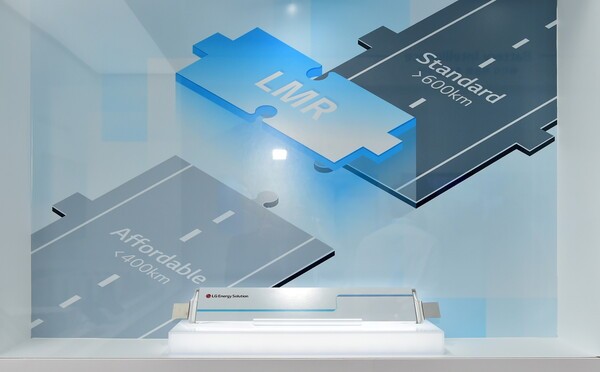
The Real Problem Wasn’t the Material — It Was How You Used It
For years, the lithium-manganese-rich (LMR) cathode has been one of those promises in battery science that never quite delivered. The chemistry looked perfect on paper: replace expensive cobalt with cheap manganese, tap into the oxygen inside the crystal lattice for extra energy storage, and you get higher density at lower cost. Every major battery maker was supposed to be building it.
LG Energy Solution’s latest work, published in Nature Communications in partnership with Seoul National University, may finally be the moment LMR stops being a lab curiosity and starts becoming a commercial reality. That matters more than the usual quarterly headline.
The Korean-Chinese research team didn’t discover a new material. They discovered something arguably more useful: the exact voltage window that makes an existing material stable enough to use at scale. Specifically, they showed that running a 40Ah LMR cell between 2.0 and 4.3 volts — not the 4.6 volts some researchers had been pushing — flips the oxygen recovery rate from 86 percent to 97 percent over repeated cycling. That small shift in protocol turned a cell that degraded poorly into one that held 92.2 percent of its initial capacity after 883 full charge-discharge cycles.
Eight hundred and eighty-three cycles is no longer a research-number milestone. For an electric vehicle battery, that translates to real-world lifespan territory. In an era where manufacturers are promising 1,000-kilowatt-hour pack lifespans and warranty periods measured in decades, 92 percent retention at that cycle count is commercially defensible.
Why This Timing Is Not Coincidental
The battery industry is currently trapped between two pressures that make LMR simultaneously more attractive and more dangerous to develop. On one side, cobalt prices remain volatile and ethical sourcing constraints —钴 comes disproportionately from the DRC — make any move away from it strategically valuable. On the other, the Chinese supply chain has consolidated tremendous scale in NMC and LFP production, making it harder for non-Chinese manufacturers to compete on cost alone.
LMR sits at the intersection of both problems. It uses manganese, which is abundant and cheap. It can store more energy per kilogram than LFP. And it doesn’t require cobalt at all. If LG can manufacture these cells at volume, the cost argument against cobalt-dependent chemistries becomes dramatically simpler.
But here’s what most coverage misses: the gas-generation problem LG solved isn’t just an engineering inconvenience. It’s the reason LMR has stayed out of large-format cells. Small coin cells can tolerate internal pressure because they have headroom. Large 40Ah EV cells — the kind that go into actual vehicles — don’t have that luxury. Gas buildup in a sealed large cell changes the mechanical stress on electrodes, degrades separator performance, and in worst cases leads to swelling or failure. The chemistry was always there. The packaging constraint was the wall.
The Fix Is Simpler Than You’d Expect
The SNU-LG collaboration found that the root cause of LMR degradation is oxygen release during charging that fails to fully recombine during discharge. When you charge above 4.6 volts, oxygen leaves the crystal lattice structure and oxidizes. During the next discharge phase, not all of it returns. The unrecovered oxygen reacts with the electrolyte, producing gas and permanently reducing capacity.
Lowering the charge cutoff to 4.3 volts keeps the oxygen inside the lattice. Lowering the discharge floor to 2.0 volts — deeper than the typical 3.0-volt stop — gives the oxygen more thermodynamic drive to return to its original state. The combination brings recovery from 86 percent to 97 percent.
LG also adjusted the formation process, running it at lower temperatures to reduce gas generation during the critical early cycles when the cell is most vulnerable. These are not material innovations. They’re protocol innovations — the kind of optimization that manufacturing engineers, not materials scientists, typically execute. That’s what makes this scalable.
What This Means for the Supply Chain
Chinese battery makers, particularly CATL and BYD, dominate the current EV-cell landscape with NMC and LFP. Neither has announced a comparable LMR roadmap. BYD’s Blade battery is LFP, optimized for safety and cost but limited in energy density. CATL has been quieter about LMR specifically, though the company’s patent portfolio suggests active research in the space.
If LG Energy Solution brings LMR to volume production, it would give Hyundai, Kia, and potentially their Western partners — LG supplies GM, Ford, and Volkswagen — a chemistry advantage that Chinese competitors haven’t yet matched at commercial scale. The cost savings from eliminating cobalt, combined with the higher energy density over LFP, could narrow the price-per-kilowatt-hour gap that has favored Chinese manufacturers.
That’s not a guarantee. CATL and Chinese suppliers have enormous manufacturing experience and can iterate quickly. But LMR stabilizes at a point where LG has first-mover commercial advantage, and first-mover advantage in batteries is real — cell form factors, integration protocols, and warranty data compound over time.
The Bigger Picture: Post-Lithium-Ion Starts Here
The most interesting implication of this work may not be LMR itself, but what it proves about how to approach next-generation chemistries. The research demonstrates that oxygen participation in redox reactions — the mechanism behind LMR’s high capacity — can be controlled through voltage protocol rather than requiring exotic new materials or coatings. That’s a methodological finding.
Other candidates for post-lithium-ion storage — sodium-ion, solid-state, lithium-sulfur — face similar stability-and-gas problems. The LMR result suggests that some of those challenges may be solvable through electrochemical protocol design rather than waiting for perfect materials. If that pattern holds, the commercialization timeline for several next-gen chemistries could shorten.
LG published this work openly in Nature Communications, not as a trade-secret-protected advancement. That signals confidence that the protocol know-how — how to run these cells at factory scale, how to integrate them into pack design — remains their competitive moat even if the science is public. The cells themselves were demonstrated at InterBattery 2026, suggesting LG is moving toward pilot production.
Who Wins, Who Loses, and What Happens Next
The winners are clear: LG Energy Solution gains a differentiated chemistry platform, Korean automakers get a cobalt-free high-density option, and the broader push to decouple EV batteries from DRC cobalt supply gets a credible technical path.
The losers are incumbents who bet the house on LFP alone or who assumed LMR was years from viability. CATL doesn’t lose today, but if LG ships LMR cells in volume within the next two years, the competitive calculus changes fast.
What happens next: watch for LG’s announcement of a pilot-line LMR production schedule. The science is published. The protocol is defined. The question is whether LG can replicate the 883-cycle, 92.2-percent-retention result at factory scale — and whether any Chinese competitor publishes a parallel breakthrough first.