The $5 Billion Golf Experiment That Just Failed
LIV Golf has announced it will wind down operations after a last-minute rescue deal with BC Partners collapsed, ending a $5 billion project backed by Saudi Arabia's Public Investment Fund. The failure raises questions about the viability of sports-as-soft-power investments and what it means for the future of professional golf.
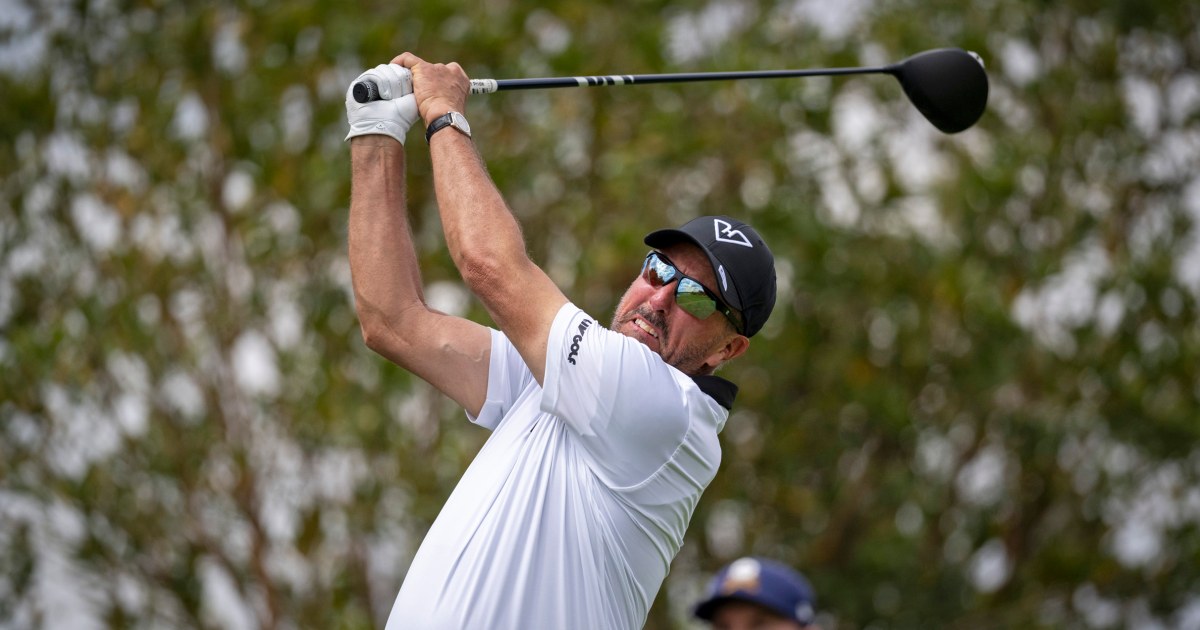
The Five-Billion-Dollar Golf Project Just Collapsed
LIV Golf announced Thursday it will wind down operations, capping a four-year experiment that absorbed more than $5 billion from Saudi Arabia’s Public Investment Fund and temporarily rewired professional golf.
The immediate trigger was simple: discussions with potential rescuer BC Partners fell apart. The private equity firm, according to reports from The Financial Times and The Athletic, could not secure enough commitments from LIV golfers to justify keeping the tour alive. By this point, LIV had already canceled multiple events this year, including its season-ending team championship, signaling how far the operation had deteriorated before the final deal unraveled.
In a statement, LIV said shifting toward an orderly wind-down was the most responsible path forward. The announcement followed an earlier New Jersey bankruptcy court hearing that suggested the league was seeking relief from creditors, though the exact amount owed remains unclear. Sources familiar with the matter estimate outstanding liabilities between $1.2 billion and $1.8 billion, though no official figures have been released.
The failure is staggering in scale. LIV represented one of the most aggressive capital injections into a sports league in modern history, a bid to unseat an established institution with a combination of guaranteed money, media deals, and institutional backing from one of the world’s wealthiest sovereign funds. It did not work.
How We Got Here
LIV Golf launched in January 2021 as a revolt against the PGA Tour, conceived inside the Public Investment Fund and led publicly by former Open Championship winner Greg Norman alongside golf legend Phil Mickelson. Both men were frustrated with the established order — Mickelson with player compensation structures, Norman with the governance of the sport’s governing bodies.
Within months, the tour attracted marquee names including Jon Rahm, Bryson DeChambeau, and Dustin Johnson, each lured by guaranteed payouts that far exceeded what most players could earn on the PGA circuit over a single season. Rahm’s $250 million signing bonus became the defining number of the entire enterprise, a sum that was not compensation but a financial guarantee that effectively removed market risk from the decision to defect.
The model was aggressive from day one. Rather than building a sustainable product, LIV bet that money and celebrity could shortcut decades of golf tradition. It worked, briefly. The tour generated headlines, split the sport into rival camps, and forced the PGA Tour into existential negotiations with its own players — negotiations that ultimately produced a revenue-sharing agreement and an expanded schedule that benefited even the tour’s most vocal critics.
But the product never translated into lasting commercial value. LIV struggled to land a long-term television partner in the United States, the sport’s largest market. Events drew respectable crowds overseas — the London draft drew significant attention — but without consistent broadcast exposure, revenue streams remained fragile. The guaranteed-payout structure, designed to attract players, also drew criticism for stripping tournaments of competitive drama. When everyone gets paid regardless of performance, stakes dilute.
Player defections accelerated in 2024 as the financial reality set in. Several mid-tier players reported delayed or missed payments. The tour’s brand partnerships, initially strong, began to fracture as sponsors weighed the reputational risks of association with a failing enterprise. NBC’s initial four-year, $800 million rights deal was reportedly renegotiated downward before eventually being dropped entirely, a signal of how quickly commercial confidence evaporated.
What This Means for Saudi Soft Power
The broader story here is not about golf. It is about whether sports investments can deliver the soft power returns Saudi Arabia and other state-backed investors have sought.
The Public Investment Fund has spent billions trying to reshape global perceptions of Saudi Arabia through high-visibility sports deals — LIV Golf, Newcastle United, Formula One partnerships, boxing spectacles. The theory was that owning sports properties would generate goodwill, diversify the kingdom’s image, and create economic leverage that transcended any single league’s profitability.
Four years and $5 billion later, LIV’s collapse suggests that theory needs serious retesting. The problem is not that the strategy is inherently flawed — it is that the assumption that capital alone can purchase cultural legitimacy is naive. Sports institutions accumulate credibility through decades of tradition, community ties, and organic fan engagement. None of those can be fast-tracked with a check.
This does not mean Saudi Arabia will retreat from sports investment entirely. The PIF has demonstrated patience with long-term plays before and is likely to continue investing in established properties where the trajectory is upward rather than downward. But LIV’s failure should prompt reflection on what kind of sports assets are worth building versus buying. A golf tour that cannot secure a domestic television deal, cannot retain its players through structural incentives, and cannot survive without continuous capital injections is not a business — it is a subsidy program with cameras.
The difference matters for other countries considering similar strategies. Sports soft power requires cultural credibility, and credibility cannot be purchased in a single transaction. It takes years to build, and LIV never had that runway.
What Happens to Golf Next
The PGA Tour wins decisively from LIV’s collapse. With no alternative tour, players who left for guaranteed money will face a stark choice: return to the PGA ecosystem or find opportunities elsewhere in a market with fewer options than they imagined. The league’s bargaining position has never been stronger, and the precedent set by its negotiations with LIV defectors will inform how it handles player disputes for years to come.
But the victory comes with baggage. The civil war strained relationships within golf, alienated fans on both sides, and exposed the fragility of the sport’s governance. The PGA Tour’s response to LIV players returning — whether it offers amnesty, penalties, or something in between — will shape the sport’s culture for years. A heavy hand risks driving away talent permanently; leniency risks appearing to reward betrayal.
Greg Norman, LIV’s face and chief executive, exits having presided over the most ambitious challenge to golf’s establishment in decades. He won battles — he forced the PGA Tour to negotiate with its players, he accelerated free-agent movement in a sport that had resisted it, he changed how sports leagues think about competitive disruption — but he lost the war. The tour itself is gone, and with it any remaining possibility of a credible alternative route to golf’s pinnacle.
Second-Order Effects
The fallout extends beyond LIV’s immediate participants. Sponsorship dollars that were locked into the tour will redistribute, likely flowing back into PGA Tour events and third-party media properties. Broadcasters who invested in LIV coverage will reassess their sports betting strategies, perhaps becoming more cautious about committing to unproven properties.
Several players caught in the crossfire face uncertain futures. Jon Rahm, who won the 2023 Open Championship as a LIV member and saw his standing in the sport fundamentally altered, will need to navigate a golf world that is no longer divided but is also no longer sympathetic to his choices. For younger players who joined LIV hoping for a shortcut to legitimacy, the closure of the tour represents a career detour with no clear map back.
The bankruptcy process itself will unfold in New Jersey federal court, where creditors will compete for whatever remaining assets exist. Whether LIV’s broadcasting rights, brand name, or player contracts have recoverable value remains an open question. Legal experts expect the proceedings to drag into 2026, adding uncertainty to an already chaotic transition.
The Bigger Picture
LIV Golf’s collapse is a case study in what happens when capital assumes it can buy legacy. The PIF had the money. It had the timing — golf was vulnerable, players were restless, the PGA Tour was on the defensive. What it did not have was a sustainable commercial model, and money alone could not fix that.
For investors watching, the lesson is clear: sports properties are not like technology startups. You cannot scale a brand through venture capital alone. You need cultural legitimacy, fan loyalty, and institutional stability — none of which can be fast-tracked. The most expensive mistakes are often the ones that assume otherwise.
The five billion dollars LIV consumed will not be recovered. The golf world will move on. And Saudi Arabia will likely keep trying to spend its way into relevance — just perhaps more carefully next time, and with a clearer understanding that no amount of capital can substitute for the slow, imperfect work of building something people actually want to follow.