The Marathon Is Over: What Messi's Exit Means for the Game
Lionel Messi has ended his run as Argentina captain, but his retirement signals something bigger: the close of the longest World Cup reign in modern football and a reckoning for a country now forced to look beyond its two greatest players.
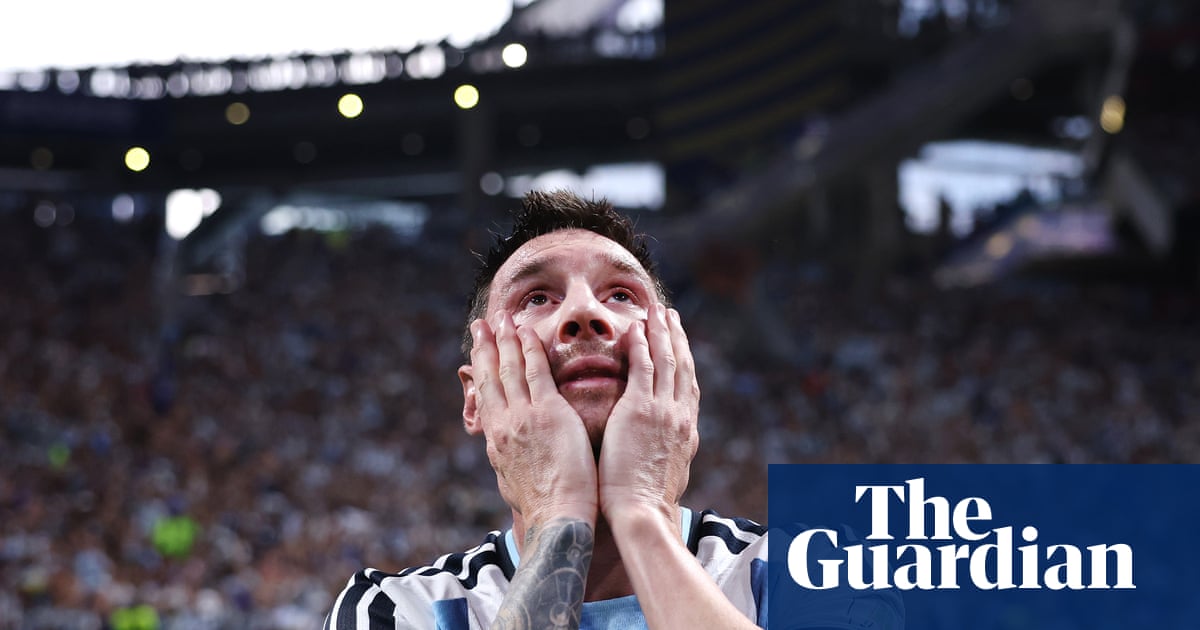
The Long Goodbye
Lionel Messi hung up his boots for Argentina on Monday, officially closing a chapter that began nearly two decades ago and redefined what it means to carry a nation on your shoulders. At 39, he retires not just from international football but from an era that saw him grow from a shy teenager into the standard by which every generation of players would be measured.
The announcement came through an Instagram post — three handwritten pages, a Harry Potter Time Turner pen, and a song by Soledad Pastorutti playing softly in the background. It was intimate, almost archaic in an age of press conferences and PR teams. That was the point. This was not a corporate departure. It was a human one.
“It’s a decision that hurt and continues to hurt,” Messi wrote. “But I understand this is the moment.”
The shift from “I think” to “I understand” — swapping out doubt for acceptance mid-sentence — speaks to a man who had been wrestling with this decision since the emotional wreckage of July 2025, when Spain beat Argentina in the World Cup final in New Jersey. He played his heart out until the last whistle, gave everything until there was nothing left, and then walked away.
The Marathon Is Over
To call this merely a retirement feels insufficient. This is the end of a marathon that started before Messi could legally drive, one that stretched across 17 years, four World Cups, and two Olympic gold medals. No player in modern football history has maintained that kind of gravitational pull over their national team for so long.
And here is the uncomfortable truth that Argentina and the football world must now confront: Messi was never just a player. He was the entire architecture of Argentine football for almost two decades. Without him, the scaffolding collapses.
Think about what that means. In the last 12 World Cups spanning roughly 45 years, either Maradona or Messi featured in 10 of them. For three generations of Argentines — grandparents, parents, children — football identity has been synonymous with these two men. Now both are gone. The mantle passes to someone nobody knows yet.
A Buenos Aires street corner became an impromptu shrine after the announcement. A red telephone sat on a table with a handwritten sign asking: “What would you say to Messi?” Passersby picked up the receiver and spoke into it. An 86-year-old man said: “You’ve given me the greatest joys in my life. You will be in my heart until the day I die.” A young boy burst into tears at school. A little girl said: “You’re the best and the greatest.”
This is not nostalgia. This is grief. And it is shared by millions who will spend the next decade wondering what comes next.
The Ghost of Maradona
Any conversation about life after Messi must begin with Maradona. The two men occupy different moral universes, of course — Maradona the tempestuous revolutionary, Messi the quiet perfectionist — but they share something far more significant: they have been the sole pillars of Argentine football identity for nearly half a century.
Writer Andrés Burgo put it plainly in his column: “In 10 of the past 12 World Cups, either Maradona or Messi played, so this truly marks the end of an era in which grandparents, parents, sons and daughters and grandchildren enjoyed an incredible privilege during almost 45 years. The heir will arrive — we hope — but right now is a time of orphanage. And gratitude.”
That word — orphanage — carries weight. It captures the hollow space left behind, the moment when a nation must accept that its heroes are mortal and finite.
The parallel runs deeper than sentiment. Maradona retired from the national team in 1994 after a scandal-touched World Cup exit. Messi ends his career on a different note — not with disgrace but with completion. He leaves having won the one thing that eluded him for so long: the World Cup. He also leaves having seen his team fall short in three separate finals across the past decade, each one a heartbreak that shaped his legend further.
Scaloni’s tears after the final told the story. The coach wept not because of a single defeat but because the entire journey — eight grueling years of near-misses, injuries, pressure, and triumph — had reached its terminus.
The Man and the Myth
What makes Messi’s departure different from most retirements is the sheer volume of myth surrounding him. He has been called a god, an alien, a magician. He has been the subject of documentaries, psychological studies, and philosophical essays about what it means to witness greatness.
Psychoanalyst Milagros Filgueras praised Messi’s decision to handwrite his goodbye letter, arguing that some farewells require the body’s involvement — the scratch of pen on paper, the crossed-out words, the physical evidence of deliberation. In an era of digital ephemera, this was an act of defiance against forgetfulness.
Journalist Pablo Perantuono devoted an entire column to what he called the “epistolary genre” — a reminder that writing by hand in 2026 is almost a countercultural statement. It says: this matters enough to be written, not typed; to be felt, not formatted.
Even the song choice carried meaning. Soledad Pastorutti’s “Brindis” is a toast — to life, to struggle, to the beautiful game. It was fitting. Messi has never celebrated alone. Even his individual achievements belong to a collective project, which is why he never says “I won.” He says “we” or “it was won.”
That humility is perhaps his most extraordinary quality. A man who could have dominated headlines for decades with boasts and braggadocio instead chose to let his feet do the talking.
The Club Career Continues
Messi is not retiring from football entirely. He continues to play for Inter Miami, where he scored four goals over the weekend before announcing his international departure. The distinction matters: this is retirement from Argentina, not from the game itself.
For Argentina, however, the transition will be abrupt and brutal. Two international dates approach with no clear replacement in sight. The infrastructure that supported Messi — the tactical systems built around his movement, the attacking patterns designed to free him, the cultural weight carried by his presence — will need to be rebuilt from scratch.
This is not unprecedented. Argentina survived without Maradona in the 1990s. They will survive without Messi, too. But survival and flourishing are different things, and the gap between them will feel enormous to a nation accustomed to greatness.
The political turbulence surrounding Argentine football does not help. Scandals involving the football association, pressure to privatize clubs, and fines and suspensions following World Cup incidents have created an atmosphere of institutional chaos. Messi’s departure arrives at precisely the wrong moment — when the foundation itself needs strengthening rather than losing its keystone.
Yet there is hope in the chaos. The same streets that wept for Messi today are already filling with young boys wearing number 10 shirts, dreaming of the next generation. The future is unwritten, uncertain, and terrifying. It is also full of possibility.
What Comes Next
Argentina will enter a period of reinvention. The question is whether the country can survive it without collapsing under the weight of comparison.
Messi leaves having given everything — physically, emotionally, spiritually. He has no regrets, no unfinished business. He empties his tank and walks away clean, untarnished by controversy or scandal. His final act is one of dignity.
For a nation that has spent 45 years defined by two individuals, that dignity is both a gift and a burden. It sets a standard that may be impossible to match. It also creates space for new narratives, new heroes, new ways of being Argentine on the football pitch.
The marathon is over. The trophy is won. The tears have dried. Now comes the long walk home.