Messi's Argentina Farewell Ends an Era That Defined a Generation
Lionel Messi is retiring from the Argentina national team at 39, capping a 20-year international career that ended with a World Cup final heartbreak. The question now is who replaces the greatest player South American football has ever produced.
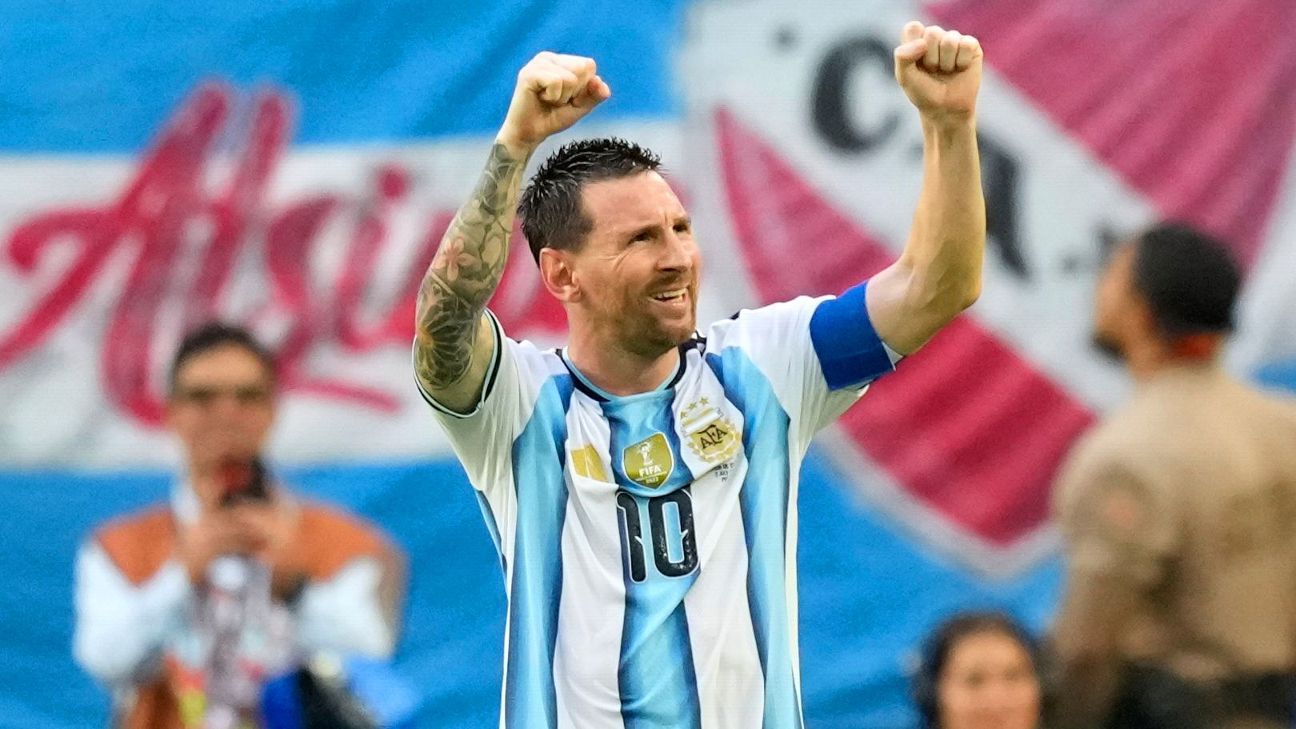
The Last Chapter
Lionel Messi is retiring from the Argentina national team. He announced it on Instagram with a handwritten notebook page dated July 21st – two days after Argentina lost the 2026 World Cup final to Spain. At the bottom, he added a footnote in pencil: After what happened with my dad, I am even more convinced than before.
Jorge Messi died on August 8th at a hospital in Rosario at age 68. The timing matters more than you might think. This is not a young man walking away from his prime. This is a 39-year-old who just played in his sixth World Cup, lost the biggest match of his life, and buried his father shortly after. The decision to hang up the national team jersey was made on paper before his father’s death. Real life confirmed it.
A Career in Numbers That Defy Comparison
Messi leaves Argentina as its all-time leading goal scorer with 125 goals in 207 appearances. He is also the country’s most capped player. Among South American footballers, no one has scored more. He won the 2022 World Cup in Qatar – Argentina’s first global title in 36 years, their third ever. Before that, he delivered the 2021 Copa América to end a 28-year trophy drought that followed the despair of three consecutive final losses in 2014, 2015, and 2016.
He actually retired in 2016. He reversed course months later. The second time around, he delivered everything. This time, there is no reason to reverse it.
The 2026 Final That Ended It All
Argentina reached the 2026 World Cup final and fell to Spain. The result was painful for a team built around Messi’s final act on the biggest stage. At 39, playing in his sixth tournament, he had nothing left to prove and everything to lose by continuing. The mathematics of international football are unforgiving. There will be no next cycle. No fourth attempt at redemption.
Spain’s victory in the final also signaled a generational passing that extends beyond Messi. The golden generation of European football – Messi, Cristiano Ronaldo, Neymar, de Bruyne, Modrić – is closing out. The 2026 final was arguably the last major tournament where this cohort still played pivotal roles on the world’s biggest stage. What happens when they are all gone? We are about to find out.
What Argentina Loses
Argentina loses more than a goalscorer. Messi was the focal point around which every tactical decision, every transfer strategy, every national team buildup revolved. Opponents spent entire matches planning how to neutralize him. Teammates adjusted their runs, their positioning, their confidence based on his presence on the ball.
Julián Álvarez, Alexis Mac Allister, Enzo Fernández, and Lautaro Martínez are the next generation. They have played alongside Messi for years. They know how to function in his system. But systems built around a single transcendent talent collapse when that talent leaves. Argentina will need to rebuild its identity around someone else. That process is never clean.
The emotional cost is heavier than the tactical one. Messi connected with Argentine fans in a way no player since Maradona did. The national team jerseys with his name on the back sell out across Latin America and Asia. Young boys in Rosario, Buenos Aires, São Paulo, and Tokyo wore number 10 and dreamed of playing like him. That lineage of aspiration continues, but the central figure has stepped away.
What Messi Keeps
He keeps 207 caps. He keeps 125 goals. He keeps the 2022 World Cup trophy. He keeps the peace of mind he described in his handwritten note – the certainty that he gave everything to the jersey, that there was nothing left unsaid between him and his country.
He also keeps Inter Miami. His club career continues in Major League Soccer, where his presence has transformed the league’s global profile. The international retirement does not affect his club commitments. He will keep playing. He will keep scoring. But the national team jersey, the one he described as something he will miss most, is gone.
The Bigger Picture
Messi’s retirement from Argentina is not just a sports story. It is a cultural moment that resonates across Asia, Latin America, and Europe. His fanbase spans continents. The handwritten note – personal, intimate, written in Spanish, posted on Instagram – felt like a letter rather than an announcement. That tone mattered. It felt human in an era where athlete communications are increasingly managed by agents and PR teams.
The broader implication for world football is the final closing of a door. The 2000s and 2010s were defined by Messi and Ronaldo dominating international tournaments. Their rivalry extended beyond clubs into World Cups, Copa Américas, and Euros. Now both have retired from their national teams. The 2026 cycle will be the first major tournament without either of them. Who fills that vacuum? Who becomes the face of international football next?
We do not know yet. But the question itself marks a transition. Messi’s retirement is not just an ending. It is the beginning of whatever comes after.
What Happens Next
Argentina will announce a new squad. The coaching staff will build around younger players. Fans will adjust to a post-Messi era. The 2028 Copa América and the 2030 World Cup will be the first tournaments where Messi watches from the stands rather than the pitch.
For those of us who followed his international career – the 2006 debut as a 19-year-old, the 2014 final heartbreak, the 2016 retirement, the return, the 2021 Copa América redemption, the 2022 World Cup triumph, the 2026 final defeat – this is genuinely sad. Not because Argentina will fail without him. But because some chapters close cleanly and some do not. This one closes with a handwritten note, a dead father, and a World Cup final loss. It closes on terms that feel heavy, not triumphant.
Messi understood that. He wrote: Time is running short, chapters come to a close, and this is one that hurts me deeply.
He was right. The hurt is real. The pride is also real. Both can coexist.
Let’s go, Argentina.