Messi's Exit From Argentina Leaves a Generation Without a North Star
Lionel Messi is ending his 21-year run with Argentina. The question isn't whether he'll miss the national jersey — it's what happens to a generation of Argentine players who learned to play international football watching him.
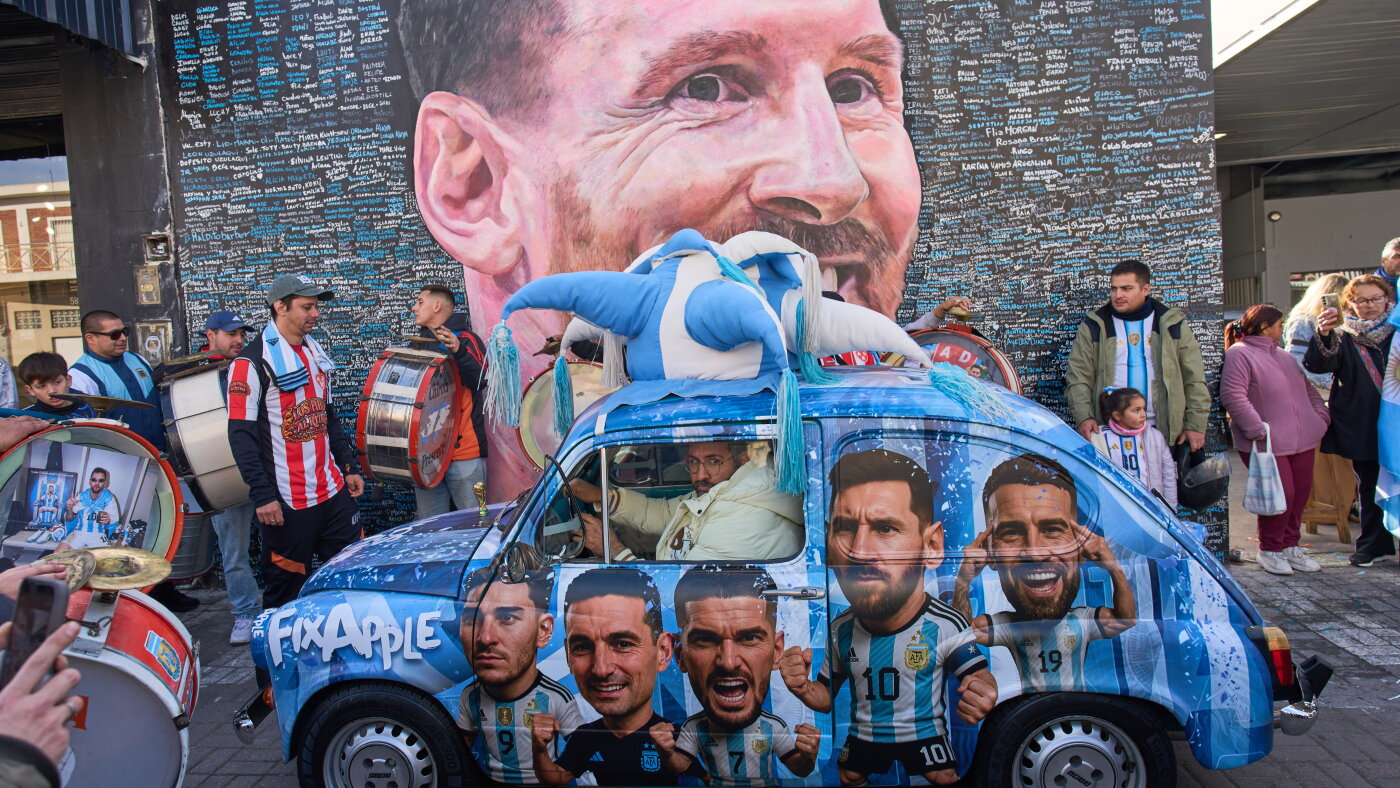
The Moment That Was Inevitable, Still Devastating
Lionel Messi announced his retirement from the Argentina national team on Monday. At 39, after 21 years and 207 caps, he is handing back the jersey that defined so much of modern football — and the timing could not be more symbolic. Two days after falling to Spain in the 2026 World Cup final, after his father Jorge had just died and before the funeral had even concluded, Messi sat down and wrote the letter that ends one of the longest solo runs in the history of international sport.
He scored 125 goals. Only Cristiano Ronaldo, at 146, has scored more for a single nation. Messi played in six World Cups. He won one. He reached two finals. He led his country through a decade of heartbreak before lifting the trophy in Qatar and then, improbably, carrying Argentina to another final in North America.
What he does next — and for how long — remains unclear. He will continue playing for Inter Miami, where he recently scored four goals in a 7-1 victory over CF Montreal. But the national team, the project that consumed his adult life, is now behind him.
A Pause, Not a Full Stop
This is not Messi’s first retirement from Argentina duty. In 2016, after losing the Copa América final to Chile on penalties — he missed one — he walked away. The national team went on to win nothing of note for another five years. Diego Maradona, then an illness-confined legend himself, publicly pleaded for Messi to return. The Argentine president joined the campaign. Messi came back. Argentina won the Copa América in 2021 and the World Cup in 2022.
The lesson from that episode is worth remembering: Messi does not simply play for Argentina. He changes what Argentina can do.
When he returns to the field, the world watches differently. When he steps away, a vacuum opens that no system or coach can immediately fill. That is the structural reality of a player whose presence recalibrates entire tournaments.
The Post-Messi Argentina
The most immediate question is who leads Argentina now. Julián Álvarez is the most natural successor in style — a forward comfortable playing off the shoulder of a defender, with the work rate to press and the finishing to punish. But he is only 24. The midfield engine of Rodrigo De Paul and Alexis Mac Allister is entering its second half. Enzo Fernández, the 2022 World Cup’s best young player, is still developing into his prime.
Scaloni built this team on a foundation of collective identity. Messi was always the focal point, but the system demanded sacrifice from every other player. That model does not survive intact if the focal point vanishes. Argentina will need to decide whether to build around a new centerpiece or to lean harder into collectivism — a path that worked briefly in 2018 when Messi barely mattered and Argentina still reached the quarterfinals.
Both options carry risk. Building around Álvarez or another emerging star assumes continuity in development. Leaning into collectivism assumes Scaloni can replicate chemistry across a new generation.
The Global Shift in Greatness
Messi’s retirement from international football creates an immediate void at the top of global football — not just for Argentina, but for the conversation about who is the best player on Earth. That conversation now belongs entirely to Kylian Mbappé, who finished ahead of Messi in the 2026 World Cup Golden Boot race and led France to glory in the United States and Canada.
Ronaldo remains the only active player with a comparable international scoring record, and at 41 he has yet to announce retirement from Portugal. But the Ronaldo-Messi era of dual dominance is over. Mbappé is the sole heir apparent, and the pressure on him will be enormous. Every tournament, every match, every moment will be measured against a standard that Messi set for two decades.
This matters beyond bragging rights. The narrative of a single dominant player shapes sponsorships, World Cup broadcasting deals, and the commercial architecture of the game. Argentina’s absence from that narrative changes the calculus for FIFA, CONMEBOL, and every league that sells tickets to fans who followed Messi through national team competition.
The Asian Angle Nobody Is Talking About
While European media focuses on Messi’s legacy and Argentina’s future, there is a quieter story playing out in Asia. A growing number of Argentine players — many born in the 1990s and early 2000s — have built careers in the J-League and K-League. Players like Exequiel Palacios, Nicolás González, and a wave of lesser-known veterans have found homes in Japan and South Korea, drawn by competitive football, reasonable salaries, and a culture that treats foreign players with a seriousness rarely seen in European leagues.
Messi’s retirement from Argentina duty removes the gravitational pull that kept countless young Argentines watching the national team. For a generation of players grinding through midtable J-League seasons or training in K-League satellite facilities, the national team announcement was always the high point of the year. It was the proof that the sacrifice of leaving Europe had purpose.
That purpose does not disappear. But it changes. The next generation of Argentines abroad will no longer have a global icon wearing their crest. They will have to find their own reasons to wear it.
What Comes Next
Messi said in his retirement letter that he would miss “hearing you all from the inside.” He will now cheer from the stands — or from his living room in Miami. The question for Argentine football is whether a country that produced Maradona, Messi, and an entire school of attacking genius can now produce enough players to fill the space his absence creates.
The data suggests yes. Argentina still has one of the deepest youth systems in the world. Players are still emerging from Rosario, from Buenos Aires, from the clubs that feed the national team. But data does not capture what Messi actually provided: the certainty that when the hardest moments arrived, a 39-year-old man would make them easier.
That certainty is now gone. What replaces it is the task for everyone else.