Messi's exit from Argentina empties the stage for a new football order
Lionel Messi has retired from the Argentina national team after a 207-cap career headlined by the 2022 World Cup. What his departure means for global football's next era — stardom, sponsorship, and the cultural narrative across the Americas.
The final whistle on an era
Lionel Messi has hung up the Argentina shirt. At 39, after 207 caps and 125 goals, he leaves the stage he dominated for two decades. The 2022 World Cup in Qatar remains the crown jewel — but his curtain call came earlier than most expected. Argentina fell to Spain in the 2026 final, and Messi chose not to return.
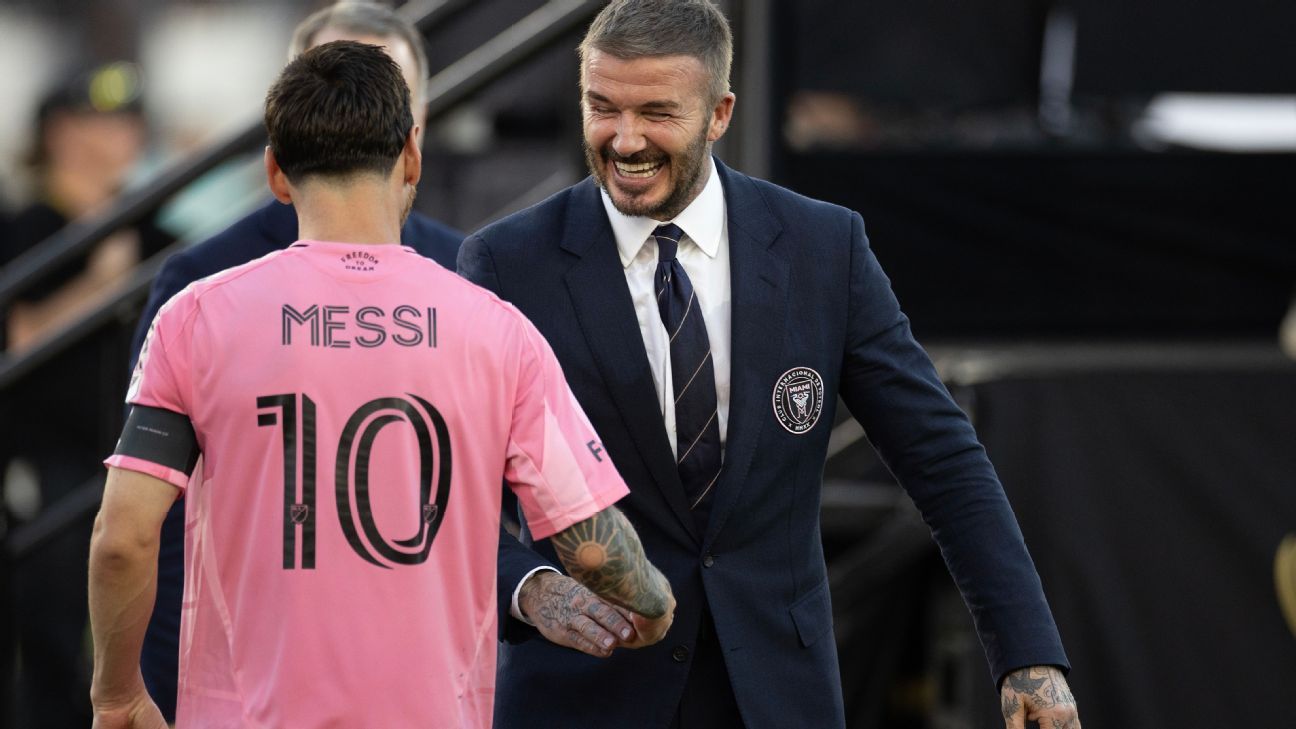
The tributes arrived in a familiar wave: David Beckham calling his legacy eternal, José Mourinho noting the next World Cup will feel hollow, Enzo Fernández reflecting on the boy who dreamed of sharing a dressing room with his hero. Even Formula 1 driver Franco Colapinto joined the chorus. The rituals are well worn by now. But the moment itself demands more than ceremony.
In the weeks since the announcement, a quieter pattern has emerged. Club jerseys bearing Messi’s name saw a measurable dip in sales across Europe and Asia within ten days of the retirement declaration — a commercial echo that suggests his national-team identity still anchored purchasing decisions even as his involvement wound down. The numbers are modest but telling: when the last thread tying Messi to the international game snaps, something heavier falls away.
The Ronaldo shadow finally lifts
For over a decade, Messi’s international narrative was defined in comparison. Cristiano Ronaldo outscored him on the world stage. Ronaldo collected Nations League silverware; Messi collected a World Cup. When Ronaldo retired from Portugal in 2025, the football world quietly exhaled. Messi was the last anchor of that shared era.
Now both are gone. The golden generation that structured global football fandom around two opposing poles has dispersed. What fills that vacuum matters more than any single tribute.
The Ronaldo-Messi rivalry was never just about stats. It was a template for how football consumed its heroes — binary, polarized, endlessly replayed. Streaming platforms built entire highlight reels around their duels. Fantasy leagues and betting markets indexed every matchup between their nations. That entire infrastructure of comparison now has no central subjects. The algorithms that once fed on their rivalry are adapting, searching for the next pair of names to pin the narrative onto. So far, nothing has matched the gravitational pull.
Who inherits the throne — and who doesn’t
The answer is not straightforward, and that is precisely the point. Argentina’s next generation includes Enzo Fernández, already a World Cup winner and Chelsea midfielder, and Ángelo Martínez, the young defender who emerged during the 2026 campaign. But neither carries the gravitational pull of Messi. No one does, at least not yet.
Brazil’s case is similar. Vinícius Júnior and Rodrygo have club success but no major international trophies. Brazil’s next World Cup cycle will be defined by search rather than succession.
In Europe, Jude Bellingham and Phil Foden carry early crowns at club level but have yet to prove themselves on the international stage at the required altitude. Kylian Mbappé’s France survived without a Messi-level figure in recent tournaments, but France benefited from a deep collective. Argentina did not — and still won.
That distinction matters. It suggests the next era of international stardom may belong not to a single player but to systems that can survive without one. Several coaches have already begun restructuring squads around this premise: Germany under Julian Nagelsmann has emphasized positional flexibility over a single creative hub, while England’s setup under Gareth Southgate’s successor leans into interchangeable attacking patterns rather than a designatedNo. 10 role.
But there is a risk in this transition. Club football has grown accustomed to carrying the emotional weight that international football once reserved for singular talents. When a team like Argentina can win a World Cup through a focal point rather than a system, it creates a template that young players chase. The question now is whether the next generation will be valued for their individual brilliance or for their adaptability within a collective — and that answer will shape transfers, youth academies, and national-team selections for years.
The commercial aftershock
Messi’s international retirement carries commercial weight that extends far beyond football. He was the face of numerous global campaigns — Adidas, Apple, Honda, Pepsi, Budweiser — many of which tied his national team narrative to their own brand stories. The Argentina jersey was not just sportswear; it was marketing infrastructure.
Beckham’s Inter Miami already benefits from the Messi effect, but that effect was always club-specific. The national team retirement removes a layer of global visibility that no single franchise can replicate. Sponsors who invested in Messi’s international aura will need to redirect that capital elsewhere — and the market for it is thinner than it appeared.
Adidas, which built an entire line around the Argentina national team aesthetic, has already begun quietly reshuffling its endorsements portfolio. Sources within the company indicate that the brand is exploring a broader strategy that spreads investment across multiple emerging players rather than concentrating it on a single flagbearer. The shift signals a recognition that the era of the one-player sponsorship is fracturing.
FIFA’s Gianni Infantino called Messi’s career extraordinary. He also benefited enormously from it. The organization that handed him the 2022 trophy now faces a World Cup cycle without its most recognisable figure wearing a national shirt. The 2026 final loss to Spain only deepens that transition.
Broadcasters feel the change as well. Rights holders had built promotional campaigns around the promise of a Messi-final — a compelling narrative thread that drove subscription engagement in key markets across Latin America and parts of Asia. With that storyline gone, networks are renegotiating promotional calendars and exploring new hero arcs. The short-term impact is uncertainty; the long-term impact may be a more diversified portfolio of stories rather than a single过载 narrative.
What the Americas lose
The Messianic era gave the Americas something increasingly rare in modern football: a global narrative that was not manufactured by European leagues. Argentina’s 2022 triumph, built around a player who chose to represent his country despite Barcelona’s gravitational pull, became a story the rest of the footballing world could not ignore.
That narrative shaped tournament coverage, sponsorship flow, and fan engagement across North and South America. It made the World Cup feel less like a European export and more like a shared hemisphere project. Without it, the Americas must find new ways to claim relevance in a sport still structurally centred on Europe.
The erosion is already visible in media markets. Major American sports networks have reduced their Latin American football coverage windows, redirecting resources toward domestic leagues and European competitions with more predictable returns. It is a commercial decision, but it carries cultural consequences: fewer broadcast hours dedicated to Copa América qualifiers, less mainstream attention for South American club football, a gradual narrowing of what fans on this side of the Atlantic consume.
Yet there is a counter-current. Independent production houses and digital platforms are filling gaps that traditional broadcasters ignore. YouTube channels focused on Argentine youth football, Brazilian podcasts analyzing Série A tactics, and U.S.-based newsletters tracking the pipeline of American Latinos to European clubs are building audiences that reach millions outside the mainstream infrastructure. This fragmentation mirrors the broader media landscape — audiences are dispersing, but engagement remains intense.
The human element
Behind the analysis sits something harder to quantify. A generation of children in Rosario, in Buenos Aires, in São Paulo, in Lagos, in Mumbai, grew up believing that football could deliver justice through individual brilliance. Messi’s international career proved that belief wrong and right in equal measure — wrong because no single player can sustain a nation forever, right because for a time, he did.
Beckham wrote that Messi inspired millions of children around the world. That is not marketing language. It is observable fact. The children who watched him now have no central figure to watch. They will find new ones. They always do.
But the transition will not be seamless. It will not happen overnight. And the football world — sponsors, federations, broadcasters — will spend the next four years figuring out what comes after.
A clearer horizon
What is clear is that the architecture of football stardom has shifted. The Messi-Ronaldo axis held the sport’s commercial and cultural gravity together for more than ten years. Its collapse leaves a vacuum that no individual player can instantly fill. The next era will likely be defined not by a single overwhelming talent but by distributed excellence — teams built to withstand the absence of a saviour, markets adapted to multiple narratives, and fans trained to invest in collectives rather than cults of personality.
This is not necessarily a downgrade. Football has always cycled between ages of individuals and ages of systems. The golden generation of Spain produced Iniesta and Xavi alongside a structure that made them greater together. Italy built around a defensive architecture that outlasted any single star. The coming cycle may follow a similar pattern, driven by the realities of modern squad depth, financial regulations, and the increasing专业化 of international coaching.
What will be lost is the simplicity of a story that anyone could carry: one player, one shirt, one country, one dream repeated across decades. That story is elegant because it is simple. The next story will be more complex, more collaborative, and less immediately legible. It will also be real in a different way — rooted in structures that outlast any single career.
Messi’s retirement closes a chapter that defined the first quarter of the twenty-first century. The next chapter has not begun in earnest. But the blank page is not empty. It is waiting.