Nagoya's Floods Expose Asia's Mega-Event Climate Risk
Record flooding in Nagoya days before the Asian Games opens an uncomfortable question: when climate extremes accelerate, can East Asia still host mega-events on schedule? The answer matters far beyond sports.
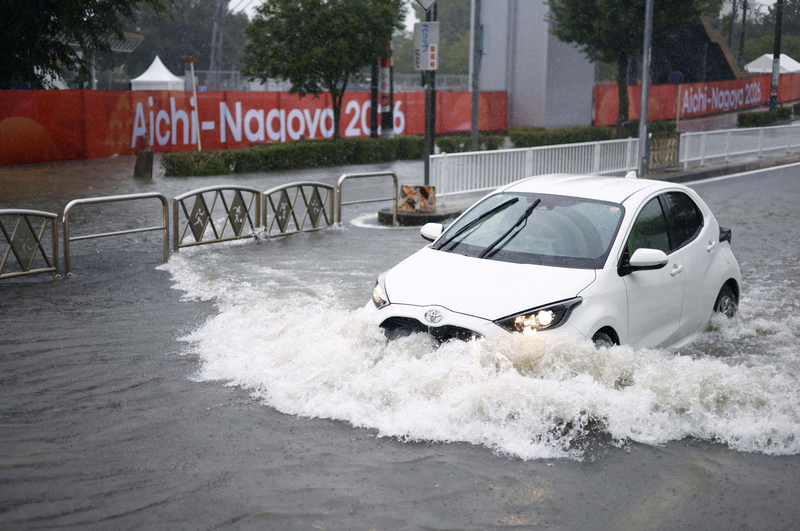
When the Rain Won’t Stop Before the Games
Nagoya received 104.5 millimeters of rain in a single hour on August 8. That is not a typo. It is the kind of downpour that turns city streets into rivers, submerges vehicles, and triggers the highest-level disaster warnings Japan has ever issued. The water rose faster than traffic signals could redirect drivers. Commuters found themselves stranded on overpasses as underpasses became pools. Emergency services logged hundreds of calls in the first two hours alone.
The Showa River hit Level 5 flood emergency — the top tier of Japan’s five-stage disaster alert system. In Nagoya itself, authorities first issued a Level 5 “emergency safety assurance” order, then downgraded it to Level 4 evacuation directives as the worst of the rain passed. Schools closed. Athletes already in-country were told to evacuate their accommodations. In one venue, water seeped through floor joints and pooled around electrical systems, forcing a partial shutdown hours before test events were scheduled.
All of this came with the Aichi-Nagoya Asian Games days away.
The Collision Nobody Saw Coming
The more interesting story here is not the flooding itself. Japan expects heavy rain. Typhoons are a seasonal fact of life. The real story is the collision of two timelines: one drawn up by event organizers years in advance, and another rewritten by a warming climate in real time.
Venues reported leaks. Water intrusion inside competition facilities is not a minor inconvenience when you are preparing to host thousands of athletes and millions of viewers. The fact that multiple venues were affected suggests the problem is systemic, not isolated to one poorly sealed roof. Drainage capacity across the Nagoya metropolitan area was designed for rainfall intensities recorded over the previous forty years. Those intensities have already been exceeded three separate times since 2020.
This raises a question that East Asian capitals do not like to discuss publicly: how many mega-events are being planned on schedules that no longer match the climate reality of their host cities? Bidding cycles span six to eight years. Construction timelines lock in concrete decisions. By the time a Games opens, the climate baseline it was designed around may already be obsolete.
Who Wins, Who Loses
The immediate loser is Nagoya, which now faces cleanup costs, reputational damage, and the logistical nightmare of potentially postponing or canceling events it has spent years preparing for. The city has already invested heavily in infrastructure upgrades and international marketing. Flooding undercuts all of it. Local businesses that anticipated a surge in visitors are now counting losses. Hotels that filled their cancellation windows are wondering whether demand will recover or retreat.
Athletes are also on the receiving end. They trained for four years. Some traveled months in advance. To tell them to evacuate their hotels is to disrupt their preparation, their routines, and their confidence. The psychological toll of uncertainty is real, even if no competition has officially been canceled. Coaches reported athletes struggling to maintain focus when daily logistics became survival calculations. Warm-up schedules dissolved into improvisation.
Japan’s disaster management system, for all its sophistication, is designed for gradual-onset threats or predictable typhoon tracks. What happened in Nagoya was faster and more concentrated than the models anticipated. The stationary front combined with a weakening tropical depression created a setup that dumped extreme rain over a small area for an extended window. That is the new normal, and the new normal is expensive.
Second-Order Effects Already Emerging
The ripple effects are already visible beneath the surface. Insurance underwriters are reassessing risk models for outdoor events across the region. Companies that underwrote the Asian Games at pre-2020 rates may face claims that exceed their projections. Reinsurance markets, which underpin primary policies worldwide, are beginning to price climate volatility into large-scale event contracts. Premiums for comparable events in Southeast and East Asia could rise by twenty to thirty percent within the next two years.
Supply chains are feeling pressure too. Construction materials for venue repairs must be sourced and shipped under urgent conditions, driving up costs and creating delays that extend beyond Nagoya. Local contractors who signed fixed-price agreements are absorbing unexpected expenses. Some are questioning whether they should continue bidding on future public events at all.
Media coverage is shaping the narrative in ways organizers cannot fully control. International broadcasters filmed rising water, evacuated athletes, and closed venues. Those images will circulate regardless of how the Games ultimately proceed. Every major event in the region now carries an implicit question: what happens if the rain comes?
What Happens Next
The Japan Meteorological Agency warned that rain could continue through August 10, with up to 200 millimeters possible in the Tokai and Kinki regions. That is not a forecast for recovery. It is a forecast for more damage.
If the Asian Games proceed as planned, they will do so under conditions that expose a fundamental vulnerability: East Asia’s event infrastructure was built for a climate that no longer exists. Flood defenses, drainage systems, and venue construction standards were calibrated against historical weather data. That data is now a poor predictor of future conditions. Engineers who designed the Showa River barriers twenty years ago could not have foreseen the rainfall rates documented in August 2024.
Insurance markets will notice. Premiums for large-scale outdoor events in vulnerable regions will rise. Organizers will face harder choices about where to hold competitions and whether to invest in temporary flood protections or accept the risk of disruption. Some cities will quietly begin removing themselves from bidding pools.
The Bigger Pattern
Nagoya is not an isolated case. Seoul flooded severely in recent summers, displacing tens of thousands and shutting down transit lines during peak sporting seasons. Beijing’s 2008 Olympics were shadowed by air quality concerns that have only intensified. Bangkok, Kuala Lumpur, and Jakarta all host major events while sitting on increasingly unstable flood plains. Jakarta is already planning to relocate its capital precisely because flooding has made large-scale operations untenable in parts of the city.
What makes the Asian Games particularly revealing is that they are supposed to showcase host-city readiness and technological capability. When the water gets in, the narrative flips. The event becomes proof of vulnerability rather than proof of strength. Diplomatic messaging depends on visibility and control. Floods provide neither.
Sports diplomacy has always carried symbolic weight. But diplomacy requires stability. When the weather itself becomes unpredictable, the symbolic value of hosting erodes. Nations that once saw mega-events as prestige projects may start to see them as liabilities. The calculation is not abstract — it is already appearing in back-channel discussions among potential host cities.
The Uncomfortable Math
Here is what the numbers tell us: Japan recorded its hottest year on record in 2023. Rainfall intensity has increased across the country over the past three decades. The Stationary Front that dumped rain on central Honshu is migrating and behaving differently than it did twenty years ago. These are not marginal trends. They are structural shifts.
Event timelines, by contrast, are rigid. Bids are won years in advance. Construction contracts lock in schedules. Sponsors sign on based on dates that cannot be easily moved. When the climate shifts faster than the schedule, someone loses. In Nagoya’s case, the losses are already visible: flooded roads, leaking venues, evacuated athletes. The secondary losses — insurance costs, reputational damage, eroded confidence in East Asia’s ability to host — have not yet appeared on any balance sheet. They will.
There is also a generational dimension. Younger athletes entering the current cycle will have never known a climate where mega-events proceeded without weather disruption. Their expectations will shift. Sponsorship models built on predictability will face pressure. The entire ecosystem surrounding international sports — from broadcasting rights to hospitality packages — assumes a stability that is no longer guaranteed.
The Close
The Asian Games may happen. They probably will. Organizers have too much invested to admit defeat, and the region has too much riding on continuity. But the image that lingers is not of athletic triumph. It is of water rising past the flood barriers, past the evacuation warnings, past the timelines everyone agreed on.
That image belongs to a different era. The question is whether East Asia is ready to admit it.
The next host city will inherit the same problem. So will the one after that. Climate change does not respect bidding cycles or construction deadlines. It moves on its own timeline, and that timeline is accelerating. The cities that adapt最快 will be the ones that stop treating extreme weather as an exception and start treating it as the baseline. Until then, every mega-event is a gamble — and the house is learning that the odds have changed.