NASA's Nuclear Mars Gambit Changes Everything
NASA's SR-1 Freedom mission marks the first time the U.S. will test nuclear electric propulsion on an interplanetary trajectory. The implications stretch far beyond Mars — they define who controls deep space next.
The real target isn’t Mars
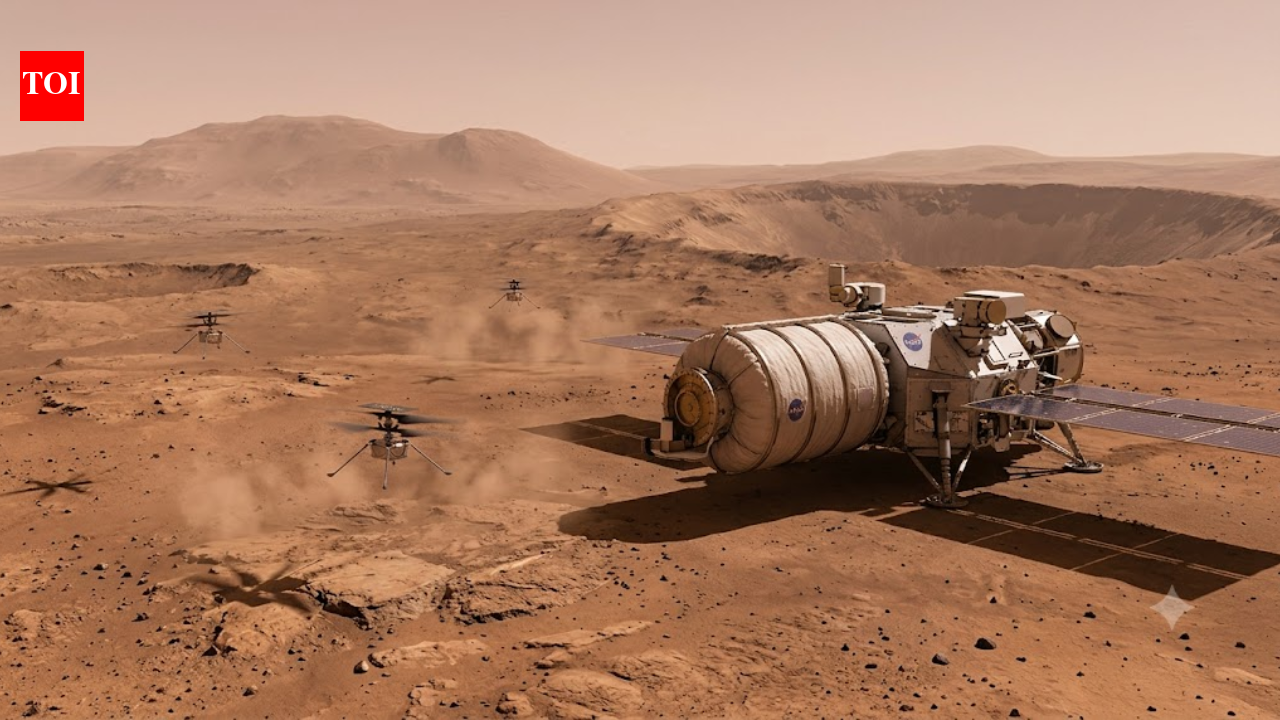
NASA’s Space Reactor-1 Freedom mission, launching in late 2028, will not land on Mars. It will fly past the planet, drop three helicopters, and then keep going. That trajectory is deliberate. The spacecraft is proving that a nuclear reactor can power propulsion in the deep solar system — a capability no American spacecraft has ever demonstrated.
The mission carries 48 kilowatts of electrical power generated from fission, with a 12-kilowatt Hall thruster as its propulsion heart. Conventional solar arrays stop making sense past Mars. By late 2026, NASA called Freedom “the first nuclear-powered interplanetary spacecraft.” That phrasing matters. It is not a prototype or a tech demo in name only. It is the first operational test of nuclear electric propulsion beyond Earth orbit, and the first time the United States is betting on fission to move hardware through interplanetary space.
Why nuclear electric, not nuclear thermal
There are two paths for nuclear space power. Nuclear thermal propulsion heats propellant directly and delivers high thrust for short bursts. Nuclear electric propulsion generates electricity from fission and then uses that power to ionize and accelerate propellant — slower acceleration, but dramatically better fuel efficiency over long durations.
Freedom is electric. That is a strategic choice. Electric propulsion lets you carry less propellant mass for the same delta-v, which means more payload or longer missions. It is the difference between a spacecraft that arrives and a spacecraft that lingers. NASA’s vision extends well past Mars: nuclear electric propulsion is meant to support missions to the outer planets, where sunlight is too weak to power solar arrays at all.
The reactor uses high-assay low-enriched uranium, a form of fuel already familiar from civilian nuclear programs but one that adds new proliferation dimensions when launched into space. NASA lists the power-conversion system at 20 kilowatts electrical output, feeding into the spacecraft’s combined power and propulsion element. That hardware stack is being designed to fly — not to sit on a test stand.
The SkyFall payload: three helicopters with a purpose
While the reactor does the heavy lifting, Freedom’s SkyFall payload does something quieter and more surprising. It deploys three helicopters derived from the Ingenuity design — the same aircraft that proved powered flight was possible on Mars in 2021.
Flying on Mars is brutally difficult. The atmosphere is roughly one percent as dense as Earth’s. The rotors have almost nothing to push against. The SkyFall helicopters are engineered for that thin air, and NASA says they could remain operational for months or even years if conditions allow.
These are not cameras on sticks. Each helicopter carries ground-penetrating radar and imaging equipment, plus instruments to measure air temperature, wind speed, and wind direction. The radar is the critical piece. It can detect subsurface ice — water frozen beneath the Martian regolith — and estimate how deep it lies and how far it extends. Finding accessible water ice is not a scientific curiosity. It is a resource map for future human exploration.
NASA is planning the deployment over relatively flat, low-elevation terrain for a reason. The data collected will feed directly into site selection for future missions. A helicopter that can probe the ground from the air changes what engineers can evaluate before committing a rover or a crewed lander.
Building precedent, not just hardware
NASA has been explicit about what Freedom is supposed to achieve. It is not a finished product. It is flight heritage for nuclear hardware, a regulatory and launch precedent, and a foundation for the industrial base needed to build larger fission systems later.
The March 2026 announcement framed the mission as a bridge — moving nuclear propulsion from the laboratory into deep space. That language is not marketing. The United States has not operated a nuclear reactor in space since SNAP-10A, which launched in 1965 and ran for 43 days producing roughly 600 watts. Freedom aims to do in two years what SNAP-10A did in six weeks, at nearly 100 times the power.
The lessons from Freedom are already feeding into Lunar Reactor-1, NASA’s planned fission surface power system for the Moon. That system could produce up to 40 kilowatts of electricity during the long lunar night. Testing a reactor in flight first — where things can go wrong without a crew on hand — is the safer path. It establishes operating procedures, radiation safety protocols, and thermal management strategies before anyone tries to put a reactor on the lunar surface.
The geopolitical silence
No NASA briefing on Freedom mentions China. That omission is itself a signal. Beijing has been developing its own nuclear space capabilities for years, including tests of nuclear thermal propulsion and plans for fission surface power on the Moon. China’s 2024 launch of a nuclear-powered satellite tested technologies that could eventually support crewed missions to Mars.
The race to master nuclear propulsion is not just an engineering competition. It is a question of who controls the timelines for deep-space exploration. A nation that can send heavier payloads faster, sustain longer missions, and power surface habitats through dark winters will shape the architecture of human presence beyond Earth. Freedom is the United States’ opening move.
What happens after Mars
If Freedom succeeds — and there is no guarantee it will — the path ahead becomes clearer. Nuclear electric propulsion could shorten transit times to Mars, increase cargo capacity, and enable missions to the Jovian system that are currently impractical. It could make crewed lunar outposts viable through the two-week lunar night. It could turn asteroid missions from multi-year gambles into routine operations.
If Freedom fails, the United States falls further behind whatever timeline China is already operating on. The reactor could malfunction. The propulsion system could underperform. The regulatory environment around launching fission material into space is still evolving, and any incident — even a minor one — would set back the entire program for years.
The launch window is late 2028. The Mars flyby is expected in 2029. Between now and then, NASA is building something it has not built since the Apollo era: a system that redefines what a spacecraft can do far from Earth. The helicopters will film the ground below. The reactor will power the journey. And the data from both will decide whether nuclear propulsion becomes the standard engine of deep-space exploration — or remains an experiment that never leaves the drawing board.