NASA’s Lunar Miscalculation Could Contaminate Its Best Science
A new NASA study shows spacecraft-associated microbes can survive for weeks in the Moon’s permanently shadowed south polar craters. The finding upends decades of planetary protection assumptions and threatens to compromise the very ice deposits Artemis aims to study.
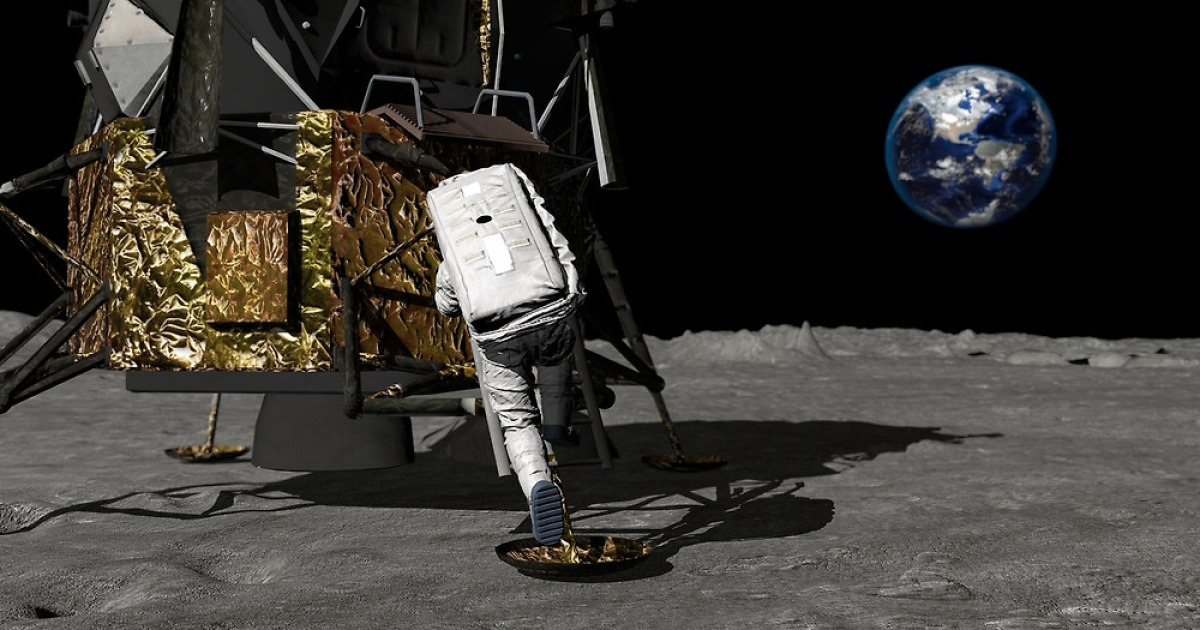
The Assumption That Could Cost Artemis Its Cleanest Data
NASA has spent decades operating on a simple premise: the Moon is too hostile for Earth life to survive contact. The vacuum, the radiation, the extreme temperatures—microbes hitchhiking on spacecraft supposedly bake or starve within hours. That assumption became the bedrock of planetary protection policy and allowed the Artemis program to proceed with relatively relaxed contamination controls.
A new study published in Science Advances challenges that premise, and the implications run straight through the heart of lunar exploration planning. Researchers at NASA’s Goddard Space Flight Center mapped permanent shadow zones at the lunar south pole and calculated ultraviolet exposure down to five-meter resolution across candidate landing sites for Artemis 3. The result is unambiguous: certain microorganisms carried on spacesuits, landers, or human gear can persist for days or even weeks in those cold traps—long enough to contaminate the very ice and organic deposits scientists are traveling to study.
How the Math Changed
The earlier foundation for this debate came from a 2019 analysis concluding that Apollo-era microbes left near the lunar equator likely perished quickly. That study treated the Moon as uniformly lethal. It did not account for topography.
At the poles, sunlight strikes the horizon at a shallow angle. Ridges and crater walls throw long, permanent shadows. Within those zones, surface temperatures rarely climb above the growth thresholds of common spacecraft-associated organisms. The new model overlaid orbital laser altimetry with thermal data to chart exactly where UV radiation never reaches and how long any surviving spore or fungal cell might endure in those pockets.
Five organisms were tested: three bacteria and two fungi. Their upper growth temperature ranges sat between 41 and 58 degrees Celsius. Lunar summer surface temperatures in the south pole’s shadowed regions mostly stay below that ceiling. Temperature alone, then, does not sterilize them.
Ultraviolet radiation is the real barrier—and the new paper shows that barrier is uneven. Aspergillus niger, a common black mold frequently isolated from the International Space Station and known to repair damaged DNA, proved the most resilient. In simulated winter conditions, it could persist for more than a day across roughly 30 percent of the Artemis 3 candidate sites. Other organisms fared worse but still survived: Deinococcus radiodurans endured one-fifth to one-ninth as long, while Staphylococcus aureus and Bacillus subtilis held out for one-eleventh to one-thirtieth of that duration. In permanently shadowed craters, all five species remained viable for over a week under the tested parameters.
The Catch That Changes Everything
The authors are careful to state that surviving is not the same as thriving. Without liquid water, metabolic activity halts. These organisms would enter a dormant stasis, not a bloom. But dormancy is enough to ruin a scientific baseline.
The lunar south pole’s permanently shadowed regions are considered among the most pristine archives in the solar system. Water ice, ammonia, and complex organic molecules deposited billions of years ago are thought to be preserved there. If Earth microbes land, settle into those shadows, and later decay or leave chemical traces, distinguishing native solar system organics from terrestrial contamination becomes nearly impossible. The signal scientists are hunting for could be drowned out by noise from their own boots.
Human activity makes this worse. Footprints press regolith into denser layers. Rover tires carve fresh tracks. Dug trenches expose subsurface material. Each disturbance can shift microclimates, briefly trap moisture from outgassed volatiles, or create shaded refuges that extend microbial survival beyond open-slope calculations. The paper notes these engineered microhabitats explicitly.
Who Wins, Who Loses
The immediate loser is the assumption that NASA can land “clean” without strict pre-mission sanitization. Current planetary protection guidelines for crewed lunar missions rely on the idea that the environment handles contamination automatically. This study suggests that assumption is outdated for polar regions.
The Artemis program faces a direct tension. Artemis 3 is scheduled for 2027. It will place humans at the lunar south pole for the first time. If contamination risks are real, spacecraft assembly, launch, transit, and descent require tighter controls—or the mission risks returning data that cannot be trusted. Stricter protocols mean longer testing cycles, heavier shielding, and potentially revised lander designs. NASA’s timeline could slip. Contractors who built hardware under looser contamination categories may face mandatory redesigns. Scientists who expected uncontaminated polar ice cores lose their clearest access to billions of years of undisturbed solar system chemistry.
The winner is planetary protection as a discipline. For years, lunar contamination policy lagged behind Mars-level precautions because the Moon was considered an environment that naturally sterilizes visitors. This research forces a recalibration. It also highlights a gap in international standards. Unlike Mars, which has well-defined COSPAR categories, lunar missions still operate under fragmented guidelines. A credible finding like this could push NASA, the ESA, and JAXA toward unified polar contamination frameworks before the first human step falls.
The Unmeasured Variable
The authors acknowledge a limitation that actually strengthens the warning: their model did not fully incorporate DNA repair kinetics during gradual UV exposure. If organisms can continuously fix damage rather than taking lethal hits all at once, survival windows widen. That means the real contamination risk may be higher than calculated, not lower.
This is also why the Korean press pickup matters. Framing the study as a challenge to NASA’s “calculation error” captures a broader truth: space agencies have historically treated lunar sterilization as solved. New orbital data and revised thermal models expose how quickly old assumptions become obsolete. The column tag in the Korean coverage signals how quickly domestic scientific outlets are treating NASA-generated lunar science as immediate policy material. That shift reflects a maturing global awareness that lunar exploration is no longer just about flags and footprints—it is about preserving a scientific record.
What Comes Next
The most likely outcome is not a mission delay but a protocol overhaul. Expect NASA to revisit cleanliness requirements for south pole–destined hardware before the next flight hardware review. Exosuit materials, airlock cycling procedures, and landing zone selection will face mandatory scrutiny. Sample return instruments may require additional contamination-proofing layers, including sterile barriers and post-landing UV sterilization checkpoints. International partners will likely demand shared standards rather than unilateral NASA rules, especially as the Commercial Lunar Payload Services program expands private access to the same polar regions.
For the public, the takeaway is simpler. We are sending people back to the Moon not just to explore, but to mine data that could rewrite chapters of solar system history. Every boot print is a potential variable. Every shadowed crater is a vault. If we want the Moon to answer questions about life’s origins, we first have to stop carrying our own answers into the room.