Nasdaq Correction Hits Korea as Tech Selloff Wipes Out Gains
The Nasdaq's 5.3% crash just erased all 2026 gains and pushed Dow and S&P into correction territory. Here's what it means for Korean portfolios already heavy in semis.
The Nasdaq Just Lost Its Entire Year
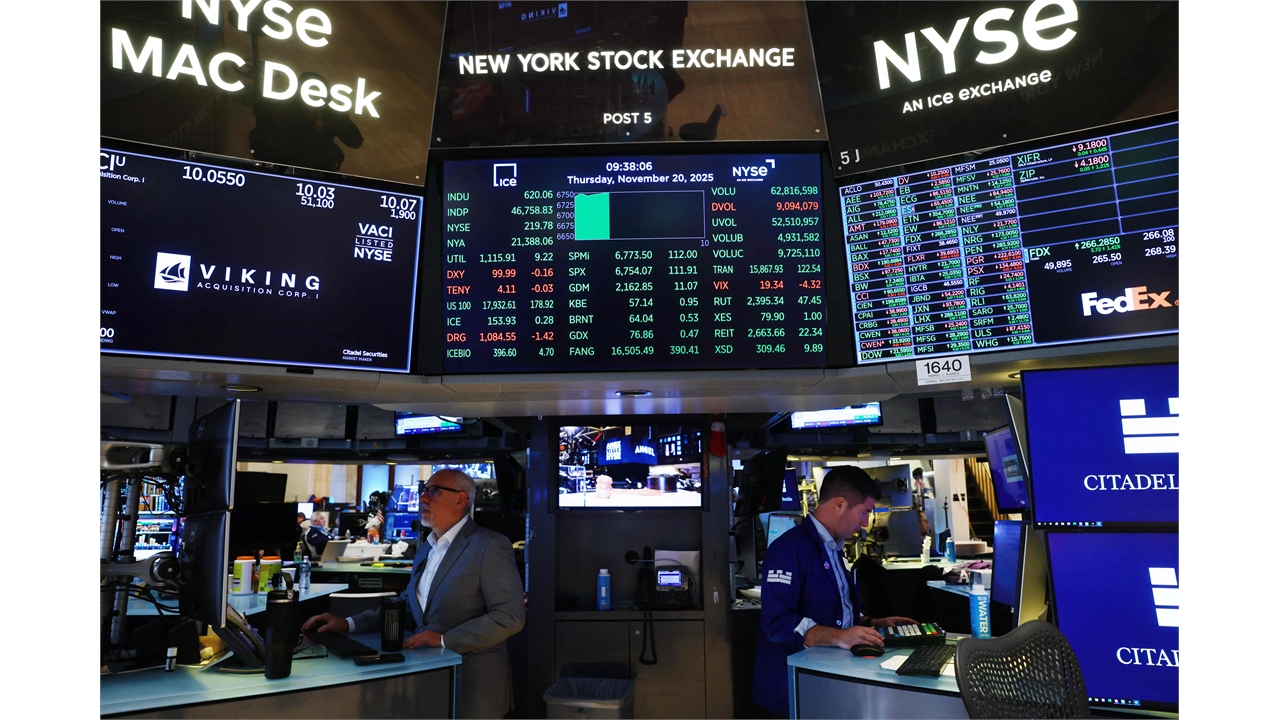
The Nasdaq composite fell 5.28 percent on Thursday, closing at 22,617.73. More important than the percentage move is what it erased: every single point of gain the index recorded in 2026. That kind of back-to-front wipeout does not happen without structural panic behind it.
The Dow Jones industrial average slipped 1.93 percent to 48,147.33, while the S&P 500 dropped 3.7 percent to 6,910.39. Both indices have now fallen more than 10 percent from their recent highs — the textbook definition of a correction. The Nasdaq qualifies by an even wider margin.
This is not a routine pullback. Three major U.S. benchmarks simultaneously entering correction territory signals broad-based de-risking, not sector-specific profit-taking.
Good Earnings, Bad Mood
What makes this episode especially jarring is the backdrop. Nvidia had just reported strong quarterly results. Anthropic, the AI company backed by Google and Amazon, was in its second day of trading and had been one of the most eagerly anticipated listings of the year.
Neither catalyst held.
Nvidia shares tumbled 14.01 percent, hitting a 52-week low. Anthropic reversed course on its debut, falling 8.5 percent and briefly touching its $83 offering price intraday. When even a fresh IPO with massive demand cannot find support, and a chip giant with excellent earnings drops to new lows, the message is unambiguous: investors are selling everything tech-related, indiscriminately.
Market psychology has shifted from cautious optimism to outright flight. The presence of strong fundamentals alongside aggressive selling suggests the drive to exit is not driven by corporate performance but by macro-level fear — likely tied to tariff uncertainty, interest rate expectations, or both.
Why This Matters for Korean Portfolios
The United States may be posting the headlines, but the shockwaves are already rippling through Seoul. Korea’s KOSPI and KOSDAQ are structurally exposed to the same semiconductor complex that drove Nvidia’s rally and now bears its punishment.
Samsung Electronics and SK Hynix are among the heaviest constituents of South Korea’s benchmark indices. HBM memory — the high-bandwidth chips that power Nvidia’s GPUs and Anthropic’s models — is effectively a single-product economy for both firms. When Wall Street sells semiconductors, Korean exchange-traded funds feel it first.
The correlation between Nasdaq semiconductor names and Korean chip stocks has historically run above 0.8 during sustained trends. A 5.3 percent Nasdaq decline does not produce a proportional drop in Seoul, but it does not leave it untouched either. Expect KOSPI to open lower and chip-sector ETFs to face immediate selling pressure regardless of local fundamentals.
Korean Institutional Response Is Already Shaping Up
Domestic brokerages are moving quickly to reassess position sizing. Several major Korean investment firms have reportedly begun trimming exposure to U.S. tech names held through QDII channels, redirecting capital toward domestic dividend plays and defensive sectors. The speed of reallocation has surprised some fund managers who expected a simpler bounce given the lack of negative earnings news from individual companies.
Institutional investors are also re-examining currency hedging costs. The won has strengthened sharply over the past several months as export data held up and geopolitical risks temporarily subsided. A deepening risk-off mood could reverse that flow within days. A weaker dollar against the won would further compress returns for Korean investors holding unhedged U.S. equity positions — exactly the group that has been accumulating tech exposure through foreign brokerage accounts over the past two years.
Retail participation in U.S. markets through platforms like Rakuten Trade and Kiwoom Securities has grown substantially. These smaller accounts are less equipped to absorb sudden drawdowns and tend to sell into declines rather than buy them, creating a feedback loop that amplifies volatility. Brokers in Korea have warned clients about elevated margin call risk on leveraged foreign-stock positions.
The Son Byung-jin Factor
The sale pressure comes at an awkward time for Korean industry itself. Reports have emerged that SoftBank founder Son Byung-jin had floated a potential acquisition of SK Hynix valued at roughly one trillion dollars before pivoting elsewhere. That bid never materialized. But the very fact that it entered public discussion signals how aggressively foreign capital was circling Korean semiconductor assets heading into this downturn.
A correction gives those assets a discount. It also gives them more reasons to wait. If global demand for AI chips softens even modestly — and the Nvidia selloff suggests it might — M&A valuations for memory makers will compress across the board. That is bad news for any remaining hopes of a premium takeover and better news for Korean policymakers trying to preserve strategic ownership.
What Comes Next
Three scenarios dominate the near term.
First, a sharp policy response from the Federal Reserve could arrest the slide within days. Rate-cut speculation has already intensified, and any overt signal from Fed officials would likely trigger relief buying, especially in growth-oriented Asian markets including Korea.
Second, if the selloff persists without a catalyst, expect a wave of corporate buybacks from Korean manufacturers. Samsung and SK Hynix have ample cash reserves and a history of deploying them when shares fall below intrinsic value. Those programs would cap downside but not reverse it without external demand recovery.
Third, and perhaps most relevant to everyday investors, is the possibility that this correction exposes a deeper structural shift: that the AI infrastructure buildout priced into these stocks requires significantly more time and capital than Wall Street initially assumed. Nvidia’s strong earnings did not stop the selling. That gap between fundamentals and valuation deserves scrutiny.
For Korean portfolio managers, the immediate task is simple: reduce leverage, increase cash, and avoid catching falling knives in names that traded on momentum rather than margins. The correction in New York is now the correction in Seoul. Timing matters more than conviction.