NATO's Drone Test: Lithuania Incident Reshapes Eastern Flank Deterrence
A NATO jet shot down a Russian drone over Lithuanian airspace, marking the alliance's most serious Eastern flank confrontation since Ukraine began its full-scale invasion. The incident is a live-fire exercise in Article 5 credibility—and a warning that collective defense is now being tested in real time.
The Incident: A Shot Across the Bow
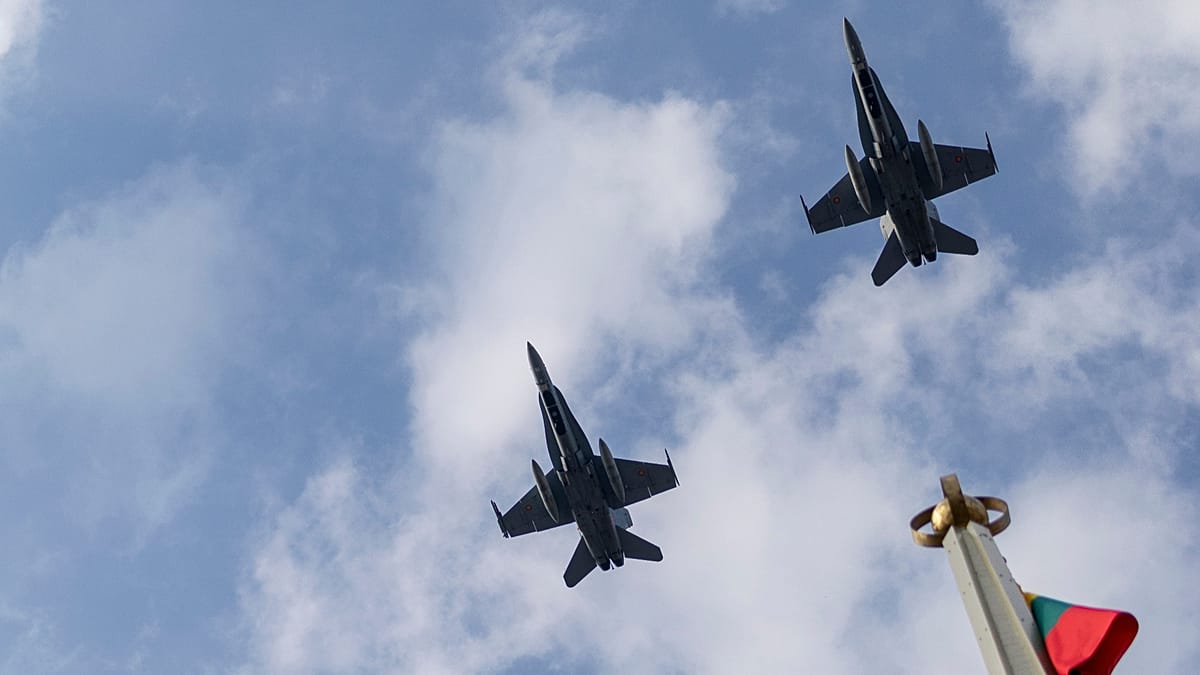
A NATO fighter jet intercepted and destroyed a drone that crossed into Lithuanian airspace from Belarus on Tuesday. This marks the first time such a shootdown has occurred over Lithuanian territory—a stark departure from years of reported but unshot-down incursions. The drone traveled through the Lentvaris and Trakai areas, heading west before crashing near the village of Pratkūnai in Kaunas county. Vilnius’ National Crisis Management Centre confirmed the event, while Moscow remained publicly silent.
Hours later, Poland announced its own “aviation operations” against Russian jet-powered drones operating near its border with Ukraine, describing the measures as preventive. The coincidence suggests a coordinated pattern of defensive actions across NATO’s eastern flank, rather than an isolated skirmish.
Beyond the Surface: Collective Defense Under Fire
The significance of this incident extends far beyond a single drone. It represents the first real-time test of NATO’s collective defense mechanism in the post-Ukraine invasion era. Since Russia’s full-scale attack began in 2022, the alliance has conducted air policing missions along its eastern border, but actual shootdowns of hostile drones have been rare. In May, NATO shot down a Ukrainian drone that strayed into Estonian airspace—an interception that highlighted the difficulty of distinguishing between friendly and hostile aircraft in contested skies.
This time, the drone originated from Belarus, a key Russian ally and de facto launchpad for attacks on Ukraine. The directionality matters: it signals that Russian or proxy forces are probing NATO’s airspace boundaries, testing how far they can push before triggering Article 5’s collective defense clause. While a single drone incursion does not meet the threshold for an “armed attack” on multiple allies, it clearly constitutes a violation of sovereign airspace—and NATO’s response will set the precedent for how such provocations are handled going forward.
Lithuanian Foreign Minister Kestutis Budrys framed the interception as proof that “collective defence works,” crediting allied air presence for protecting Baltic skies. President Gitanas Nauseda echoed this sentiment on social media, stressing that “such readiness is vital for our region” amid intensified Russian aggression. But the statement carries a subtext: the alliance cannot afford to appear passive in the face of repeated border violations, especially as Ukraine’s war drags on.
The Diplomatic Tightrope
The timing could not have been worse for fragile de-escalation efforts. US President Donald Trump had recently announced that Ukraine and Russia agreed to halt strikes on each other’s energy infrastructure. Ukrainian President Volodymyr Zelenskyy subsequently stated that Kyiv was ready to take “de-escalatory steps” if Moscow reciprocated. Yet overnight, Russian forces launched 102 drones at Ukraine while Ukrainian troops struck military targets in Russia’s Krasnodar Krai. The drone shootdown over Lithuania occurred against this backdrop of broken truces and renewed combat—undermining any illusion that the conflict is winding down.
For NATO, the incident creates a diplomatic tightrope. A robust response risks escalating tensions and undermining peace talks; a weak one emboldens further provocations. The alliance has chosen the former, but the consequences remain uncertain. Moscow’s silence is telling: it may be assessing whether to deny involvement, blame “unidentified drones,” or simply wait out the controversy. Either way, the incident injects volatility into an already tense diplomatic environment.
Nuclear Ambitions and Alliance Fractures
Lithuania is not merely a passive recipient of NATO protection—it is actively seeking to reshape the alliance’s deterrent posture. In July, President Nauseda declared his intention to involve Lithuania in Western nuclear deterrence against Moscow and began the process of lifting the country’s constitutional ban on hosting nuclear weapons. This move, still theoretical, has sent ripples through European capitals where the debate over nuclear sharing is intensifying.
The drone incident adds urgency to that debate. If conventional air policing andInterceptor capabilities are insufficient to guarantee border security, some allies may argue for a stronger nuclear umbrella. Others, particularly those wary of provoking Russia, will caution against escalatory rhetoric. The incident thus becomes a case study in alliance cohesion: can NATO present a unified front when confronted with ambiguous threats that sit below the threshold of Article 5?
Poland’s simultaneous activation of aviation operations suggests that individual member states are prepared to act unilaterally when they perceive NATO’s response as inadequate. This fragmented approach could weaken collective decision-making and create friction within the alliance.
What Happens Next: Deterrence or Escalation?
Several scenarios are likely in the coming weeks. NATO will probably increase the tempo of its air-policing missions over the Baltics, potentially rotating in additional fighter squadrons and early-warning aircraft. This could lead to more frequent standoffs if Russian drones continue to test the perimeter. Alternatively, Moscow may adopt a policy of plausible deniability, sending drones that operate just inside Ukrainian airspace or using asymmetric tactics that avoid clear violations of NATO territory.
For Lithuania and its neighbors, the immediate concern is whether this incident marks a new normal. Repeated drone incursions could force NATO to consider more aggressive rules of engagement, including shoot-on-sight policies for suspect aircraft. That would raise the stakes dramatically and increase the risk of accidental escalation.
The long-term impact depends on how effectively NATO can translate this moment of readiness into sustained deterrence. If the alliance demonstrates that it will respond decisively to every breach, it may deter future provocations. If it appears hesitant or divided, it could invite further probing—and potentially draw the region into a wider conflict.
The Bigger Picture: A New Security Architecture?
This drone shootdown is more than a tactical skirmish; it is a stress test for the post-Cold War security order in Europe. The alliance that once faced a monolithic Soviet threat now confronts a hybrid adversary that operates in the gray zones between war and peace. Drone incursions, cyberattacks, and disinformation campaigns are all part of Russia’s toolkit to erode NATO’s resolve without triggering a full-scale response.
The incident in Lithuania shows that the alliance is willing to cross a threshold that was previously considered off-limits. Whether that threshold can be held without spiraling into direct confrontation remains the central question. For the Baltic states, the answer will determine whether NATO’s eastern flank remains a buffer zone or becomes a flashpoint. For Europe, it will shape the architecture of security for decades to come.