Netanyahu's Assassination Claim Before an Election—Who Wins, Who Pays
Benjamin Netanyahu says Iran targeted one of his sons for assassination just weeks before Israel's October election. The claim shifts a personal grievance into a national-security story—and raises urgent questions about what evidence exists and what happens if it does not.
A Claim That Demands Evidence
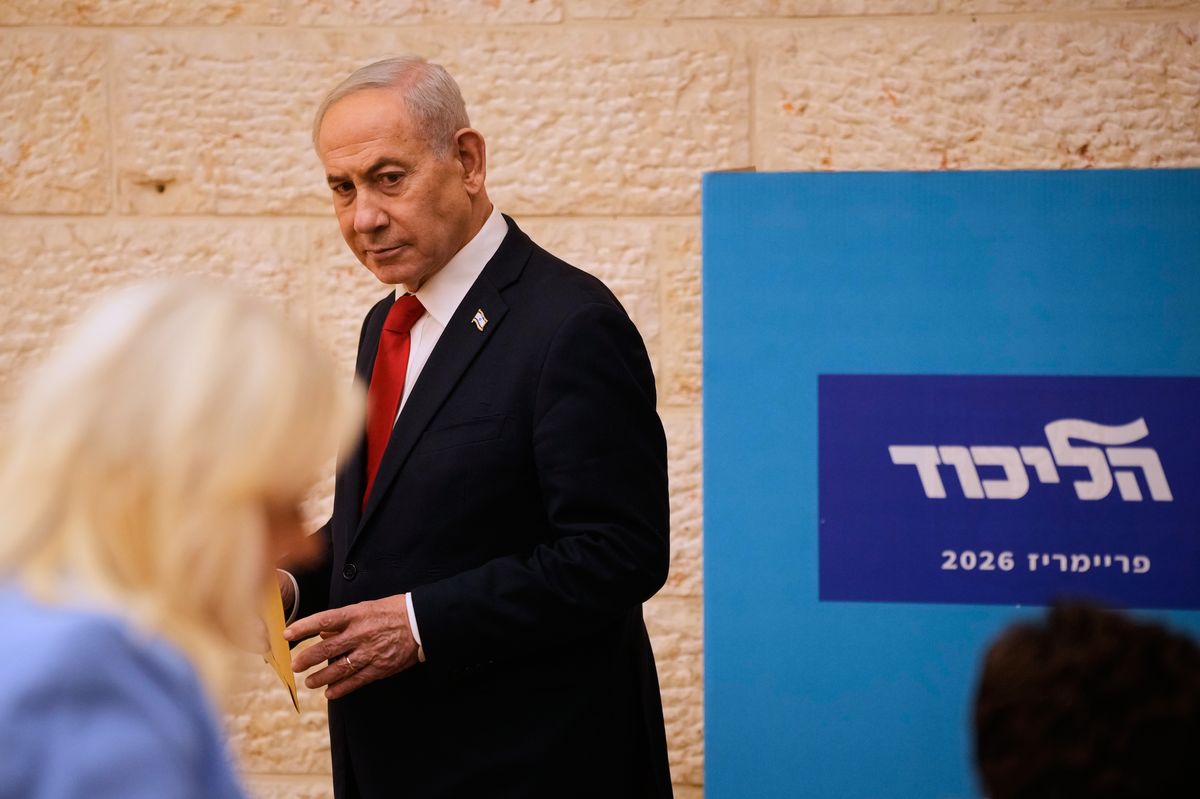
Benjamin Netanyahu made a statement on August 24 that cannot be treated as routine political rhetoric. Speaking to Channel 14 by phone, he said Iran had targeted one of his sons for assassination. “Therefore the security they receive is not a luxury,” he added. The claim came roughly six weeks before Israel’s general election, scheduled for late October, and weeks after Israel and the United States launched coordinated attacks on Iran beginning February 28.
This is not a minor allegation. It is a charge that, if true, represents a dramatic escalation in the Israel-Iran shadow war—one that moves from proxy strikes and cyber operations to a direct attempt on the family of a sitting prime minister. It is also a claim that, at this stage, carries almost no public substantiation.
The Timing Is the Story
Netanyahu’s election is set for late October. Polls show a tight race, and the government has been governing under strain from the war with Iran and domestic unrest over judicial and security policy. A credible external threat—especially one that places his children in the crosshairs—is politically powerful. It consolidates the base, raises the stakes for voters who prioritize national security, and creates pressure on opponents to appear soft.
But timing does not equal fabrication. The key question is whether Netanyahu is inflating a real threat for electoral gain, or using a real threat to justify a political strategy. Both scenarios are plausible. The distinction matters.
What We Know—and What We Don’t
Netanyahu did not identify which son was targeted. He has two: Yair, the elder, who has drawn repeated controversy for his hardline statements and currently resides primarily in Miami; and Avner, the younger, who lives in Israel. Channel 12 reported that the attempt occurred while Yair was absent from Israel, but did not confirm him as the target. Channel 14, the outlet that carried Netanyahu’s remarks, has not independently corroborated the claim.
The Shin Bet—Israel’s domestic security service—has reportedly reached an agreement to protect Netanyahu’s wife, Sara, and two sons for at least five years, even if he loses the election. That is an unusual provision. It signals institutional seriousness: the security apparatus is treating this as a persistent threat, not a temporary political measure.
But here is the gap: no details of the plot itself have been released. No date, no method, no intelligence assessment, no arrest, no indictment. Military censors have blocked coverage, and Channel 12 alleged that the Israeli security establishment suppressed reporting for months. If the story is being controlled, the public has no way to evaluate its weight.
Why the Silence Raises Doubts
Intelligence agencies normally leak operational successes—the arrests, the foiled plots, the intercepted communications—to build public confidence and deter enemies. Silence in this direction is anomalous. When a threat to a prime minister’s children is real and imminent, the standard move is to signal readiness, not to go dark.
There are legitimate reasons for restraint. Naming the target, revealing the method, or disclosing the timing could compromise ongoing operations, endanger the families further, or reveal capabilities the intelligence community wants to keep hidden. But those reasons cut both ways: they argue for caution, not for a vague public claim delivered through a telephone interview with no supporting detail.
The result is a narrative vacuum. In that vacuum, political actors fill the gaps with their own assumptions. Supporters see confirmation of an existential Iranian threat. Skeptics see election-year theater. Neither side can be disproven with the evidence available today.
Who Gains, Who Pays
If the claim holds up under scrutiny—meaning, if specific evidence emerges later, if investigators point to a named operative, if the Shin Bet or military intelligence releases an assessment—the political calculus flips. Netanyahu strengthens his hand. The Likud party rallies around a leader under direct attack. Voters who are undecided on economic or social issues may consolidate behind security-first messaging.
If the claim does not hold—if months pass without corroboration, if investigators find no operational basis, if the target turns out to be unverified or fabricated—the costs are severe. Netanyahu’s credibility suffers. Opponents gain ammunition. And the broader public narrative about Iran hardens in ways that may outlast his premiership. A false or inflated alarm about Iranian intent can become embedded in Israeli strategic thinking regardless of who is in office.
The family pays a different kind of cost. Yair Netanyahu, already a polarizing figure, faces the prospect of being cast as either a victim of Iranian aggression or a pawn in his father’s political strategy. Avner, who lives in Israel, is now publicly linked to a threat that has not been detailed. Sara Netanyahu’s security arrangement, agreed to for five years even if her husband loses, underscores that the danger is treated as personal and enduring.
The Regional Dimension
This claim does not exist in isolation. Israel has been at war with Iran since the coordinated strikes began in late February. The conflict has involved missile exchanges, drone attacks, andproxy engagements across the region. An assassination attempt on a leader’s family would be consistent with Iranian patterns of retaliatory signaling—but it would also be unusually direct. Iran has historically operated through intermediaries: Hezbollah in Lebanon, militias in Iraq and Syria, Houthi forces in Yemen. A move against Netanyahu’s sons would represent a departure from that doctrine, or a new level of confidence in its capabilities.
Either interpretation shifts the regional balance. If Iran is willing to strike at the personal level, the threshold for escalation drops. If Israel perceives that threshold as crossed, its own retaliatory posture hardens. The election outcome will determine whether that hardening becomes policy or remains rhetoric.
What Comes Next
The most likely scenario is that the claim persists in ambiguity. Netanyahu has no incentive to provide full details before the election; his opponents have no incentive to produce counter-evidence; the intelligence community has every reason to remain silent. The October vote will proceed largely on other issues—economy, governance, the war’s trajectory—while this allegation hovers in the background, unproven but impossible to ignore.
The second scenario is that something emerges after the election. If a new government conducts an independent review, or if the Shin Bet releases its findings, the claim could be confirmed, partially confirmed, or discredited. Each outcome carries consequences for Israeli politics and Israel-Iran relations that are impossible to predict now.
Until then, the only honest conclusion is that Netanyahu has made a serious allegation with insufficient public evidence to evaluate it. That is not a condemnation of the claim itself. It is a recognition that in a democracy, leaders should be held accountable for the stories they tell the public—and that the burden of proof does not disappear because an election is approaching.
The Bigger Question
Beyond the immediate politics, this moment reveals something about the state of Israel-Iran relations. The two countries have been fighting a proxy war for decades. Now the fighting appears to have moved into the personal sphere. Whether that shift reflects a new Iranian strategy, a new Israeli vulnerability, or a combination of both remains unclear.
What is clear is that the next few weeks will matter enormously. The election will decide Israel’s leadership. The claim will decide something else: whether a singular allegation, made without evidence, reshapes how a nation sees an enemy—and itself.