Can Netanyahu Survive Israel's Most Divided Election Yet
Benjamin Netanyahu faces his most dangerous election in decades, yet remains the dominant force in Israeli politics. His survival bet hinges on a fractured opposition and the raw power of his base.
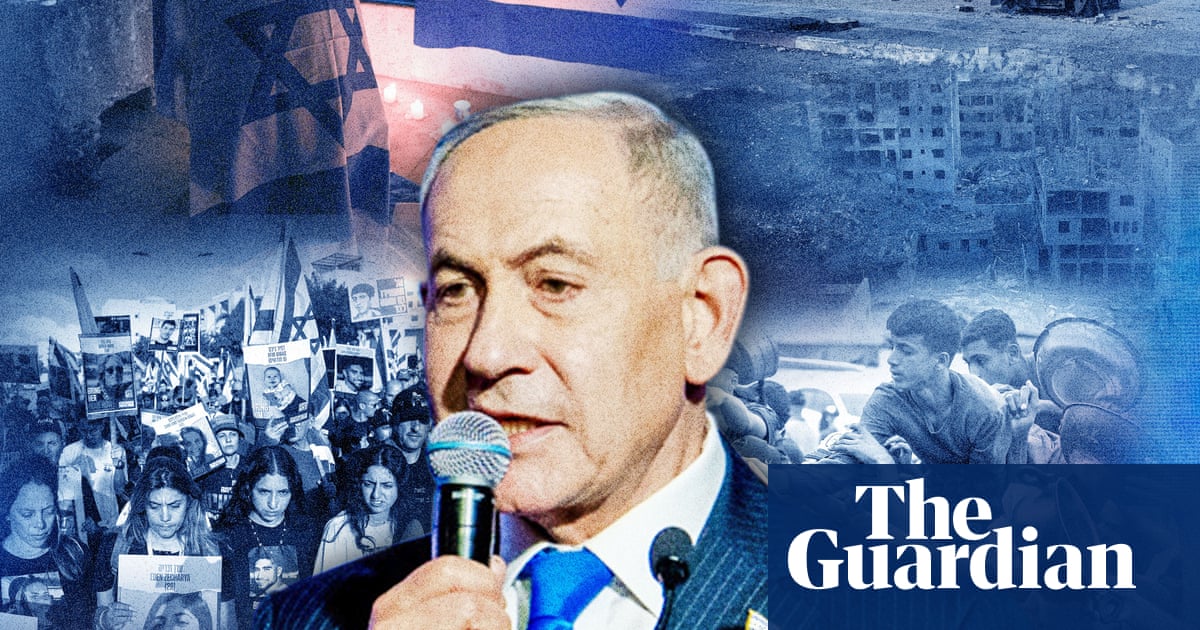
The Man Who Isn’t in the Room
Gadi Eisenkot stood before a crowd in Modi’in and spoke about integrity, accountability, and a country without lies. Every sentence carried an unspoken qualifier: unlike Bibi.
Benjamin Netanyahu did not attend. He rarely needs to. Even absent from the hall, the former prime minister loomed over everything — shaping the language, defining the terms, forcing everyone else to react to him rather than act on their own agenda.
This is Netanyahu’s greatest trick: making an election about himself while appearing to transcend politics altogether.
Eisenkot, a former IDF chief of staff turned political amateur, built his entire candidacy as the anti-Netanyahu option. His party name, Yashar, means straight or direct. He calls for term limits. He talks about leading by example. He refuses to engage with what Channel 14’s Yinon Magal called a racial slur against him, calling it beneath the dignity of the office he seeks.
That refusal itself tells you everything about how broken Israeli politics has become — and how much work Netanyahu still has to do simply by existing.
The Election That Shouldn’t Be Close
On paper, Netanyahu should be finished.
He promised to destroy Hamas after the October 7 attacks. He failed. Israel flattened Gaza, killing more than 70,000 Palestinians, but Hamas survives. He promised to eliminate Iran’s nuclear threat. That hasn’t happened either. He presided over a war that has left Israel increasingly isolated on the world stage, with growing diplomatic consequences that will define the region for years.
The October 7 massacres at the Nova music festival and southern kibbutzim killed nearly 1,200 Israelis. Stickers bearing the faces of the dead are still posted at bus stops and railway stations across the country. Every commmute is a reminder.
Before the war, Netanyahu attempted a judicial coup that split the country in two. His allies face corruption charges and a scandal involving alleged payments from Qatar in exchange for positive media coverage. Intelligence reports suggest he received credible warnings about the October 7 attack and chose to ignore them.
And yet. The polls show the pro- and anti-Netanyahu blocs virtually level. This should not be possible.
How Survival Works
The explanation begins, as it always does with Netanyahu, with loyalty. Three decades of political mastery have built a base that functions less like a voting constituency and more like a religious congregation. Reports that intelligence chiefs warned about October 7 didn’t shake that foundation. The prime minister’s “poison machine” — a network of loyalist media and online influencers — reframed failure as betrayal, incompetence as conspiracy.
Netanyahu’s genius has always been narrative control. He doesn’t need to win arguments. He needs to make sure his supporters never feel the need to lose them.
His latest campaign poster captures the strategy perfectly: a rhyming choice between Yamin (right) and Falastin (Palestine). The message reduces complex geopolitics to tribal identity — vote for me, or the Arabs take over. About 20 percent of Israel’s population are Palestinian citizens. They are treated as rhetorical props in Netanyahu’s framing, neither invited into government nor allowed to be ignored.
The anti-Netanyahu bloc has struggled to mount a coherent alternative. It includes former prime ministers Naftali Bennett and Avigdor Lieberman — men who once worked alongside Netanyahu before spectacular falling-outs. They share enough nationalist conviction to oppose a Palestinian state, yet they lack the gravitational pull to unify Israel’s fractious opposition.
The Stakes Beyond Israel
What happens Tuesday reverberates far beyond Israel’s borders.
A Netanyahu victory means continuity in Washington’s most complicated alliance — one increasingly strained by American concerns about civilian casualties, regional escalation, and the costs of unconditional support. It means Israel’s far right, represented by figures like Itamar Ben-Gvir, gains further leverage. Ben-Gvir’s Otzma Yehudit party calls for expanded West Bank settlements, the annexation of Gaza, harsher treatment of Palestinian prisoners, and more weapons in the hands of Jewish Israeli civilians. On the nationalist right, Ben-Gvir may be the rising moon, but Netanyahu remains the sun.
An opposition win — or at least a shift away from Netanyahu’s dominance — opens possibilities that seem almost unimaginable given current sentiment. Yair Golan, leader of the Democrats and a former general who drove south on October 7 to rescue civilians, spoke of a “regional, strategic process” without using the T-word: peace. The word has been poisoned by associations with the 2005 Gaza withdrawal, which Netanyahu successfully framed as a precursor to October 7. But it has not disappeared entirely. Videos of young Israelis singing Shir LaShalom — the peace anthem Rabin sang before he was assassinated in 1995 — went viral this week.
Who Moves In
Eisenkot’s challenge reveals something about Israeli politics that outsiders often miss: the transformation of military credibility into political currency. A former chief of staff entering politics four years ago and mounting a serious challenge to the country’s longest-serving prime minister is unusual. But it reflects a broader pattern — Israel increasingly expects its leaders to look and sound like soldiers first, politicians second.
Noa Sadeh, 56, put it plainly after the Modi’in rally: she was tired of politicians who knew how to talk. She wanted someone who would do the doing. David Nadler, a 74-year-old retired colonel, insisted I write down the word “integrity” — meaning Eisenkot says something, means it, and does it.
The contrast with Netanyahu is deliberate. It is also, perhaps, naive. Netanyahu operates in a political ecosystem where rules have always been suggestions and scandals are currencies rather than liabilities. Eisenkot’s reluctance to match Channel 14’s crudeness may mark him as decent in the eyes of some voters. But it could also signal that he still doesn’t understand what kind of fight he’s in.
The Question That Matters
The most puzzling fact about this election isn’t that Netanyahu remains competitive. It’s that he ever was.
The biggest disaster in Israel’s history happened on his watch. His promises unraveled. His scandals accumulated. And still, the polls show a死锁.
Something is holding his base together that has nothing to do with policy outcomes or electoral accountability. It is identity, fear, and three decades of carefully constructed mythmaking. As long as Netanyahu controls the narrative — framing every threat as existential, every opponent as part of a broader conspiracy, every failure as someone else’s fault — his political survival remains likely.
The queues at airports as diaspora Israelis fly home to vote suggest that not everyone has accepted the permanence of his reign. The young people singing peace songs in the Negev suggest that change is possible. But可能性 in Israeli politics doesn’t translate directly into power.
Netanyahu has won elections under worse conditions. He will probably win this one too.