Netflix Is Betting Big on Korean Prestige Drama With Scandal
Son Ye-jin and Ji Chang-wook reunite on Netflix in Scandal — a period thriller based on the 2013 film that signals the streamer's deepening commitment to Korean prestige content. Here's why this pairing matters more than it initially appears.
The Announcement That Flies Under Western Radars
A story broke on a Friday in Japan about a Korean period thriller called Scandal — and nearly every English-language entertainment outlet had already moved on to the next headline. That disconnect tells you something about how differently Asian entertainment desks read the same news. What sounded routine in Seoul was actually a quietly significant signal: Netflix is pushing its Korean prestige bet harder, and it just paired two of the genre’s most bankable stars in their first-ever on-screen collaboration.
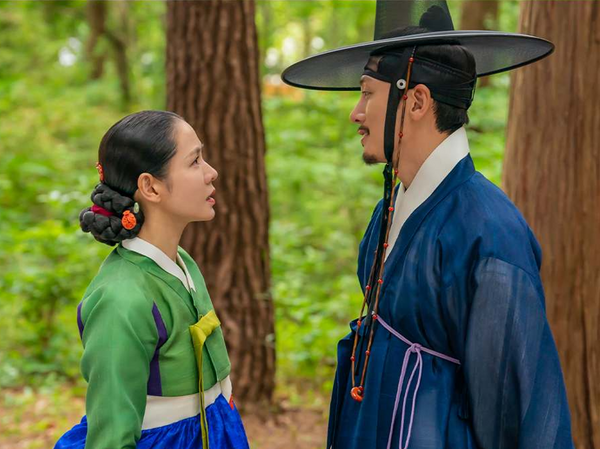
Scandal premieres globally on Netflix on September 18. It’s based on the 2013 film of the same name, reimagined as a series. The setting is an era when romantic desire itself was considered taboo, particularly for women. A gifted noblewoman, played by Son Ye-jin, proposes a dangerous wager to Cho Won, a playboy portrayed by Ji Chang-wook. To win the bet, he must pursue a widowed young noblewoman named Hyo-yeon, played by Nana from the K-pop group After School. What follows is a layered game of manipulation, attraction, and betrayal that threatens to shake the entire upper class.
Director Jeong Ji-woo — known for the films Happy End and Yu Yul’s Music Album, plus the Netflix series Somebody — is helming the adaptation. The visual tone, as shown in the trailer and key art, leans into stark monochrome palettes punctuated by the vivid colors of traditional Korean hanbok. That contrast isn’t merely aesthetic; it mirrors the central tension between constrained social order and explosive personal desire.
Why This Pairing Is Not Routine
Son Ye-jin and Ji Chang-wook are both household names in Korea and major draws across Asia. Son has built a formidable filmography — My Brilliant Life, That Winter, the Wind Blows, Falling for Innocence, the film Choice — and her television work, including the blockbuster Crash Landing on You, has cemented her as one of Korea’s most bankable performers. Ji Chang-wook has carried his share of hits, from Irregular Detective through Welcome to Waikiki and Beyond Evil. Their characters in Scandal could not be more different: she is composed, calculating, masked by grace. He is restless, pleasure-seeking, driven by ambition and appetite. That chemistry was already generating buzz in the Korean entertainment press long before the trailer dropped.
For Son Ye-jin specifically, this marks her first drama role in roughly four years since Choice in 2022. She is a filmmaker and theatrical actor who has been remarkably selective about television projects. Her return to the format suggests a level of conviction about the material that rarely comes with a standard series deal. For Ji Chang-wook, the role of Cho Won demands a blend of charm and moral ambiguity that has defined his strongest work. The fact that they’re sharing screen time for the first time is itself a selling point that Korean and Japanese outlets are treating as event television.
Nana, best known to international audiences for her role in Oh! My Boss: Love on a Shelf and the Netflix series Mask Girl, plays the pawn who may become the pivot of the entire scheme. Her character Hyo-yeon is described as caught between reluctant acceptance and growing emotional entanglement — a narrative function that gives the actress room to carry real dramatic weight beyond the idol-turned-actor trajectory.
The Deeper Pattern: Netflix’s Korean Strategy
What Western desks tend to miss is the pattern beneath individual announcements. Netflix has been investing in Korean scripted content at a scale that exceeds any other global streamer, and Scandal fits neatly into that strategy. The platform’s Korean-language slate has included Crash Landing on You, Squid Game, King the Land, and The Glory — projects that achieved breakout global success and demonstrated that Korean prestige drama could carry worldwide audiences. Scandal represents the next iteration of that playbook: historically grounded, star-driven, and designed to convert fan excitement into sustained viewership.
The 2013 film that this series adapts was never a mainstream blockbuster in the West, but it found a steady audience among Korean period drama fans. Expanding it into a series allows Netflix to deepen the world-building, explore the social structures of the era, and stretch out a story that was always more compelling in its interpersonal dynamics than in its plot mechanics.
Japanese entertainment media are particularly attuned to this because Korea and Japan share one of the strongest cross-cultural entertainment pipelines in the world. K-dramas enjoy massive followings in Japan, and vice versa. When cinemacafe.net ran the announcement on a Friday afternoon, it landed squarely within a news cycle where Korean content was already generating significant conversation in Japanese entertainment circles. Western outlets, by contrast, often treat Korean drama announcements as niche content unless they arrive with the promotional momentum of something like Squid Game or All of Us Are Dead.
Who Wins, Who Loses, and What Happens Next
Netflix wins by reinforcing its position as the global home for premium Korean drama. The platform is essentially signaling to its international subscriber base that it will continue funding high-quality Korean productions alongside its local-language originals.
Son Ye-jin and Ji Chang-wook win by finally sharing a screen together in a project that leverages both their strengths — her commanding presence and his magnetic charisma — in a genre that fits their proven appeal. Japanese and Korean fans win because they get a prestige period drama that treats the cast and material with serious investment rather than formula.
Traditional broadcast networks in both countries lose ground. The scarcity of theatrical and linear TV opportunities for top-tier Korean actors who have crossed into pan-Asian fame makes streaming deals increasingly attractive. That dynamic shifts the economics of Korean drama production over time.
Scandal arrives September 18 on Netflix globally. How it performs will be closely watched as an indicator of whether the Star-driven period drama remains a viable format for the streamer — or whether audiences have already moved on to thrillers and contemporary romances. For now, the excitement on Asian entertainment desks is genuine. Whether it translates into global viewership numbers remains the question Netflix is clearly willing to test.