Why NHK's Brassamura Changed Everything About Japanese Family Drama
NHK's Brassamura hit 70.6 percent peak ratings and sent Japanese social media into f renzy — not because it's a comfortable family story, but because it dares to show a father who is both terrifying and tragically human. What does this say about Japan?
When the Asadora Became Something Dangerous
NHK’s Brassamura just concluded its second week, and the numbers are staggering. A peak rating of 70.6 percent in the latest episode — that is not a television statistic; that is a national event. For context, Japanese drama rarely breaks 20 percent. When a morning serial clears 70, something has shifted in the cultural atmosphere.
But the number alone tells you almost nothing about why this happened. What matters is what filled the screen: Atsuro Watanabe, 58, playing Kiyoji — a father whose mental deterioration turns domestic space into a war zone. He hallucinates, swings a kitchen knife through their neighborhood, screams five times that he does not want to die, and then collapses into his daughter Tamari’s arms and expires. After the funeral, Tamari sits on the engawa — the wooden veranda — and says something that made Japanese social media erupt.
“Why is my heart so clear, even though my father has died? I must be a terrible daughter.”
Her mother-figure Rei responds: “That’s fine. That’s exactly fine.”
This single exchange — between a daughter who feels guilty for feeling relief, and a woman who tells her the guilt is unnecessary — is why Brassamura has become the most discussed drama in Japan right now. It is not just entertainment. It is a conversation Japan has been having quietly for years, finally spoken aloud on national television.
The Asadora Has Always Been About Harmony. Brassamura Breaks That Rule.
To understand the shock value of Brassamura, you need to understand what an NHK asadora normally does. The genre — Japan’s beloved morning serial — runs 156 weeks per year, airs every day at 8:15 a.m., and traditionally follows a young woman overcoming hardship through resilience, community support, and quiet dignity. The father figure, when present, is either absent (died early) or supportive. The formula guarantees emotional safety. Viewers tune in for consistency, for the rhythm of a life that may be difficult but is always ultimately legible and resolved.
Brassamura has disrupted this contract. Kiyoji is not absent. He is not supportive. He is vividly, terrifyingly present — and his presence is traumatic. The drama does not soften him into a redemption arc. It does not show him becoming understanding or making amends. He dies without being reconciled with.
What it shows instead is something far more honest: the daughter’s relief after his death is not a moral failure. It is a human response. And the drama validates that response without irony or judgment.
This is, by any measure, radical for an NHK production — a network that has historically positioned itself as the guardian of Japanese family values.
The Real-Life Blueprint: Ueno Chiyoko’s Father
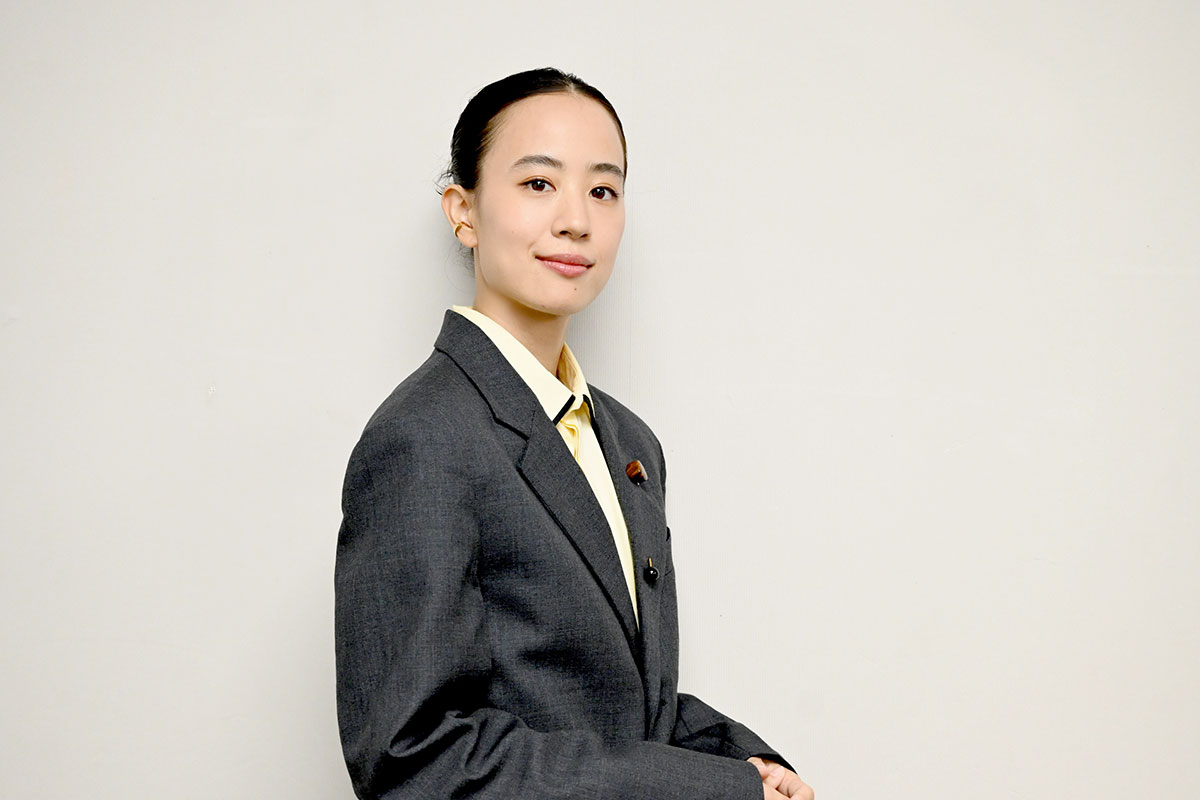
Brassamura is based on the life of Ueno Chiyoko, a pioneering 1920s Japanese writer and journalist. Her relationship with her own father is the emotional spine of the series, and Shizuka Ishibashi, who plays Tamari, drew heavily on primary sources to understand it.
In her own writings, Chiyoko described her father as “the kind of eccentric or even madman you would only encounter in novels by Balzac or Dostoevsky.” That comparison is telling. Chiyoko was placing her father outside the realm of normal Japanese family structure — outside the ie system, outside the expectations of filial duty, into the territory of psychological fiction.
Ishibashi told the press she initially struggled to decode what kind of person this father figure represented. The historical records did not give her a simple template. Chiyoko herself had spent a lifetime processing the relationship, channeling it into her writing. That act of sublimation — transforming personal trauma into creative output — is precisely what Brassamura depicts Tamari doing.
The parallel is not accidental. The drama is showing us that art can be born from unresolvable family wounds. That does not make the wound any less real. It makes the output real in a different way.
The Performance That Split the Internet
Watanabe’s portrayal of Kiyoji is the technical centerpiece of this moment. He plays the father as someone whose cruelty and vulnerability are inseparable. There are moments — particularly in the early episodes — where his eyes hold a softness that contradicts everything else he does. Ishibashi noted this repeatedly in her interview: the fear was real, but so was the love, and they existed simultaneously.
The climactic death scene is where this complexity peaks. Kiyoji is not merely raging. According to Ishibashi, what Watanabe conveyed was a desperate cry — “help me” and “understand me” — that the character could never articulate directly. Because he could not express it, he became simply a disruptive, frightening presence. The tragedy is not just that he dies. It is that no one around him fully understood what he was trying to communicate while he was alive.
This reading of the scene has resonated strongly on Japanese social media. Viewers have reported feeling torn between horror at Kiyoji’s violence and grief for the man underneath it. That tension — the inability to resolve one emotion into the other — is exactly what makes the episode so culturally sticky.
Why 70.6 Percent Is Not Just a Rating
A 70.6 percent viewership share in Japan means that roughly seven out of every ten households with a television were watching that episode. For a morning drama, this is unprecedented in the streaming era. It signals that Brassamura has transcended its genre. It is not being watched because it is comforting. It is being watched because it is unavoidable — because the conversation it has started feels too important to miss.
The demographic data reinforces this. The episode pulled 70 percent plus of the target demographic, which for an asadora typically skews female and middle-aged. But the social media reaction has crossed age and gender lines. Young viewers are discussing the father-daughter dynamic. Older viewers are defending the drama’s refusal to romanticize abuse. The conversation is not contained within the show’s audience.
This is what makes Brassamura a cultural barometer rather than a mere ratings hit. It is measuring something that exists beneath Japanese television: a growing willingness to talk about family trauma honestly, to acknowledge that love and harm can coexist in the same relationship, and to validate the relief that sometimes follows the end of an abusive dynamic.
What Comes Next
The third week of Brassamura is titled “Makeup and First Love.“Tamari becomes a substitute elementary school teacher and experiences her first romantic attraction. On the surface, this sounds like a return to asadora convention — the hopeful, romantic pivot after hardship. But given what the drama has already established, this next phase will likely carry a different weight.
Ishibashi has said that Tamari’s relationship with her father will continue to influence her entire creative life — that the grief and understanding will surface gradually, over a long timespan, only fully emerging when Tamari begins to write in earnest. The father’s physical presence is gone, but his roots in her psyche are deep.
This is the drama’s most ambitious claim: that liberation from an abusive parent is not a single moment of relief. It is a lifelong process of integration. And that process, for Tamari, will be expressed through art.
For Japan, Brassamura is doing something similar on a cultural scale. It is taking a painful, unresolved national topic — the hidden damage inside family structures, the silence around mental illness, the guilt children feel when they wish their difficult parent were gone — and processing it through storytelling. The 70.6 percent rating is not just proof that people are watching. It is proof that people are ready to watch.
The question Brassamura leaves us with is not whether Japanese television can handle difficult family dynamics. It has proven it can. The question is whether the rest of the industry will follow.
The Numbers Behind the Moment
For those tracking this as a cultural shift rather than just a television event, a few data points matter:
- Peak viewership share: 70.6 percent (Episode 10, Week 2)
- Target demographic reach: 70 percent plus
- Lead actor age: Atsuro Watanabe, 58, portraying a deteriorating father
- Source material: Based on the life of writer Ueno Chiyoko (1902–1984)
- Network: NHK General TV, asadora time slot, Monday through Friday 8:15 a.m.
- Current episode arc: “Liberation from the Father” (週タイトル)
- Upcoming arc: “Makeup and First Love” (Week 3)
These numbers are not normal for the genre. They signal that Brassamura has become something larger than a drama series. It has become a shared cultural experience — one that is forcing a conversation Japan has avoided for generations about what happens when the family structure fails, and what the children of that failure are allowed to feel when it ends.