Nidec accounting collapse and the crisis of Japanese corporate
Nidec's 632 billion yen write-down and CEO's abrupt exit under a qualified audit opinion signal deep governance rot. Foreign investors relying on Big Four credibility in Japan face a reckoning.
The numbers nobody saw coming
Nidec reported a 632.1 billion yen impairment loss for the fiscal year ending March 2026 — a figure that caught even its own board members off guard. When the first estimate crossed the 600 billion yen threshold in mid-September, outside director Soichiro Sakuma called it “completely beyond our expectations.” The company admitted it could not have foreseen the scale even six months earlier.
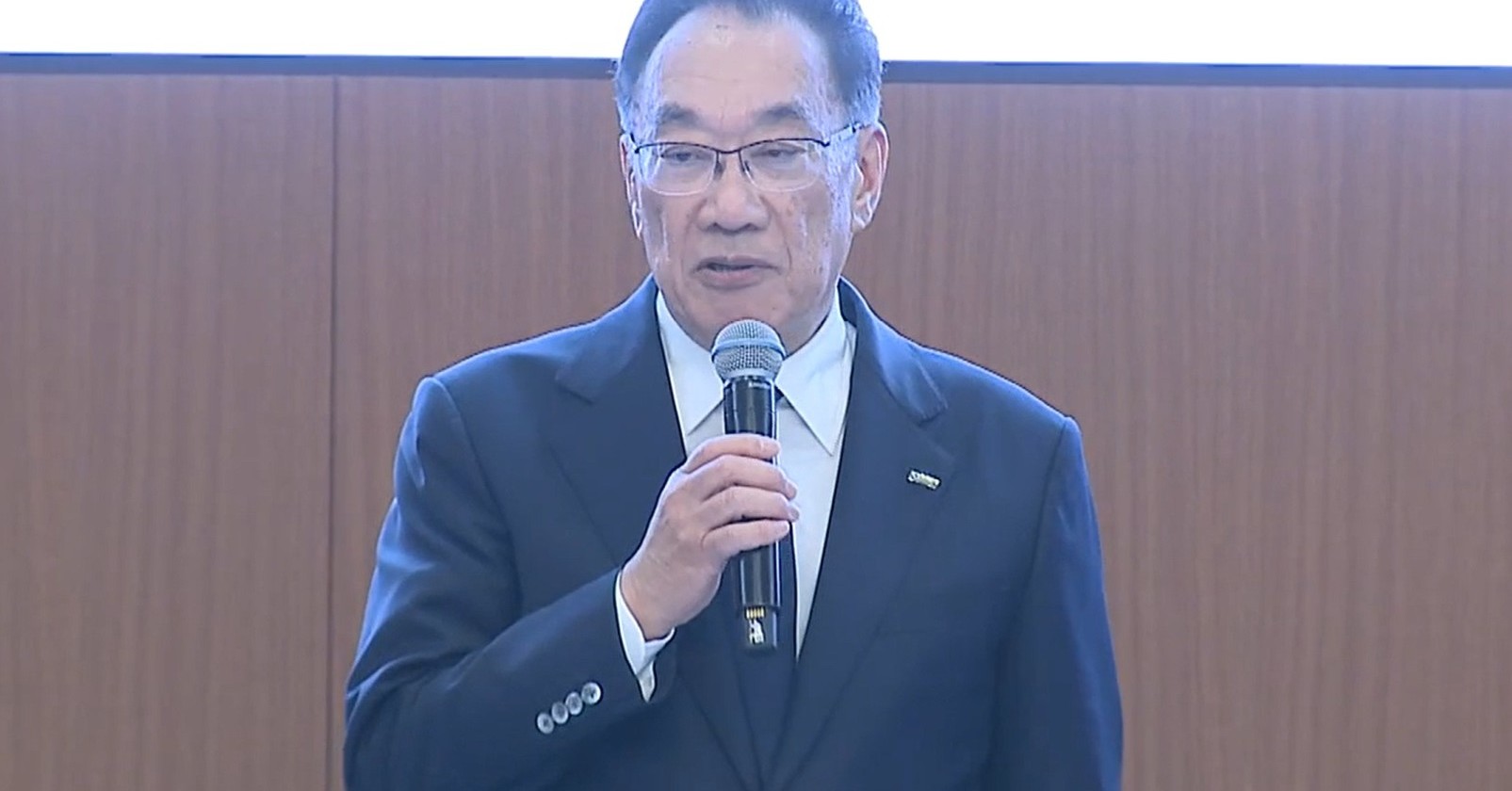
The timing is almost more disturbing than the number itself. Nidec held its press conference on October 1, 2026, just days after CEO Mitsuya Kishida submitted his resignation on September 29. The board had debated his fate on September 25, asked him to leave the room, and then — unanimously — decided he had to go. Kishida was gone before the financial results were public.
What sealed his fate was not only the scale of the write-down. Nidec also cited “inappropriate remarks and actions regarding financial reporting” on Kishida’s part. The company did not specify what those actions were.
A Big Four auditor raises its hand
Perhaps the most consequential detail came from the podium at the press conference: PwC Japan was there, and it confirmed it had issued a qualified audit opinion — technically a “no opinion” in Japanese audit terminology — for the fiscal year ending March 2026.
Masatada Kubota, a managing executive at PwC Japan, stated that some of the firm’s own staff who had been involved in the improper accounting had held positions of responsibility within Nidec’s financial reporting process. PwC said it intended to deliver a proper audit opinion by October.
This is significant. A Big Four firm issuing a qualified opinion on a major industrial company’s books is rare in Japan and unusual enough to attract international attention. It means the auditor could not express confidence that the financial statements were fairly presented — and that the failure ran partly through the auditing firm’s own personnel.
Why this matters beyond Nagoya
Nidec is not a small cap. It is a ¥2 trillion+ industrial conglomerate with operations spanning motors, precision machinery, semiconductors, and electric vehicle components. Its customer base includes major global manufacturers. The company’s market position makes this story a test case for how much the world can trust Japanese corporate disclosures — and by extension, the audit firms that certify them.
Foreign investors, particularly institutional holders in Europe and North America, have long relied on Big Four audits as a proxy for governance credibility in Japanese markets. A qualified opinion on a company of Nidec’s scale — with the auditor’s own compromised staff named in the process — undermines that assumption directly.
The broader implication is stark: if Nidec could produce a 632 billion yen impairment that no one in its own boardroom anticipated, and if its auditor flagged material irregularities in its financial reporting, then the baseline assurance that international investors place in Japanese listed companies’ annual reports is thinner than widely believed.
The governance gap
Japan has spent years reforming its corporate governance code. The Tokyo Stock Exchange’s push for better disclosure, the introduction of outside directors, and the emphasis on audit committees were all designed to address exactly these kinds of situations. Nidec’s experience suggests the reforms have been superficial in practice.
The board’s unanimous vote to remove Kishida after he left the room is notable. In Japanese corporate culture, asking a sitting CEO to exit a board meeting before a decision is made is an extraordinary — and publicly humiliating — act. That it happened speaks to how severe the board viewed the situation. Yet the board’s own admission that it could not predict the impairment raises the question of whether the governance structure that failed to foresee the crisis is the same one now tasked with fixing it.
The new CEO — whose identity was not disclosed at the press conference — faces an impossible opening. The company must deliver a clean audit opinion by October, restructure a bloated asset base, and rebuild investor trust, all while the previous leadership’s specific misconduct remains unenumerated.
Who wins, who loses
Foreign investors who sold or reduced positions before the results are the clear winners — or at least the less wounded. Those still holding Nidec shares are absorbing a significant governance discount that may take years to reverse.
PwC Japan’s credibility suffers regardless of the outcome. The firm acknowledged its own staff held compromised positions within Nidec’s financial reporting chain. Whether it recovers by delivering a clean opinion by October or stumbles again will shape its reputation across Japan’s industrial sector.
Japanese listed companies more broadly lose. One more example of a major firm’s books failing to reflect reality will reinforce the narrative that Japan’s governance reforms are theater. It will make it harder for any Japanese company to point to the code and say the system is working.
What happens next
The immediate battleground is PwC’s October audit opinion. If the firm delivers a clean report, Nidec will have a path back. If it qualifies again — or issues a disclaimer — the consequences will cascade through the company’s cost of capital, its relationships with suppliers and customers, and the willingness of international investors to engage with Japanese industrials at all.
The medium-term question is whether the Tokyo Stock Exchange and financial regulators treat Nidec as a one-off failure or as evidence of a structural problem. A single scandal can be contained. Two or three in quick succession force a reckoning with how much authority international investors actually place in Big Four audits of Japanese companies — and whether that authority is justified.
Until then, the 632 billion yen number sits where it belongs: as a reminder that in global markets, the most dangerous risks are the ones no one thought to measure.