Why Nomura Puts a 3x P/E on Samsung and SK Hynix at a Time of Memory Scarcity
Nomura is betting that memory shortages will persist through 2028 and that Korean chipmakers remain severely undervalued on a forward P/E basis. The call challenges how global investors price the world's two largest memory producers.
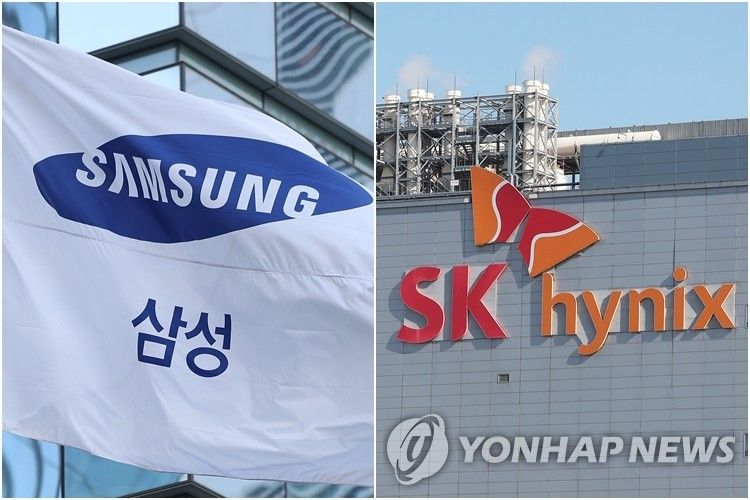
A 3x P/E in a Memory Shortage
When you hear that a major Wall Street–level bank is assigning a 2027 forward P/E of roughly 3x to the world’s two largest memory chipmakers, the first reaction should be suspicion. Three times earnings does not sound like a premium; it sounds like a company the market has written off. In a sector where AI-driven demand has sent valuation multiples skyrocketing for names like NVIDIA and TSMC, a single-digit forward P/E on the companies producing the foundational memory that makes it all possible reads almost absurdly cheap.
But that is precisely why Nomura’s call on Samsung Electronics and SK Hynix warrants sustained attention. The bank is not recommending these stocks because valuations look historically cheap in a vacuum. It is recommending them because the structural shortage in memory supply — driven by AI data-center buildouts, expanding edge computing needs, and a contracting competitive landscape outside Korea — has not yet been fully priced into Korean semiconductor valuations, even after recent recoveries from their post-correction lows.
Nomura maintains its 670,000 won target on Samsung and 4.7 million won on SK Hynix, both rated Buy. The analysis, led by researcher Jung, argues that share prices remain roughly 37% below their peaks despite the rebound, and that forward multiples barely reflect the severity of the supply-demand imbalance playing out across global data centers. To put that in perspective, while semiconductor peers trading on growth narratives command P/Es in the 20x to 40x range, Samsung and SK Hynix are being priced as if the current memory tightness is a temporary anomaly rather than a structural feature of the market.
The Shortage Is Real, and It Is Getting Worse
The core of Nomura’s thesis rests on a straightforward but underappreciated observation: demand is running ahead of supply, and no one is building enough capacity fast enough to close the gap. Memory makers themselves have been reinforcing this message publicly for months. Jung cites repeated management commentary from both Samsung and SK Hynix warning of prolonged shortages extending well into 2028.
What makes this cycle fundamentally different from earlier downturns and recoveries is the contract structure governing the market. Long-term agreements, or LTAs, are increasingly becoming the default way buyers secure supply. These deals lock in volume and pricing well beyond standard spot transactions, sometimes stretching three to five years into the future. And crucially, customers are accepting terms that would have been unthinkable in a surplus environment — higher prices per unit, less flexibility on volume adjustments, tighter delivery commitments, and penalties for cancellation. That shift alone changes how revenue visibility works for Samsung and SK Hynix, converting what was once cyclical spot revenue into something closer to the predictable, annuity-like cash flows that merit higher valuation multiples.
The shortage has also begun spilling beyond chip factories into finished products. When a customer cuts the number of memory chips per device — say, reducing RAM in a server configuration or delaying next-generation AI accelerator shipments — or scales back finished-goods production because allocation is insufficient, you are watching the shortage reach the product level. It is no longer a factory-floor problem affecting yield rates and capacity utilization. It is a revenue problem for the companies that would otherwise be buying memory, and it creates a feedback loop where those companies’ revenue declines further reinforce their urgency to secure supply at any cost.
China’s Capacity Plans Hit a Wall
One concern that has weighed on Korean memory valuations throughout this cycle is the speed with which Chinese rivals might expand. Beijing has poured capital into domestic memory development through initiatives like the Chinese Semiconductor Industry Investment Fund, and there has been persistent speculation that incremental output from Chinese fabs — particularly from ChangXin Memory Technologies (CXMT) and Yangtze Memory Technologies Corp (YMTC) — could begin easing the global shortage sometime in the second half of this decade.
Nomura is effectively dismissing that timeline as irrelevant to current pricing. Jung’s assessment is that Chinese manufacturers, despite aggressive expansion rhetoric and state-backed funding, simply do not have the production headroom to add meaningful supply through 2028. The obstacles are not merely financial — they include access to advanced lithography equipment constrained by export controls, a shallow talent pool compared to Korea’s decades-long memory expertise, and the inherent lag between fab construction and meaningful volume production. Even under optimistic scenarios, Chinese memory output would remain a marginal contributor to global supply through the end of the decade.
This matters because global investors often treat Chinese memory growth as a looming supply overhang — a shadow cast over Korean valuations that keeps multiple expansion capped regardless of near-term fundamentals. If Nomura’s read is correct, that overhang is largely imaginary through at least 2028. The Korean majors retain their dominance in a market where the next several quarters of demand are backed by contracts, not hope. Chinese capacity, when it eventually arrives, may matter for the 2030s, but it cannot discipline prices today.
Who Wins and Who Loses
Samsung and SK Hynix win if Nomura is right. The scenario is one where memory remains tight, customers keep signing LTAs under increasingly favorable terms, and the market eventually re-rates Korean semiconductor valuations toward something closer to the forward cash generation that a 3x P/E implies is already baked into earnings estimates. The mathematics of the undervaluation are striking: at 3x forward earnings, the market is implicitly assuming that memory demand will normalize and prices will collapse, even as both companies report record revenues and expanding margins.
Global AI and data-center buyers lose in the short run. They face rising costs and constrained allocation, and the pain is not evenly distributed. Large hyperscalers with deep pockets can absorb unfavorable LTA terms and secure priority allocation, but smaller AI startups and mid-tier cloud providers find themselves squeezed out. Every quarter they cannot secure memory is a quarter of slower product launches, reduced margins, or forced design compromises. The fact that even desperate buyers are accepting terms they would have rejected six months ago is a sign of acute market stress, not strategic patience.
Chinese memory producers also lose, in a relative sense that may prove permanent. If they cannot ramp fast enough to capture market share during this shortage, they miss the window where demand creates room for newcomers. The incumbents lock in volume commitments and pricing power just when third-party entrants would need to move fastest. By the time Chinese fabs reach meaningful production volumes, the LTAs that dominate the market will have already allocated the bulk of long-term supply to Samsung and SK Hynix, leaving entrants to fight for residual demand.
Second-Order Effects: A Market in Transition
Beyond the direct supply-demand dynamics, Nomura’s thesis carries important second-order implications for how the semiconductor industry structures itself. The migration from spot-market pricing to long-term contracted pricing represents a fundamental shift in how memory is commoditized — or cease to be. In a spot-driven world, memory is a textbook commodity: price fluctuates with quarterly supply and demand, and buyers can shop around every quarter. In a contract-driven world, memory becomes more like a utility: customers pay for guaranteed access, and price volatility is absorbed by the seller in exchange for revenue predictability.
This transition benefits the incumbents disproportionately. Samsung and SK Hynix have the manufacturing scale, the balance sheet, and the customer relationships to lock in multi-year supply agreements. Smaller players — whether Chinese entrants or niche memory specialists — cannot offer the same volume guarantees and therefore cannot compete for the LTAs that are becoming the primary revenue stream. The result is a market that is simultaneously tighter on supply and more concentrated among the players who control it.
There is also a capital-allocation angle that markets may be underweighting. Samsung and SK Hynix have been extraordinarily disciplined about capex in the downturn years, deliberately withholding investment in new capacity precisely when competitors were tempting themselves to build. The consequence is that the current shortage is, in part, self-inflicted by the industry’s previous chastity — and that means the recovery will be sharper and more profitable than historical cycles would suggest, because the supply response has been artificially delayed.
What Happens Next
The risk to Nomura’s call is real, even if it is not the risk most investors are pricing in. The shortage could prove temporary — either through surprise capacity additions from the Korean majors accelerating their own expansion plans or from a demand slowdown large enough to tip the balance. Memory cycles are notoriously volatile, and periods of severe shortage have historically been followed quickly by gluts as everyone rushes to build capacity simultaneously. If demand softens faster than expected — perhaps from an AI investment pullback or a macroeconomic deterioration — the LTA structure could unwind, and valuations would revert downward, not upward.
But the cycle argument cuts both ways. If shortages persist and LTAs become entrenched — and there are credible reasons to believe they will, given the structural nature of AI-driven demand — then Korean memory valuations may not revert to old multiples at all. A structural shift in how memory is bought and sold would justify re-rating, even if the absolute P/E level Nomura is implying seems low by traditional standards. In that scenario, the 3x P/E is not a value trap but a snapshot of a market that has not yet recognized that the game has changed.
What is clear is that Nomura sees a dislocation between the fundamentals of the memory market and the prices attached to the two companies best positioned to profit from it. The shortage is real. The contractual shift is underway. Chinese competition is a distant threat. And yet Samsung and SK Hynix trade at multiples that imply the worst has already happened. Whether the market agrees remains an open question. But the gap between a 3x forward multiple and a sustained supply crunch is wide enough to make this one of the more interesting semiconductor calls coming out of Asia right now — and the wider that gap grows, the more consequential any correction will be.