North Korea's AI-Evasive Missile Tests Deterrence
North Korea claims AI-guided evasive flight for an intermediate missile, potentially eroding regional defenses. Analysis of capabilities, propaganda, and deterrence implications.
The Claim That Could Redraw Defensive Calculi
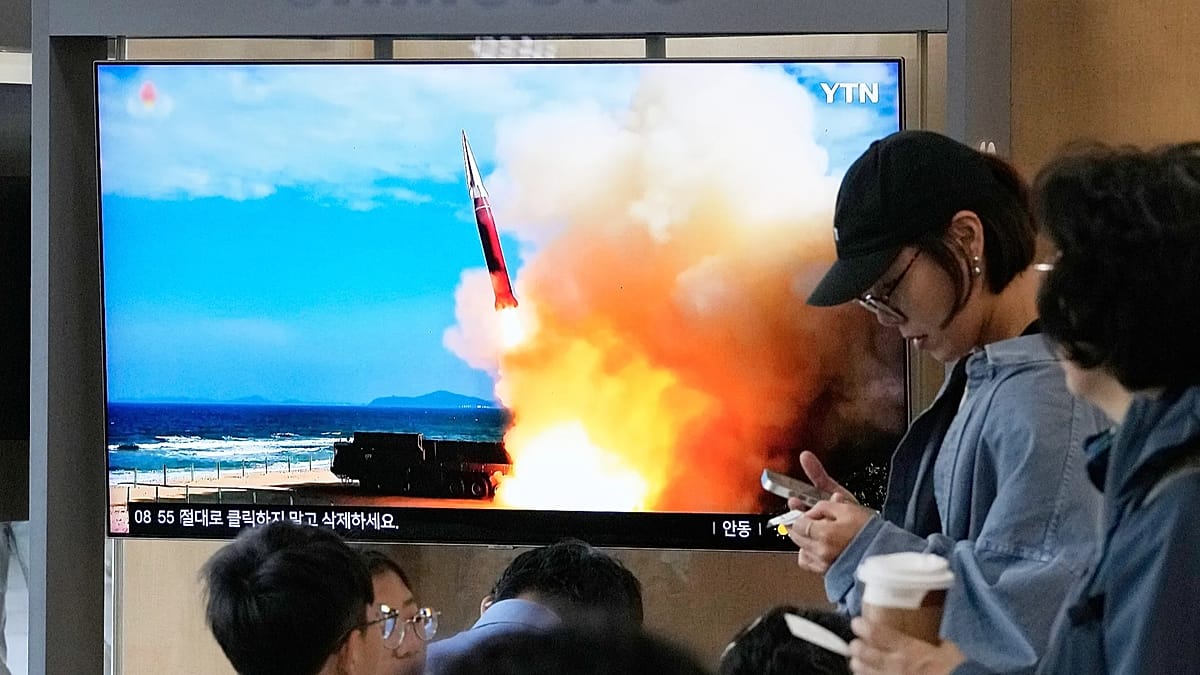
North Korea fired an intermediate-range ballistic missile on Saturday and said it carried artificial intelligence capable of altering its trajectory mid-flight to dodge interception. The statement from Kim Yo Jong, the regime’s de facto二号, was dense with both technical assertion and psychological warfare. She pointed to a disagreement between Seoul and Tokyo over how far the missile traveled as evidence that adversaries could not track it once it began its evasive maneuvers.
If the claim holds even partial truth, it marks a qualitative shift in Pyongyang’s weapons portfolio. It also forces a re‑examination of the layered missile‑defense systems that South Korea and Japan have spent billions reinforcing.
What ‘AI‑Guided Evasive Flight’ Actually Means
Ballistic missiles traditionally follow a predictable arc: a powered boost phase, a coasting trajectory through the vacuum of space, and a terminal dive toward the target. Interception relies on that predictability. An AI‑guided system would embed sensors and onboard computation that could adjust control surfaces or fire small thrusters during the boost or mid‑course phase, producing a wavy or skipping path rather than a smooth parabola.
North Korea has already hinted at such behavior. In September it tested a hypersonic missile system described as belonging to a family of weapons designed to overwhelm defenses. State media in recent years has referenced a “wavelike trajectory mode” for solid‑fuel missiles. The new claim adds the word “artificial intelligence,” suggesting that the trajectory changes are not pre‑programmed but responsive to real‑time data—perhaps adjusting to radar returns or defensive counter‑measures as they unfold.
The leap from “maneuverable re‑entry vehicle” to “AI‑steered” is significant. It implies a flight computer capable of processing sensor input and deciding evasive actions faster than any human operator could. That capability, if genuine, would require advances in miniaturized processing, robust software, and perhaps machine‑learning training in simulation environments that mimic enemy radar and satellite coverage.
The Distance Dispute as Propaganda and Proof
South Korea’s Joint Chiefs of Staff said the missile traveled more than 700 kilometers. Japan’s Defense Ministry put the range at roughly 680 kilometers. Kim Yo Jong highlighted the gap as proof that the missile’s path became impossible to follow after its initial skip point.
The discrepancy itself is not remarkable. Different radar sites, varying assumptions about the missile’s apogee, and the fog of real‑time tracking can easily produce a tens‑of‑kilometers spread. But Pyongyang’s framing turns a routine measurement variance into evidence of evasion success. It is a classic information‑operations move: use an objective ambiguity to reinforce a subjective claim.
For defense planners, the real question is whether the missile’s trajectory actually deviated enough to degrade interceptor performance. Even a modest sideward deviation of a few kilometers during the terminal phase can force defenders to enlarge their kill boxes, increasing the number of interceptors required and the probability of missing.
A Rapid Arsenal Expansion Against a Hostile Border
The launch came two days after landmine explosions near the military demarcation line wounded three South Korean soldiers. A joint South Korean‑US investigation concluded that North Korea planted the mines, breaching the 1953 armistice. Seoul had demanded an apology and removal of border fortifications; Pyongyang called the demands “pathetic” and warned of retaliation if South Korean forces fired on troops working along the border.
Since Kim Jong Un abandoned reconciliation rhetoric in 2024 and labeled Seoul a “permanent adversary,” Pyongyang has accelerated border works and escalated weapons testing. The Saturday test follows a September 20 hypersonic system demo, a series of solid‑fuel intermediate‑range missile launches since 2024, live‑fire drills, and the commissioning of a new warship. The pattern is clear: demonstrating capability while tightening the military posture.
The solid‑fuel missiles are particularly notable. Unlike liquid‑fuel systems that require hours of propellant loading, solid‑fuel rockets can be launched within minutes, reducing the window for preemptive strike and making them harder to track on the ground before ignition.
How This Challenges Existing Missile Defenses
South Korea and Japan deploy a layered shield: early‑warning satellites, Ground‑Based Midcourse Defense (GMD) elements in Alaska and California, Aegis‑equipped destroyers with Standard Missile‑3 interceptors, Terminal High Altitude Area Defense (THAAD) batteries, and Patriot PAC‑3 units. The system is designed to engage threats at different phases of flight.
An AI‑guided evasive missile would stress every layer. During boost phase, the missile’s maneuverability could dodge early interceptors. In mid‑course, a skipping trajectory might confuse radar discrimination algorithms that assume a straightforward ballistic arc. In terminal phase, last‑second deviations could overwhelm Patriot and THAAD engagement zones, which rely on predicting impact points seconds before impact.
Defense manufacturers and militaries are already developing countermeasures: better tracking radars, killer satellites, and directed‑energy weapons. But those systems are years from deployment and face cost and scaling challenges. The net effect is a shifting advantage toward the attacker, especially when the attacker can launch multiple missiles with varying trajectories.
The Geopolitical Backdrop: Ukraine, Russia, and a Broken US Dialogue
North Korea’s military buildup does not exist in a vacuum. Kim Jong Un has pivoted toward Moscow, sending thousands of troops and substantial weapon shipments to support Vladimir Putin’s war in Ukraine. The tests serve dual purposes: they provide operational data and they generate revenue through arms sales, strengthening Pyongyang’s strategic partnership with Russia while undermining Western sanctions.
Meanwhile, dialogue with Washington has stalled. After talks with former President Donald Trump collapsed in 2019, Kim has insisted that the US end its “hostile policy”—a term covering sanctions and joint military exercises. In August, Trump scaled back a major joint exercise, apparently hoping to restart negotiations. Pyongyang dismissed the gesture, insisting on preconditions that South Korea and the US consider unrealistic.
The missile test, therefore, is both a military advancement and a political signal. It tells domestic audiences that the leadership is delivering security guarantees despite international isolation. It tells Washington and Seoul that concessions will not buy restraint. And it tells Moscow that the partnership is yielding tangible returns.
What Comes Next
South Korea’s military has raised surveillance levels and pledged closer information sharing with Washington and Tokyo. US Indo‑Command stated the launch did not pose an immediate threat to American personnel or territory—a standard disclaimer that acknowledges capability without panic.
Expect more tests. North Korea has a history of using launches to commemorate political dates, celebrate military milestones, or respond to perceived diplomatic slights. With the border fortification campaign accelerating and the Russian relationship deepening, there is little incentive for Pyongyang to slow down.
For South Korea and Japan, the response will likely involve accelerated procurement of next‑generation interceptors, more frequent joint exercises, and possibly discussions about deploying additional early‑warning assets. The United States may face pressure to reconsider the scale of its forward presence, especially if AI‑guided missiles prove they can penetrate defenses with higher probability than current models assume.
The Bottom Line
North Korea’s claim of AI‑guided evasive flight is bold, unverified, and laced with propaganda. The distance dispute between allies is too small to be conclusive proof of evasion. Yet the very assertion matters. It forces defense planners to treat maneuverable, sensor‑driven missiles as a credible threat rather than a theoretical one. It pushes allies to invest in adaptive interception systems and to question whether today’s layered defense can hold against tomorrow’s tactics.
In a region where deterrence has long rested on the predictability of ballistic trajectories, unpredictability is a weapon. Pyongyang is learning to wield it.
Key Players and Context
Kim Yo Jong, sister of leader Kim Jong Un and a key policymaker, announced the test and framed the missile as “strategic”—a term that implies nuclear capability.
The 21 September landmine explosions, investigated jointly by South Korea and the US‑led UN Command, wounded three South Korean soldiers and were found to breach the armistice.
Solid‑fuel intermediate‑range missiles, first revealed in 2024, can be launched quickly and are harder to detect before ignition.
Russia’s war in Ukraine has drawn North Korean troops and weapons shipments, deepening the strategic partnership and providing Pyongyang with political cover and material gains.