North Korea Locks In Permanent Nuclear Status, Closing Door on Diplomacy
North Korea's foreign minister declared its nuclear arsenal untouchable for a millennium, directly rebuffing a recent US-Japan-South Korea trilateral statement. The hardening stance eliminates any near-term prospect of denuclearization talks and reorients regional strategy.
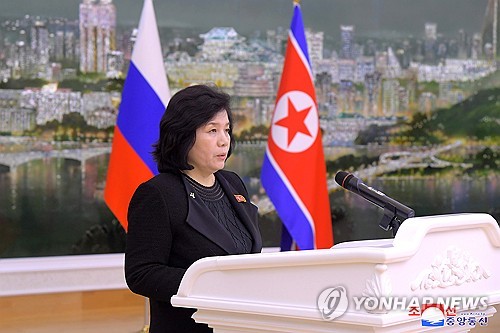
Permanent weapons, permanent problems
North Korea’s foreign minister declared on September 24 that the country’s nuclear arsenal is “absolutely unchangeable for a hundred years and a thousand years,” effectively closing the door on denuclearization talks for a generation at least.
Ri Son-hong’s statement came days after the foreign ministers of the United States, Japan, and South Korea issued a joint declaration on September 21 reaffirming their commitment to complete North Korean denuclearization and urging Pyongyang to return to negotiations.
The timing was not accidental. Ri’s response was pointedly sharp, calling the trilateral statement “anachronistic” and accusing the three nations of clinging to a “realization-impossible fantasy.”
The declaration marks a significant escalation in North Korea’s rhetorical posture. By invoking such an extraordinary timeframe—one millennium—the regime is not merely restating an existing policy position but attempting to permanently foreclose any future diplomatic pathway. Analysts noted that the language mirrors phrasing previously used in North Korea’s own constitutional documents and military directives, suggesting the statement carries the full weight of Kim Jong-un’s approved position rather than representing a spontaneous diplomatic maneuver.
What changed
This is not the first time Pyongyang has stated it would not give up its nuclear weapons. But the rhetorical temperature has shifted markedly. Where past declarations spoke of “no regression” or “no compromise on sovereignty,” the new language is absolutist: eternal, irreversible, unchallengeable.
Ri explicitly rejected the notion that opposition pressure could be combined with dialogue, saying bluntly that “coopetition between confrontation and dialogue” holds no appeal for North Korea. The rejection of a dual-track approach—sanctions pressure paired with engagement—represents a departure from earlier decades when Pyongyang kept at least one channel open, however nominally.
She also framed North Korea’s nuclear status as already reshaping the regional order, claiming that a “geopolitical restructuring centered on nuclear-armed North Korea” is “inevitable” and “firmly entrenched.” This assertion goes beyond mere defensiveness; it signals Pyongyang’s conviction that the world has already accommodated its nuclear status and that resistance is merely a matter of time before it crumbles.
Behind the scenes, multiple sources familiar with North Korean decision-making indicate the declaration was debated at the highest levels. Some advisors reportedly cautioned that locking in such absolute language could isolate Pyongyang further and eliminate future flexibility. Kim Jong-un ultimately sided with the hardliners, consistent with a broader trend toward ideological rigidity observed since 2022.
Who wins, who loses
Pyongyang wins nothing diplomatically from this posture. It gains no concessions, no sanctions relief, no security guarantees. What it does gain is internal political cover: by drawing a line so absolute, Ri insulates Kim Jong-un’s leadership from any future criticism that nuclear weapons were surrendered for too little in return. The language also reinforces the regime’s core ideological narrative—that self-reliance (Juche) and military strength are the only guarantees of survival.
But the regional cost is significant. For Washington, Tokyo, and Seoul, the message is unambiguous—there will be no progress on the Korean Peninsula through negotiation so long as Pyongyang holds this position.
Japan is likely the most affected. Tokyo has long treated North Korean nuclear capability as an existential threat justifying expanded defense spending and closer ties with Seoul and Washington. Ri’s declaration validates that alarm while making military containment a far more expensive proposition. Japanese officials are now likely to accelerate plans for increased missile defense deployments, counter-strike capabilities, and potentially discussions about extended deterrence arrangements that go beyond current frameworks.
South Korea faces a similar squeeze. The new hardening undermines arguments within the ruling party that engagement remains viable, potentially shifting momentum toward even stronger support for trilateral military coordination with the US and Japan. However, it also complicates efforts to manage inter-Korean relations, particularly if public sentiment shifts toward hardline positions that make any future reconciliation more politically costly.
China’s position grows more uncomfortable. Beijing has consistently called for dialogue and denuclearization while also opposing regime collapse in Pyongyang. Ri’s declaration makes China’s balancing act harder—Pyongyang is digging in further, but Beijing does not want a crisis on its border. There are growing reports of quiet frustration within Chinese diplomatic circles about North Korea’s increasingly unpredictable behavior, though official rhetoric remains measured.
Second-order effects
Beyond the immediate diplomatic paralysis, several second-order consequences are already emerging. The declaration is likely to accelerate defense procurement cycles across the region. South Korea may push forward with plans for additional nuclear-capable submarine deployments and expanded range for its own missile systems. Japan could face renewed domestic debate about whether its current defense posture is adequate against a formally nuclear-armed neighbor that has ruled out any constraint.
The economic dimension cannot be ignored. North Korea’s insistence on permanence contradicts the regime’s obvious economic desperation. Sanctions enforcement has tightened considerably since 2022, and alternative supply routes have been disrupted by enhanced monitoring. The declaration suggests Pyongyang has chosen symbolic permanence over pragmatic adaptation—a calculation that prioritizes regime survival through deterrence over material improvement for the population.
There are also implications for non-proliferation norms globally. By declaring its nuclear status eternal and unchallengeable, North Korea is testing whether the international community will accept a new category of state—that of a permanent nuclear pariah. If the status quo holds, other sanctioned states may draw their own conclusions about the utility of nuclear weapons as insurance against regime change.
What happens next
The immediate consequence is paralysis. With Pyongyang ruling out denuclearization as impossible and the trilateral partners refusing to recognize North Korea as a nuclear state, there is no common language for diplomacy.
Expect increased US-Japan-ROK military exercises, deeper missile defense cooperation, and continued pressure on North Korea’s illicit trade networks. The three partners have shown they can coordinate rapidly when provoked, as they did following North Korea’s April 2024 constitutional amendment enshrining its nuclear status. That precedent suggests the trilateral will respond to Ri’s declaration with heightened posture activities rather than diplomatic outreach.
Meanwhile, Beijing faces a strategic dilemma that will intensify. It has consistently called for dialogue and denuclearization but also opposes any action that could destabilize the Kim regime. Ri’s declaration makes China’s balancing act harder—Pyongyang is digging in, but Beijing does not want a crisis on its border. Chinese mediators may attempt behind-the-scenes outreach, but North Korea’s latest rhetoric leaves little room for constructive interpretation.
There is also a risk that the declaration could push Pyongyang toward further nuclear tests. The language used—particularly the insistence that denuclearization rhetoric only strengthens North Korea’s “justification” for nuclear expansion—suggests the regime sees no downside to further weaponization. Intelligence estimates suggest North Korea has maintained the capability for additional nuclear tests since 2017, and the current political climate removes what few remaining constraints existed.
The bigger picture
The declaration is best understood as North Korea’s answer to a region increasingly focused on other threats. With attention turning toward Iran, the South China Sea, and European security, Pyongyang has used this moment to entrench its status before the world looks elsewhere. The regime appears to have calculated that the cost of provocation is lower than the cost of waiting for greater scrutiny.
For the next administration in Washington, the Korean Peninsula will not go away. But it will be harder, more expensive, and without a clear off-ramp. The traditional tools of diplomacy, sanctions, and deterrence now face a adversary that has explicitly rejected the premise of negotiation while accepting the costs of isolation.
The days of hoping North Korea would trade nukes for aid are over. The question now is what comes next when diplomacy has been ruled out entirely—and how the region manages a permanent nuclear adversary that has declared itself beyond reach.