North Korea Probes DMZ on Two Fronts Before Landmine Explosion
North Korean troops crossed the DMZ boundary on the eastern front just before a landmine explosion wounded three South Korean officers on the western front — a dual-front signal that demands a closer look at Pyongyang's escalation playbook.
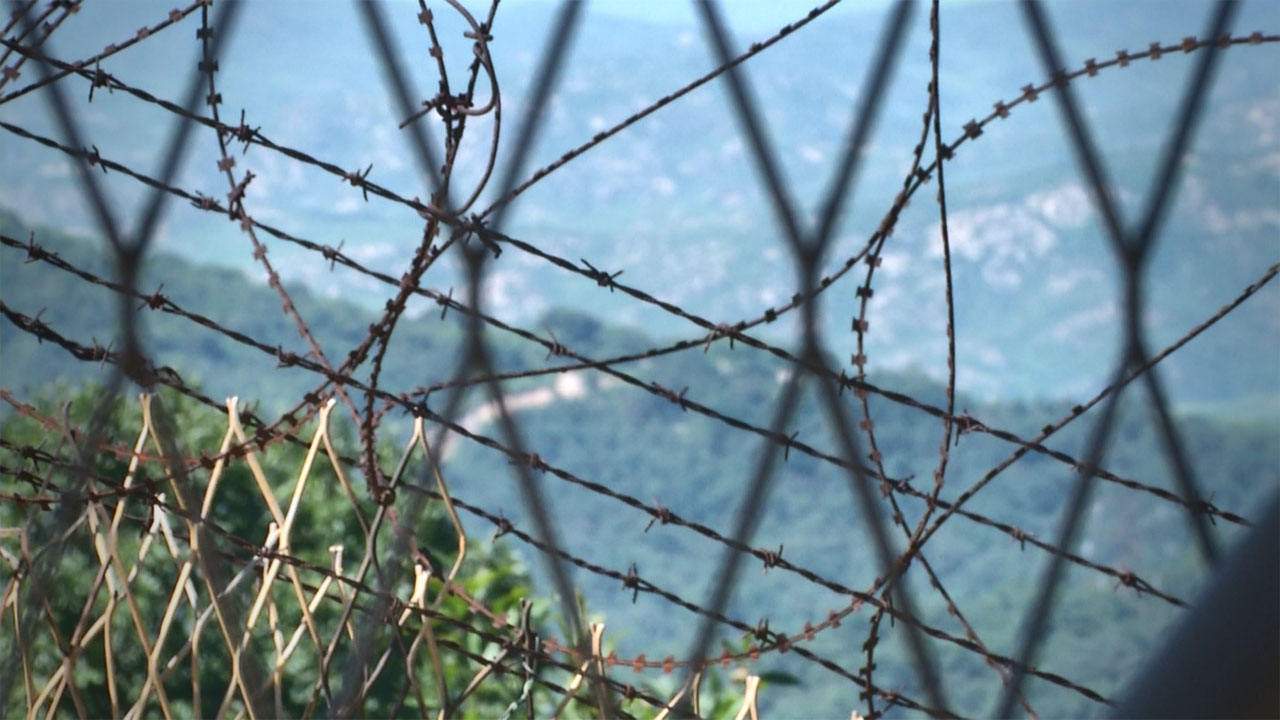
The Crossing That Preceded the Blast
Three South Korean military officers were seriously injured on the morning of September 23 when a device — almost certainly a landmine — detonated along the western front of the DMZ. The location is a known area where North Korea has been accused of laying mines since 2024, when Pyongyang formally declared it would no longer treat the Military Demarcation Line as a formal border.
But the explosion itself is only half the story. In the hours before it went off, North Korean patrol troops crossed the Military Demarcation Line on the eastern front — a separate stretch of the border roughly 150 kilometers away — and then turned back. South Korean forces responded with warning broadcasts and warning shots, following standard operating procedure.
What makes this sequence significant is not the crossing alone, nor the explosion alone. It is their proximity in time, and the fact that they occurred in different sectors under different operational conditions.
A Deliberate Dual-Front Probing Strategy
This is not the first time North Korea has tested the DMZ boundary since its border reclassification campaign began. Both eastern and western sectors have seen repeated incursions by what appear to be routine patrol and guard units. The South Korean military has been managing these as day-to-day incidents — broadcast warnings, sometimes shots fired, always de-escalated without escalation.
That normalization is precisely what Pyongyang seems to be exploiting.
By conducting a boundary probe on the eastern front while simultaneously leaving behind evidence of mine-laying on the western front, North Korea is running a two-track test of South Korean response patterns. On one front, it sends soldiers across the line and watches whether the response remains calibrated. On the other, it plants devices and watches whether the reaction matches the provocation or falls short.
The wounding of three officers — described as serious but not life-threatening — suggests the western front event was not entirely accidental. Whether this was a newly laid mine or a remnant from decades past is impossible to confirm from the available reporting. But the pattern of border infrastructure modification, new tactical roads built along the former boundary, and renewed mine-laying activity all point to an active campaign rather than a lapse in maintenance.
Who Wins and Who Loses
Pyongyang wins a modest but real advantage from this kind of calibrated aggression. Each controlled crossing tests the alertness, communication speed, and political will of South Korean forces without triggering a kinetic response. Each planted or discovered mine forces Seoul to absorb costs — medical, operational, political — without a clear adversary to blame publicly. The ambiguity is the weapon.
Seoul loses ground every time an incident like this goes unanswered beyond standard protest measures. The three injured officers are a human cost, but the deeper loss is strategic: each unchallenged boundary probe makes the DMZ more permeable in practice, even if the armistice still technically holds.
The United States, which maintains a contingent of roughly 28,500 troops in South Korea and serves as the ultimate security guarantor, faces a reputational question. Washington has been pushing for burden-sharing talks and regional force posture adjustments. If North Korea perceives any signal that American commitment is wavered — through delayed defense reviews, public friction with Seoul, or diversion of attention to other theaters — the incentive to test boundaries further grows.
What Happens Next
The most likely path forward is not dramatic escalation but slow grinding pressure. North Korea has shown no interest in reigniting full-scale conflict; it has every interest in keeping South Korea perpetually off-balance through a series of low-level, deniable provocations.
Seoul’s options are limited. Increasing patrol frequency along the DMZ raises the chance of an accidental engagement. Closing the border entirely would be a political surrender. The most practical response is likely enhanced surveillance — more drones, better sensor coverage along the eastern front in particular, where the September 23 crossing occurred — and a diplomatic push to bring the issue before the United Nations Command Military Armistice Commission, a body that has rarely functioned effectively in recent years.
There is also a technical problem that deserves attention: the physical markers along much of the DMZ have degraded over 70 years. Comments from South Korean veterans online noted that boundary markers are nearly invisible in many sections. Without clear demarcation, every incursion becomes harder to verify and harder to respond to proportionally.
Why This Matters Beyond the Peninsula
The timing of North Korea’s actions is worth watching. Any provocation that draws regional attention now arrives against a backdrop of shifting American foreign policy priorities and ongoing negotiations about regional force postures. A conflict on the Korean peninsula would instantly redraw assumptions about deterrence in East Asia, affect energy supply routes through the Strait of Taiwan and the South China Sea, and force Japan and Australia into reactive postures they have spent years trying to avoid.
For now, the situation remains contained. But the dual-front probing pattern observed on September 23 establishes a playbook. If Pyongyang can conduct boundary crossings and mine-laying across multiple sectors simultaneously while keeping South Korean forces locked in a defensive, reactive posture, it has found a sustainable way to exert pressure without crossing the threshold into war.
That is a dangerous equilibrium — not because it looks like the prelude to conflict, but because it is conflict by another means.