North Korea Troops Signal a Dangerous New Axis in Ukraine
Russia is tapping North Korea for up to 10,000 more troops as it expands its military to 2.44 million personnel. The swap of drones for soldiers marks a new proxy dimension in the Ukraine war.
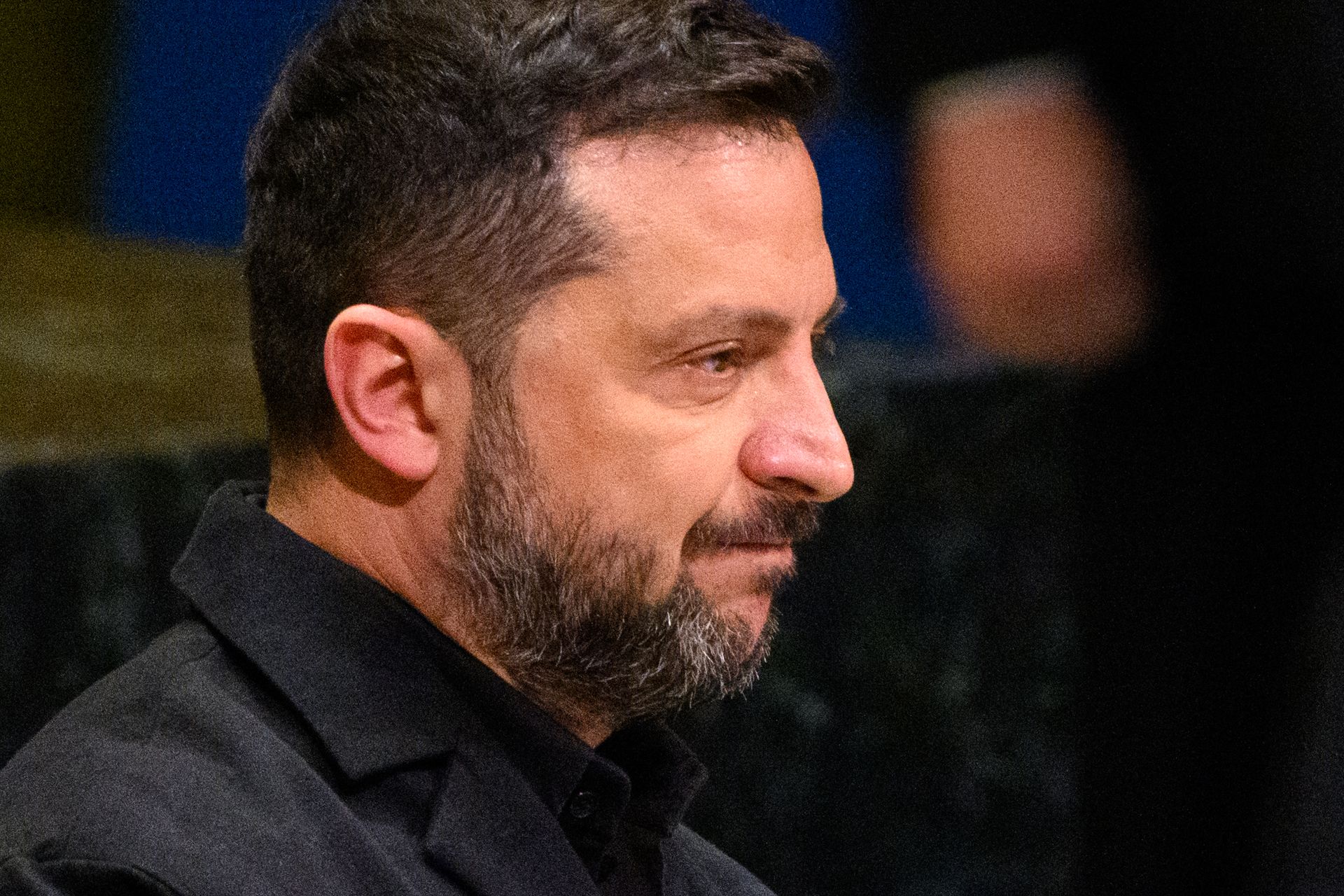
The Unspoken Escalation
Volodymyr Zelensky has issued a warning that deserves more attention than it is getting. On September 28, the Ukrainian president stated that Russia has already begun additional mobilization following parliamentary elections widely condemned as rigged. Moscow is also ramping up its use of foreign fighters, and the most consequential detail is not about any Syrian volunteer or Wagner remnant — it is about North Korea preparing to send another 10,000 troops.
More than 8,000 North Korean military personnel are already stationed in Russia. That number will grow substantially. What makes this moment sharper is the transaction underpinning it: Kyiv Independent reports that Russia is providing technological assistance to Pyongyang in exchange, and Shahed attack drones are now being produced by North Korean facilities.
This is not a side story. It is the shape of a new axis forming in real time.
Why This Matters Beyond Kyiv and Moscow
Western capitals have spent two years tracking the flow of Iranian drones and Chinese dual-use components into Russia. North Korea has been a footnote — mentioned in passing, documented in fragments. Zelensky’s remarks at the UN General Assembly, which already drew criticism from South Korea’s leadership, bring the issue into the open.
The scale changes everything. Ten thousand additional troops would nearly match the combined strength of all NATO battalions currently deployed along the eastern flank. North Korean soldiers are not volunteers. They are conscripts and elite units trained for a very different kind of war — one designed around artillery saturation and trench warfare, the exact playbook Russia is now applying in Ukraine.
The technological quid pro quo runs in both directions. Iran gave Russia guidance on missile and drone production early in the war. North Korea is now feeding that machine with manufacturing capacity and bodies. In return, Russia is handing over military technology that accelerates Pyongyang’s own weapons programs. Every engine component, every guidance system transfer strengthens a regime that has spent decades seeking exactly this kind of partnership with a major military power.
The Numbers Behind the Threat
Russian state media confirmed on September 28 that Putin authorized an increase in armed forces size. The new cap sits at 2,441,630 personnel, including 1,550,500 active-duty troops. That is an increase of 15,500 — small on paper but symbolic. It is the fourth such increase since January 2025.
Ukrainian intelligence assessments, shared with the Kyiv Independent, paint a starker picture. Russia’s General Staff is preparing to mobilize approximately 300,000 personnel each year through 2026 and 2027. On top of that, roughly 400,000 people per year are needed just to replenish losses. That is 700,000 new bodies annually that Moscow must find, press, or import.
North Korea is not the only foreign source, but it is the most organized and the most alarming in scale. Other pathways — contracts with African militias, residual Wagner networks, coerced prisoners — are harder to quantify and harder to track. The North Korean deployment is visible. It is also repeatable.
Second-Order Effects: What No One Is Fully Accounting For
The immediate concern about North Korean troops is tactical. The longer-term danger is structural, and it reaches well beyond the battlefield. Three second-order effects deserve particular attention.
First, the integration of North Korean forces into Russia’s military machinery normalizes a precedent that other authoritarian states will observe and potentially replicate. If Pyongyang demonstrates that a sanctioned, isolated regime can export soldiers to a major power and receive advanced technology in return, the cost-benefit calculus shifts for other potential participants. States that have maintained distance from Russia’s war effort may begin to calculate that selective engagement offers tangible rewards without the full costs of open alliance.
Second, the technological transfer flowing from Russia to North Korea has implications for regional security in East Asia that extend far beyond Ukraine. Intelligence assessments suggest that Russian aeronautical engineering expertise, satellite imagery analysis techniques, and electronic warfare knowledge are reaching North Korean research institutes. These capabilities, when applied to Pyongyang’s existing missile and nuclear programs, accelerate timelines that Western planners had assumed were static. South Korea’s defense establishment has already flagged this concern in classified briefings to the National Security Council.
Third, the political dynamics within Russia itself are shifting in ways that compound the threat. The mobilization order, blessed by a rubber-stamp parliament and enabled by a foreign workforce that generates no domestic grief, removes one of the primary constraints that have historically limited Kremlin escalation. When soldiers come from abroad, the Russian public does not see body bags arrive at airports. When casualties mount among North Korean conscripts rather than Russian draftees, there is no wave of mothers’ protests, no political pressure on the war effort. This insulation allows Moscow to sustain a level of combat intensity that would have been politically unsustainable under earlier conditions.
Who Wins and Who Loses
Moscow wins immediate manpower. It buys time on a front that has been grinding for years. Pyongyang wins technology and diplomatic legitimacy. A sitting nuclear power hosting North Korean troops on Russian soil signals a level of strategic recognition that Kim Jong-un’s government has long sought.
Ukraine loses breathing room. Its already stretched defenses now face an enemy that is simultaneously expanding its own ranks and importing soldiers who bring a specific combat doctrine. The additional mobilization is expected precisely because United Russia won the September 21 elections convincingly enough for the Kremlin to feel politically secure in ordering it.
NATO loses predictability. The alliance has built its eastern deterrence posture around a calculus that assumed Russia was fighting a war of attrition against its own population. North Korean troops disrupt that equation entirely. They are a force multiplier that does not draw from Russian families, does not generate domestic protest, and does not appear in any Russian census.
The Path Ahead
Zelensky called for further sanctions and continued aid from allies in his nightly address. The request is urgent, but the situation demands something more structural than the current aid packages. The deployment of North Korean troops is not a temporary workaround — it is a permanent addition to Russia’s force structure that will compound year after year unless something changes the cost-benefit calculation in Pyongyang.
The most likely near-term trajectory is steady growth. If the current 8,000 are embedded in combat zones, the next 10,000 will follow the same path. Russian command will integrate them into existing formations rather than create separate units, meaning Ukrainian forces will face North Korean tactics without necessarily knowing they are facing them. This blending is deliberate. It maximizes the utility of North Korean soldiers while minimizing the political visibility of their presence.
The deeper danger is the normalization of this arrangement. If North Korean troops remain in Russia through 2027 and beyond, the conflict ceases to be a regional war with external suppliers and becomes a multinational proxy conflict with direct combatants from three continents. That is the escalation Zelensky flagged when he said, “This is how evil spreads and how a threat to life in one part of the world spreads to other parts of the world.”
What makes this moment distinct from earlier phases of the war is that the proxy dynamic is no longer abstract. Soldiers from a third country are already fighting on European soil. The question ahead is whether the international response will treat this as the boundary-crossing event it is, or whether it will be absorbed into the same pattern of incremental concern that has characterized much of the conflict so far.
Zelensky’s warning is clear. The test is whether the world listening is ready to act.