North Korea's Bridge to Sanctions Evasion: The New Yalu Crossing
A decade-old bridge between Dandong and Sinuiju finally opens, signaling deeper North Korea-China ties and raising fresh questions about whether sanctions can contain a regime pivoting toward Moscow.
A bridge built in silence, opened at just the right moment
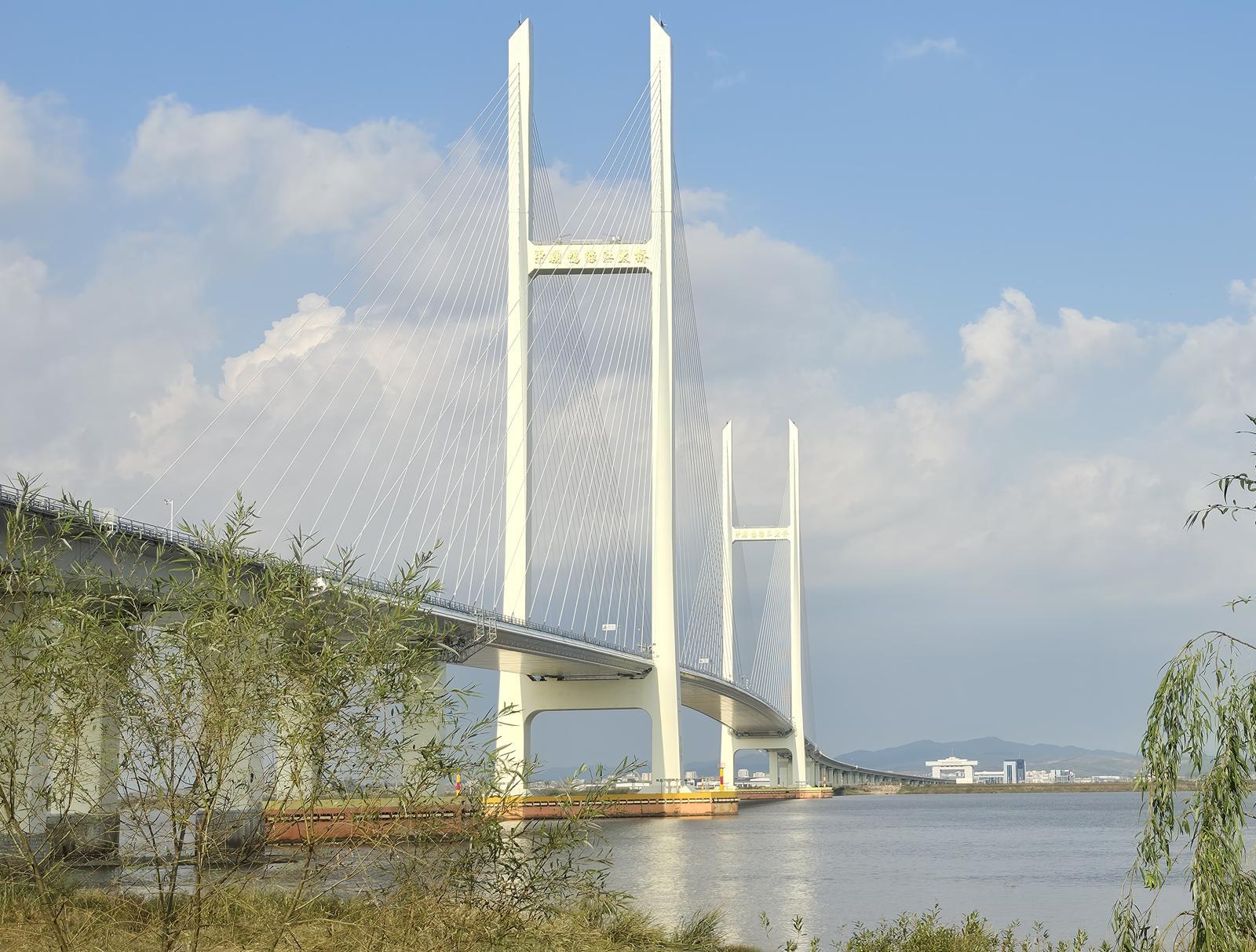
The new Yalu River bridge — roughly three kilometers of steel and concrete spanning the water between China’s Dandong and North Korea’s Sinuiju — has been sitting there since 2014. Fourteen lanes, wide enough for four vehicles side by side, completely unused. Not a single truck rolled across it. For over a decade, it was a monument to what might have been: a physical connection between two countries whose relationship had quietly frozen.
That changes on the 15th. Beijing and Pyongyang are scheduling a joint opening ceremony. Chinese Foreign Ministry spokesperson Mao Ning called it important infrastructure, and framed the crossing as a catalyst for economic exchange and people-to-people contact. The framing is deliberate. This is not merely a bridge; it is a statement about where North Korea sits in the current order.
From estrangement to embrace
The reason the bridge sat empty for twelve years is itself a story. North Korea conducted nuclear tests. The United Nations responded with increasingly severe sanctions. China, despite being North Korea’s primary economic partner, partially enforced those restrictions. Trade fell. Diplomatic contact dwindled. The bridge became a symbol of a relationship under strain rather than one expanding.
The reversal began in 2025. Kim Jong Un traveled to Beijing for the anniversary parade — a visible signal that he was recalibrating. By March, Pyongyang and Beijing had restored their international passenger train, suspended during the pandemic. In June, Xi Jinping visited Pyongyang for direct talks with Kim. Six months after the bridge was first expected to open, it finally did.
The timing is not accidental. The sequence of events — the train, the flight, the summit, the bridge — traces a clear arc. North Korea is anchoring itself to China again, but on terms that reflect a more assertive regime. Kim is not asking for permission. He is building infrastructure while the window is open.
What the numbers actually show
China’s customs data places 2025 bilateral trade at $2.73 billion — the highest level in six years. That sounds like progress until you compare it to 2016, when trade peaked at $5.65 billion before sanctions tightened. The number is half what it was. The upward trend is real but the base is low.
This is the central tension that Western analysts often miss: the headline narrative is about deepening North Korea-China cooperation, but the data shows a relationship that has been structurally constrained for nearly a decade. The bridge does not erase that. It provides capacity that was previously unavailable, but capacity without demand is just idle steel.
Why North Korea still controls the flow
One detail worth noticing: despite reopening rail and air links this year, Pyongyang has not yet resumed group visa issuance for Chinese tourists. That is a deliberate choice. It means North Korea is reopening selectively — taking what it needs from China while keeping strict control over human contact across the border. The regime has learned from the pandemic era that information and people moving freely are harder to contain than goods.
The old Yalu River Bridge, which handled both road and rail traffic on a single lane each, is expected to become primarily a rail route. The new bridge will handle road freight. That division of labor, noted by the monitoring group 38 North, suggests Pyongyang is optimizing for cargo over people — exactly the kind of prioritization that matters when sanctions evasion is the objective.
The Russia factor is not secondary
In September, North Korea opened a one-kilometer vehicle bridge connecting its Rason special economic zone to Russia’s Khasan in the Far East. This was the first road bridge between North Korea and Russia. Reuters described it as part of Pyongyang’s effort to balance between Beijing and Moscow. That assessment is correct but understated.
The dual opening — China in October, Russia in September — reveals a strategy. North Korea is no longer treating China as its sole external lifeline. It is building redundancy. Every new crossing is an insurance policy against the possibility that Beijing, under renewed international pressure, could tighten enforcement. A regime that has spent decades preparing for isolation does not bet everything on one relationship.
China is watching. The Far East is China’s gateway to the Sea of Japan, and increased North Korea-Russia trade through the Rason-Khasan corridor affects Beijing’s strategic calculus. The new Yalu bridge and the old Tumen River dynamics are connected in ways that go beyond simple bilateral trade statistics.
What this means for sanctions enforcement
The United Nations sanctions framework prohibits North Korean exports of coal, seafood, and textiles, and restricts imports of industrial machinery. None of that changes with a bridge opening. But the physical architecture of smuggling is. Wider roads mean larger convoys. Dedicated freight routes mean less commingling with legitimate passenger traffic. The old bridge was a bottleneck; the new one is a funnel.
The question is not whether sanctions will break overnight. It is whether they will face sustained pressure at the points of entry that matter most. China has historically enforced UN sanctions unevenly — often slowly, sometimes not at all. A new bridge gives Beijing another opportunity to choose its level of compliance, and Pyongyang another opportunity to test where the boundaries actually are.
The harder question
The opening of the Shin-Yalu River Bridge is being presented as a milestone in North Korea-China relations. That is accurate but incomplete. The more consequential framing is that it represents North Korea’s successful engineering of an escape valve from sanctions pressure — not by defeating the sanctions, but by building alternatives around them. The regime is not waiting for the international order to change. It is constructing parallel infrastructure while the world watches.
Whether the bridge becomes a major trade corridor or remains mostly symbolic depends on decisions in Beijing, Pyongyang, and Washington. But the symbolic weight is already real. Twelve years of silence followed by a joint ceremony sends a message that North Korea is rewriting its own isolation, one crossing at a time.