German Robot Groping Case Tests Assault Law for the Age of Machines
A humanoid robot allegedly used to grope a teen in Cologne has German prosecutors grappling with whether existing assault laws cover machines. The outcome could reshape product liability across the robotics industry.
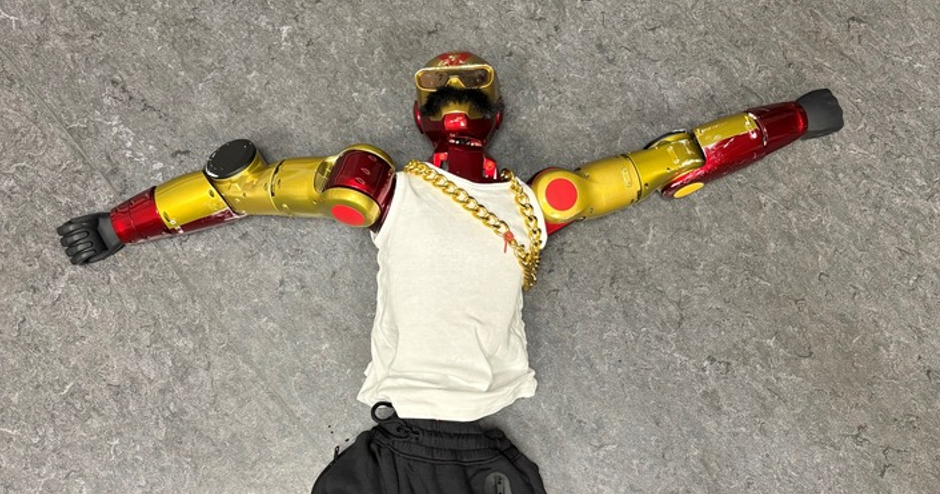
A Robot in Cologne Changes Everything
On Oct. 10, just before midnight on a busy nightlife strip in Cologne, a red-and-gold humanoid robot about four feet tall approached a group of three teenage girls standing near a fast-food restaurant. According to police and multiple videos circulating online, the machine — dressed in athletic wear and owned by a 16-year-old boy — touched the buttocks of a 16-year-old girl and made repeated thrusting motions toward her. The owner and his 19-year-old companion were livestreaming the encounter, commenting on it in real time, before police arrived and confiscated both the robot and the suspects’ smartphones.
That is the factual record as far as investigators and public evidence currently allow. What comes next — the legal classification of what happened, and who pays — has no clean precedent anywhere in the world.
The Law Was Written for Humans
Under German criminal code, the offense of sexual harassment (§ 184a StGB and related provisions) requires direct physical contact between people. Legal experts told RTL that a robot arm making unwanted contact with a minor does not fit that statutory language. The prosecutor’s office in Cologne is therefore exploring a charge of sexually motivated insult (§ 186 or general insult provisions), along with potential violations around the unauthorized publication of images — a separate but potentially significant layer given that the incident was broadcast live.
No charges have been filed as of Wednesday, and investigators are still reconstructing the exact sequence of events from surveillance footage and online recordings. They are trying to answer a deceptively simple question: who was in control?
Three scenarios are on the table. One, the robot was being teleoperated or remotely guided by one of the young men at the moment of contact. Two, the movements were pre-programmed or triggered by a specific command. Three, the robot acted autonomously — its own AI or sensor system producing the motion without direct human input at the point of contact.
The answer to that question determines almost everything else.
If a Human Was Controlling It
Remote control or pre-programming makes this a conventional criminal case with an unusual instrument. The 16-year-old and the 19-year-old would face charges for using a machine as the means of committing a sexual offense. German law already holds adults and older minors criminally responsible for offenses committed through intermediaries — a person who directs a dog to bite someone is still the attacker. A robot arm is functionally no different in that framework.
The livestreaming complicates sentencing but not liability. Broadcasting the act and deriving attention from it could aggravate the offense, and German courts have increasingly treated online exploitation of sexual violence as an independent harm. The claim made later on TikTok — that the robot had accidentally bumped into a woman while avoiding another passerby — is undermined by multiple longer videos showing deliberate, repeated sexual gestures after the initial contact.
If the Robot Acted on Its Own
This is where the case becomes genuinely unprecedented. If investigators determine that the robot produced the motion autonomously — through onboard AI, uncommanded sensor response, or some other mechanism not directly controlled by the users at the moment — then existing criminal statutes start to fray. There is no provision in German or EU law that treats a machine as a legal actor capable of committing assault. The liability then pivots to civil law and product regulation.
That pivot has enormous commercial implications. The robot involved is a commercially available model sold for roughly €5,000. It is not a prototype or an academic research platform — it is a product sitting on shelves. If a court or regulator determines that the robot’s design, sensor configuration, or autonomy architecture made inappropriate contact foreseeable and preventable, the manufacturer could face product-liability claims, mandatory recall orders, or new certification requirements.
Who Pays When a Machine Misbehaves
Product-liability law in the EU is governed by the Product Liability Directive, which imposes strict liability on manufacturers for damage caused by defective products. A defect can be a design flaw, a manufacturing error, or inadequate instructions. The question this case forces is whether a robot’s failure to maintain appropriate physical boundaries with human beings qualifies as a design defect — and whether that standard should apply to consumer-grade humanoid robots.
The answer will differ depending on what the robot was designed to do. A warehouse robot navigating factories has a different boundary standard than a social robot operating in public spaces. But once a consumer-grade robot is sold for use in environments where it will encounter unaccompanied minors, the duty-of-care analysis shifts. Regulators may require geofencing, proximity sensors, or software locks that prevent certain types of physical interaction — or they may simply ban the sale of untethered humanoid robots to private individuals below a certain capability threshold.
What Happens Next
The Cologne investigation will proceed along two tracks. The criminal track targets the two young men and will turn on the control question — remote, programmed, or autonomous. The regulatory track, likely triggered by the outcome of that investigation, will examine whether the robot’s manufacturer should have anticipated this misuse and whether current consumer-robot standards are adequate.
Even if the boys face only insult charges rather than sexual harassment, the case will reverberate. It is the first publicly documented instance of a consumer humanoid robot being used — deliberately or not — in a sexually aggressive act against a minor. Courts in Germany and elsewhere will cite it. Legislators will cite it. Robotics companies will cite it, usually to argue that the problem is misuse, not design — an argument that gains force only if the control evidence points away from the manufacturer.
The timeline matters. German investigators are analyzing video and phone data now. Charges could be filed within weeks. A trial, if it proceeds, would not conclude until at least 2027 — by which time the robot market will have moved significantly further. Companies shipping humanoid robots to consumers in Europe will be watching closely, because the legal classification decided in a Cologne courtroom will determine whether they face criminal complicity for their customers’ actions or civil exposure for their product’s behavior.
The technology is already here. The law is not.