NVIDIA Just Rewired the Chip Supply Chain — And Samsung Won Big
NVIDIA has moved its Grock3 low-latency AI inference chips into volume production through Samsung Foundry, marking the first time a Korean fab has entered NVIDIA's accelerator supply chain at scale. The implications ripple across the Korea-China-Taiwan chip triangle and the global AI infrastructure race.
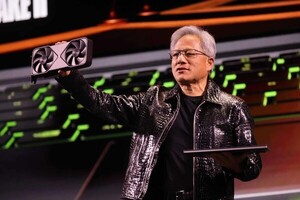
The Deal That Changes Everything
NVIDIA announced last week that its Grock3 LPX rack has entered volume production — and the fine print is where the story lives. Samsung Foundry is manufacturing the Grock chips. TSMC, in turn, continues to produce NVIDIA’s GPUs. This is not a minor supplier swap. It is the first time a Samsung fab has entered NVIDIA’s accelerator supply chain at meaningful scale, and it reconfigures the geopolitical and competitive map for AI infrastructure in ways that will echo through the next decade of semiconductor economics.
The Grock technology came through a licensing deal signed in December 2024 for $20 billion — NVIDIA’s largest acquisition-scale transaction ever. The terms of that deal have not been fully disclosed, but industry analysts estimate that a significant portion was structured as a combination of upfront licensing fees and future revenue-sharing tied to Grock chip production volumes. That structure is notable: it means Samsung Foundry’s margins on Grock silicon could become a recurring revenue stream, not a one-time fabrication hit.
Grock’s architecture packs 500MB of high-speed SRAM directly onto the chip, a design choice aimed squarely at reducing memory bottlenecks during inference workloads. The result is a processor that moves 3,400 tokens per second per LPX rack — which holds 264 Grock3 chips — far faster than what standard GPU-based inference can achieve for latency-sensitive tasks like coding agents, real-time translation, and autonomous system control. The architectural philosophy behind Grock is unmistakably different from NVIDIA’s GPU strategy: where GPUs excel at parallel throughput, Grock is engineered for deterministic low-latency performance, a distinction that matters enormously as the industry moves past the training bottleneck into the inference deployment phase.
Why Samsung’s Entry Matters
Samsung Foundry has been chasing prestige clients for years. Its advanced-node process has historically lagged behind TSMC’s leading-edge offerings, and the foundry business has been a persistent drag on Samsung’s broader semiconductor profitability. A foundry win from NVIDIA — the most valuable company in the world and the dominant force in AI hardware — is the kind of validation that moves stock prices, shifts client conversations, and reshapes investor narratives overnight. For Samsung, this deal is not just a manufacturing contract. It is a strategic foothold inside the most powerful AI company on earth, and it establishes a dependency chain that did not exist before.
The chips are fabricated using Samsung’s process technology, and the relationship creates structural interdependencies. Samsung’s equipment suppliers, particularly those in the lithography and packaging segments, will see sustained demand. Samsung’s own R&D investment in advanced packaging — specifically its I-Cube heterogeneous integration platform — is now directly tied to NVIDIA’s product roadmap, meaning Samsung’s engineering priorities will align more closely with NVIDIA’s than they ever have before. This is a deeper entanglement than a typical foundry relationship.
TSMC remains NVIDIA’s GPU supplier, and that relationship is not going anywhere. TSMC’s process leadership in GPU fabrication is well-established, and NVIDIA’s Blackwell and Vera Rubin architectures are designed around TSMC’s capabilities. But the Grock arrangement splits the supply chain geographically and functionally: Korean fabs for inference-optimized silicon, Taiwanese fabs for general-purpose GPU acceleration. This diversification is exactly what NVIDIA’s AI infrastructure lead Dion Harris described when he said the company is “using the right processor for each part of the job” — not replacing GPUs, but complementing them with purpose-built silicon for inference workloads. The effect is a supply chain that is more resilient but also more complex, with cost and coordination implications that are still being figured out.
The Inference Wars Are Real
Low-latency inference is becoming the bottleneck that determines which AI products feel fast and which feel sluggish. The difference between a model that responds in 200 milliseconds and one that takes two seconds is not a marginal UX improvement — it is the difference between an AI assistant that feels intelligent and one that feels broken. OpenAI’s UltraFast mode, for example, runs on Cerebras chips and currently handles about 750 tokens per second — impressive, but roughly a quarter of what a single Grock3 LPX rack can push. AMD has also pivoted toward inference, announcing earlier this year that it would integrate Cerebras chips into rack-level systems, signaling that even the companies with strong GPU portfolios are acknowledging that inference requires a different approach.
The market is converging on the same conclusion: training may have been the war, but inference is the peace, and latency is the terrain. Training models is capital-intensive but comparatively rare — a handful of organizations worldwide can train frontier models. Inference, by contrast, is ubiquitous and continuous. Every query, every API call, every real-time decision multiplies into billions of operations per day. The economics of inference at scale are where the real money will be made, and the companies that can deliver the lowest cost per token at the highest throughput will define the competitive landscape for years.
NVIDIA’s math is stark. Jensen Huang allocated one-quarter of the datacenter space designed for coding applications specifically to Grock chips, with the remaining three-quarters going to Vera Rubin GPU systems. The company projects cumulative revenue of $1 trillion from the Vera Rubin and current-generation Blackwell lines through 2027. Grock is not a side bet — it is a structural component of NVIDIA’s infrastructure strategy going forward. The $20 billion licensing fee, the Samsung production arrangement, the dedicated datacenter allocation — each of these signals that NVIDIA is treating inference as a first-class concern equal to training.
The Korea-China-Taiwan Triangle
This deal shifts the triangle in real time. Taiwan’s TSMC retains GPU dominance but loses exclusivity over NVIDIA’s full accelerator portfolio. The implication is subtle but significant: TSMC can no longer point to NVIDIA as an exclusively Taiwanese-sourced client. Samsung now has a direct manufacturing relationship with NVIDIA that TSMC does not, which gives Samsung leverage in ongoing negotiations with other prospective clients who may seek a non-TSMC alternative for geopolitical or supply-chain reasons.
China’s semiconductor ambitions, meanwhile, face a steeper climb. Samsung and NVIDIA are now co-developing inference-specific silicon under a partnership that explicitly excludes Chinese foundries from the loop. The export-control environment has made this exclusion structural rather than incidental — U.S. regulations restrict the transfer of advanced semiconductor manufacturing technology to China, and the Grock-Samsung arrangement falls squarely within that constrained corridor. Chinese AI companies that depend on high-performance inference chips will need to source through indirect channels or accelerate domestic alternatives, both of which carry significant cost and performance penalties. The gap between Chinese and Western inference capability is likely to widen in the near term.
South Korea gains a seat at the table for the most important AI hardware stack in the world, a position it held in memory (HBM) but never in logic-process AI accelerators. Samsung’s HBM business was already a critical enabler of NVIDIA’s GPU supply — every Blackwell and Grock chip requires HBM — but the new foundry relationship elevates Samsung from components supplier to system-level partner. That distinction matters for valuation, for negotiating power, and for the strategic narrative that Samsung has been trying to construct around its semiconductor division.
Second-Order Effects and Market Reactions
The immediate market reaction has been muted but telling. NVIDIA’s stock rose modestly after the announcement, reflecting analyst relief that the company is executing on its inference strategy rather than relying solely on training hardware. Samsung’s shares moved more dramatically, up on the expectation that the foundry deal would provide a meaningful revenue inflection point. TSMC’s stock dipped slightly on concerns about supply-chain diversification away from Taiwanese manufacturing, though analysts note that the impact on TSMC’s core GPU business should be limited in the near term.
Beyond the stock market, the deal is reshaping vendor relationships across the semiconductor ecosystem. Equipment manufacturers with exposure to Samsung’s advanced-node expansion — including ASML, Applied Materials, and Lam Research — are reassessing their capacity planning. Packaging and testing companies that specialize in heterogeneous integration are seeing increased inquiry volume from Samsung and its subcontractors. The ripple effects extend to labor markets as well: Samsung has been accelerating hiring at its foundry operations in South Korea and Texas, and NVIDIA’s engineering teams are now coordinating with Samsung’s process engineers on a regular cadence that did not exist before.
There are also implications for the competitive dynamics between NVIDIA and its own internal R&D. The Grock acquisition brought in a team of engineers and a library of IP that NVIDIA has been integrating into its broader accelerator architecture. The Samsung foundry relationship means that some of that integration is happening externally, which introduces coordination overhead but also provides flexibility that internal production would not. If inference demand surges beyond what Samsung can handle, NVIDIA has the option to bring Grock production to TSMC or another foundry — a strategic optionality that the company likely factored into the $20 billion deal.
What Happens Next
NVIDIA reports Q2 earnings on May 26. The market will be looking for two data points: first, whether Grock production volume is tracking toward the deployment targets NVIDIA outlined, and second, whether Samsung Foundry is revealing any Grock-related revenue in its guidance. Both will signal whether this is a production milestone or a supply chain headline. Analysts expect NVIDIA to provide more specific guidance on Grock deployment timelines during the earnings call, particularly around the Neavius datacenter deployment with Vera CPU and Rubin GPU, which is expected to come online by year-end.
The broader implication is that the AI infrastructure race is no longer just about who can train the biggest model. It is about who can serve the cheapest, fastest inference at scale — and the companies that control both the silicon and the datacenter deployment path will set the economics for everyone else. The Grock-Samsung arrangement is an early move in that game, and it signals that NVIDIA is building a diversified, multi-foundry strategy that reduces dependence on any single manufacturing partner while accelerating time-to-market for inference-optimized hardware. For Samsung, the deal is validation that its foundry ambitions are no longer theoretical. For the rest of the industry, it is a reminder that the AI hardware landscape is still being written, and the players who thought the supply chain was settled should pay attention.