NVIDIA Buckles to Memory Squeeze — AI Costs Just Got Real
NVIDIA is raising AI server prices 15% because it can no longer absorb the cost of scarce HBM memory. The shift signals that chipmakers have lost pricing power to a small group of memory producers — and every AI company downstream will feel it.
The Bottleneck Is No Longer the Chip
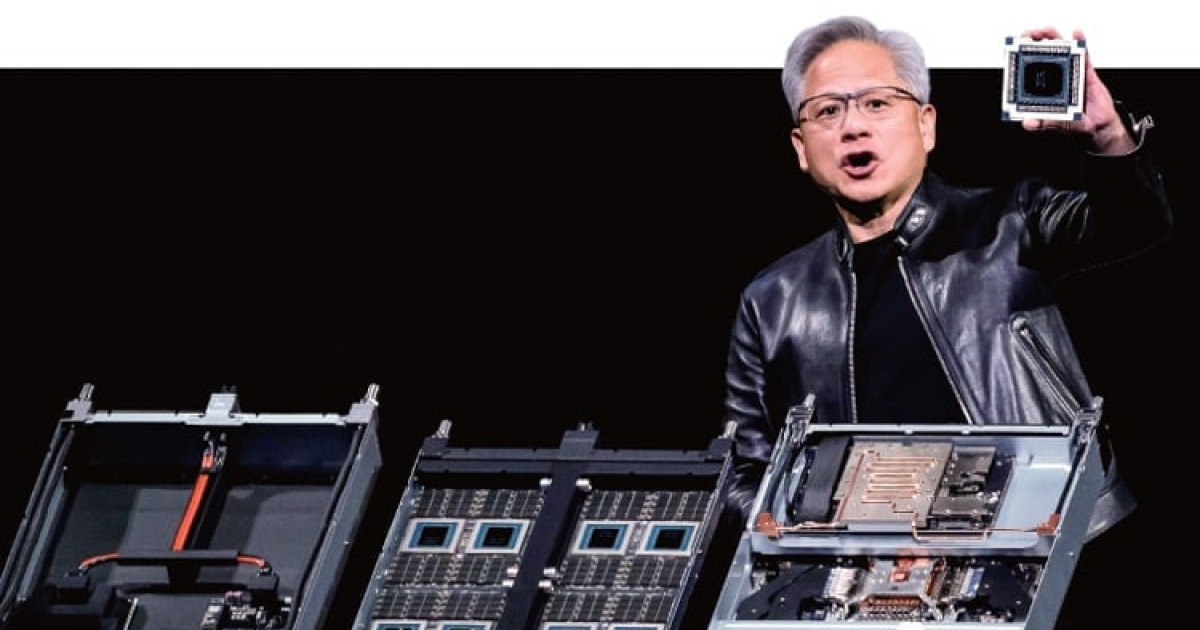
NVIDIA announced — through its manufacturing partners, at least — that it is raising AI server prices by 15% starting with early-next-year shipments. The reason is not demand for GPUs. It is the opposite: memory can no longer keep up.
This matters more than the headline percentage. For years, NVIDIA held effective pricing power over the AI semiconductor chain. It controlled the GPU architecture, the software stack, and the integration. Memory was a line item, not a lever. Now the three memory makers — Samsung, SK Hynix, and Micron — collectively sit on the other side of that equation, and their bottleneck determines how many servers NVIDIA can ship, at what price, and to whom.
Bloomberg reported that Microsoft, Google, and Oracle were notified of the increase. Both the current-generation Grace Blackwell platform and the next-generation Vera Rubin architecture are affected. Apple and Qualcomm have already moved in the same direction for their products. The price-setting authority in AI hardware has quietly shifted.
Why Memory Won Tectonic
High-bandwidth memory, or HBM, is the non-negotiable component inside every modern AI accelerator. The physics of transformer models require massive data to move into and out of GPU compute arrays every millisecond. Without sufficient HBM, a top-tier chip is just an expensive brick.
Demand surged as every major cloud provider and AI company built out data centers in parallel. Samsung, SK Hynix, and Micron are expanding production, but semiconductor fabrication does not scale on a quarterly budget cycle. Greenfield fabs, specialized equipment, and yield ramp take years. Memory lead times are simply longer than GPU lead times, and the gap is widening.
The result is a structural squeeze. Memory is the constraint, not the GPU. And in a supply chain, the constraint sets the price.
Who Wins, Who Loses
The immediate winner is the memory triopoly. Their negotiating position is stronger than it has been in a decade. They are not just supplying components — they are capping the output of the most valuable hardware company on Earth.
NVIDIA loses the ability to absorb cost increases into its margins. The company has priced server configurations with an implicit assumption that component costs would be manageable. That assumption no longer holds. Even so, NVIDIA is likely passing the increase through rather than eating it, which means its customers — cloud providers, enterprises, AI startups — feel the full impact.
Big tech wins only if it already secured memory allocations months ago. Amazon, Microsoft, Google, and Meta have been stockpiling HBM and building internal accelerators partly to reduce NVIDIA dependence. Their self-developed chips also require HBM and DRAM, which means the memory crunch deepens even as they try to diversify away from NVIDIA. More chips in the ecosystem does not mean more servers. It means more memory demand, which means more pressure on the same three suppliers.
Startups and smaller AI companies lose the most. A 15% server price increase on next-gen hardware is not a proportional hit across budgets. It is a threshold test. Companies that priced their infrastructure models around current server costs will need to revise them upward. Some will delay hiring. Some will delay training runs. A few will not survive the recalibration.
The Data Center Math
Deinformation estimated that the price increase adds at least $5 billion to the build cost of a single one-gigawatt AI data center. That is not an abstract number. It is real capital that must be raised, serviced, or redirected. For operators carrying debt or answering to shareholders, $5 billion per site changes project viability.
The cost does not stop at construction. Operational expenses rise too, because server pricing influences the rent cloud providers charge for GPU compute. If an AI server costs 15% more to buy, the hourly rate to rent it from AWS, Azure, or GCP will reflect that — likely with a markup. Training runs, inference workloads, and fine-tuning jobs all become more expensive in tandem.
That creates a feedback loop. Higher compute costs slow iteration speed. Slower iteration slows model development. Slower model development pushes some teams toward smaller, less memory-hungry architectures — or away from on-prem training altogether. The market adapts, but adaptation has a cost, and the cost falls on the people who can least afford it.
What Happens Next
Three things are likely. First, memory prices stay elevated through at least the next cycle of fab expansions coming online. Samsung and SK Hynix have announced capacity plans, but those facilities do not produce volume HBM for another two to three years. Micron’s timing is similar. Supply will tighten, not loosen, before it expands.
Second, NVIDIA will face continued pressure to either raise prices again or reduce configuration sizes. The company could respond by offering a lower-HBM tier of its current or future accelerators, effectively creating a second price band in its server lineup. That would let budget-constrained customers access NVIDIA silicon at reduced memory throughput, while preserving the premium tier for companies that can pay.
Third, the industry will accelerate alternatives — but alternatives are not substitutes in the near term. Cerebras, Graphcore, and domestic Chinese accelerators exist, but none have scaled to the memory requirements or the software maturity that NVIDIA commands. Self-developed chips from big tech are a longer game. They may reduce NVIDIA dependency over time, but they do not solve the memory bottleneck. If anything, they widen it.
The Bigger Signal
The 15% price increase is a proxy event. The real story is that the person who controls the scarcest resource in an AI supply chain now sets the pace — and the price. For years, NVIDIA was that person. Now it is three companies in Seoul and Taiwan and one in Texas.
Every AI plan built on the assumption that hardware costs would stabilize or decline is wrong. The next year will be defined by memory allocation as much as by GPU allocation. Companies that secured HBM early will ship sooner, train faster, and retain a cost advantage. Companies that did not will pay a premium — and may not recover it quickly.
The bottleneck has moved. The prices are catching up. Everyone downstream should adjust now.