NVIDIA Yields to Memory Shortage, Raises AI Server Prices 15%
NVIDIA is raising AI server prices by at least 15%, reflecting the growing power of memory chipmakers Samsung, SK Hynix, and Micron. The shift means global AI training and inference costs will rise sharply.
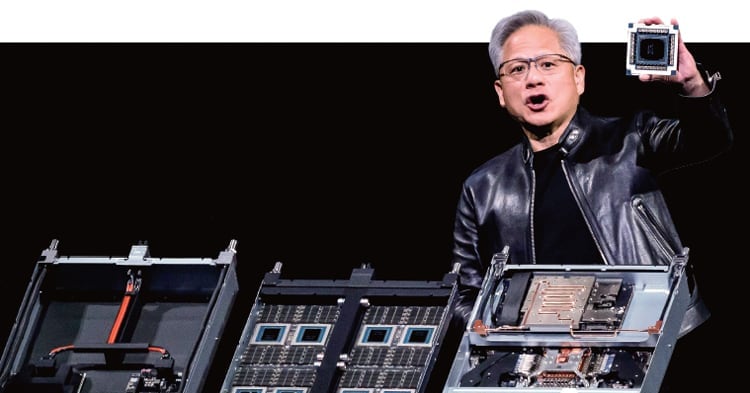
The Real Power Shift in AI Hardware Just Happened
NVIDIA raised its AI server prices by at least 15%, effective for shipments beginning next year. On the surface, this looks like a standard supply-chain pass-through. It is not. For the first time, the company that dominated AI semiconductor pricing for years is no longer the price-setter. Memory makers now are.
Bloomberg reported the price increase on August 22, citing manufacturing suppliers who supply Microsoft, Google, and Oracle-class datacenter operators. Both current-generation Grace Blackwell and the next-generation Vera Rubin platforms are affected. The cause is blunt: HBM (high-bandwidth memory) and server DRAM prices have surged because every hyperscaler is racing to build AI datacenters, and memory capacity cannot keep pace.
This is the moment the AI hardware narrative finally caught up to physical reality. For three years, the dominant story was GPU performance per dollar, benchmark wars, and NVIDIA’s widening moat around CUDA. The subtext—the dependency on a fragile memory supply chain—has now become the text. The bottleneck has moved downstream, and the pricing power has followed.
Why Memory Now Holds the Cards
An AI accelerator only delivers performance when it can ingest massive data rapidly. That requires large volumes of HBM packed directly onto the GPU package. Without enough of it, you cannot ship a working server. Samsung, SK Hynix, and Micron each produce the bulk of the world’s HBM. Together, they have gained leverage the GPU side has never had before.
Building HBM fabs and installing equipment takes years. Even as all three memory companies accelerate capacity expansion, supply will not catch demand until well into the next cycle. That gap is what forces NVIDIA’s hand. Apple and Qualcomm have already used the same memory shortage logic to raise their own product prices. NVIDIA joined that line now.
The mechanics are stark. HBM3e, the current generation required for top-tier AI accelerators, demands advanced packaging capacity that is concentrated in Korea and Japan. TSV (through-silicon via) bonding, the process that stacks HBM layers, is yield-sensitive and slow to scale. Each generation of HBM multiplies the complexity. The memory giants are investing tens of billions, but the return curve is measured in multi-year increments, not quarterly ones. NVIDIA’s design cycle is fast. Memory’s build cycle is glacial. That asymmetry is the source of the leverage shift.
The $50 Billion Question Per Datacenter
DeInformation estimated that the price increase could add at least $50 billion to the construction cost of a single one-gigawatt AI datacenter. That is not an abstract figure. One-gigawatt campuses are exactly the size Microsoft, Amazon, and Google are planning right now. A 15% hardware uplift translates into billions in capital that either gets absorbed or passed down the stack.
Cloud providers are likely to recoup most of the increase by raising GPU rental rates. That means every AI startup, every research lab, and every enterprise running inference through a public cloud will see higher bills. Training costs will climb first and most visibly, because HBM-intensive models consume the most memory per FLOP. Inference costs will follow as models grow larger and token throughput demands rise.
The second-order effect is subtler and more damaging. A 15% hardware cost increase compounds with other inflationary pressures—power, cooling, real estate, and skilled labor. Datacenter operators who signed long-term leases and fixed-power agreements at lower assumed costs are now underwater. Some will renegotiate. Others will absorb losses. A few will delay or cancel projects, creating a wave of stalled AI infrastructure announcements that will echo through earnings calls over the next four quarters.
Big Tech’s Own-Chip Ambitions Do Not Solve This
Amazon, Microsoft, Google, Meta, and OpenAI are all developing or expanding custom AI accelerators to reduce NVIDIA dependency. That is real. But custom chips also require HBM and server DRAM in volume. Every new ASIC is another bite out of the same constrained memory supply. The industry-wide memory demand curve is getting steeper, not flatter.
This means the memory shortage is not a transient NVIDIA problem. It is a structural constraint on the entire AI infrastructure buildout. Even if a buyer switches away from NVIDIA today, the monthly cloud invoice will still reflect the same HBM-driven cost pressure. The decoupling narrative—that vertical integration insulates you from commodity constraints—does not hold when the commodity is the thing that makes the chip work at all.
There is also a timing mismatch. Custom silicon programs typically take 18 to 36 months to reach volume production. Memory capacity expansions take three to five years from announcement to ramp. The two timelines do not converge. Buyers who bet on custom chips to escape NVIDIA’s pricing power are simply swapping one dependency for another, and the new dependency is harder to escape because it is physically distributed across three suppliers in two countries.
Who Wins. Who Loses.
Samsung, SK Hynix, and Micron win. Their pricing power has shifted from passive to decisive. They set the bottleneck now.
NVIDIA loses margin flexibility. Its brand and software moat remain intact, but it can no longer absorb component costs internally. The 15% increase is a public admission that memory, not GPU design, is the binding constraint.
Hyperscalers squeezed in the middle face higher capex and higher opex. They will try to negotiate long-term memory supply deals, which may stabilize some costs but will favor the largest buyers and leave mid-sized AI companies exposed.
Smaller AI firms and independent researchers lose most. Higher GPU rental rates compress experimentation budgets. Model training runs that were viable at last year’s prices become marginal. This is the silent consequence of the price hike: it raises the cost of entry for everyone who does not control its own datacenter capacity.
The winners and losers map cleanly onto one variable: scale. The firms that can secure long-term memory contracts, build proprietary infrastructure, or negotiate preferential allocation will internalize the shock. Everyone else will pay the spot rate and watch their unit economics deteriorate.
The Inference Lag That Nobody Is Pricing In
Most commentary focuses on training costs, which is where the immediate pain is visible. But the inference side deserves equal attention. As models grow larger and context windows expand, inference becomes increasingly memory-bound. A 15% hardware cost increase does not hit inference one-to-one—cloud providers optimize around utilization—but it does raise the floor. Every marginally profitable inference workload becomes a question mark. Lightweight models that serve as entry points for developers and enterprise customers will face the same cost pressure as frontier models, just expressed through different billing lines.
This creates a compression effect at both ends of the market. The top tier absorbs cost through premium pricing. The bottom tier faces margin collapse. The middle—the workspace of startups and small teams—gets squeezed hardest. It is the segment that drives experimentation, and it is the segment that will feel the most acute pain.
What Comes Next
Expect memory suppliers to announce more capacity commitments over the next two years. New fabs in Japan, the United States, and South Korea are already in various stages of planning. But lead times remain long. Practical supply relief will not arrive before 2028 at the earliest.
NVIDIA’s Vera Rubin and Rubin Ultra architectures will still ship. They will just cost more. The company’s ability to command a premium depends on whether its software stack and ecosystem lock-in remain strong enough for buyers to accept higher prices. So far, they do.
The deeper lesson is simple. AI hardware pricing was never just a GPU story. It always required memory. The market is now pricing that reality in. Anyone building AI infrastructure should plan for sustained cost pressure, not a quick recovery. The firms that treat this as a temporary bump will be surprised. The firms that treat it as the new baseline will be prepared.