Ocarina of Time Remake Is Nintendo's Nuclear Option for Switch 2
Nintendo just unveiled a full remake of The Legend of Zelda: Ocarina of Time for Switch 2, dropping November 5 — the same week the console launches globally. This is not a nostalgic cash grab. It is a strategic strike at the heart of gaming history.
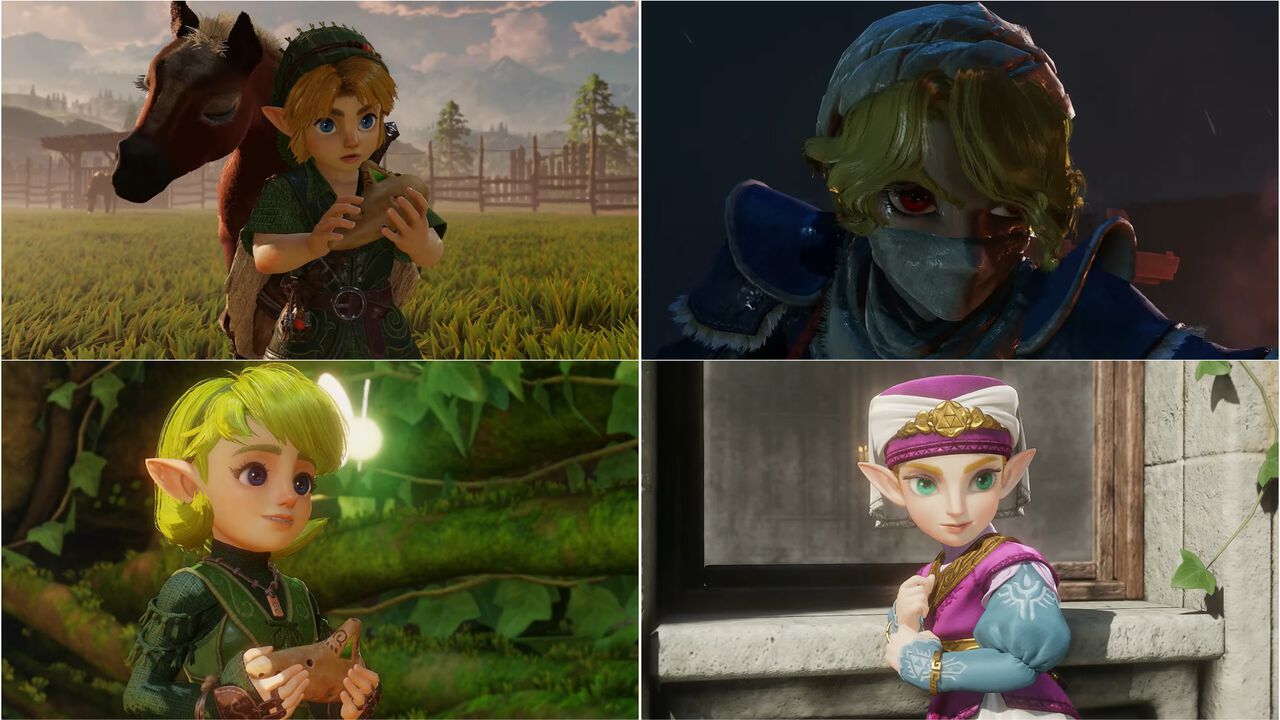
The move no one saw coming
Nintendo did not wait to announce a new Zelda game. It did not tease a sequel. On September 8, during the Zelda 40th Anniversary Direct, it pulled the trigger on a full remake of Ocarina of Time for Switch 2 — and dropped the release date simultaneously: November 5.
That date is not arbitrary. It lands within the console’s global launch window. For a franchise that defined 3D adventure gaming, this is the most aggressive software play Nintendo has made since the Wii launched with New Super Mario Bros. Wii in 2006.
What makes this announcement particularly jarring is the timing. For years, Nintendo has treated its classic IPs with protective restraint — remasters, compilations, the occasional mobile pivot. A full ground-up remake of its most celebrated title, unveiled just weeks before a new hardware generation, signals a fundamental recalibration. Nintendo is no longer preserving its legacy; it is weaponizing it.
What makes this different from every other “HD remaster”
Japanese outlets have already catalogued the character designs from the revealed gameplay footage — young Link and adult Link both return with Epona, alongside Navi, Malon, the Great Fairy, Saria, Priscilla, Darunia, Ruto, Impa, Ganondorf, and the Great Deku Tree. But the list of who appears matters less than how they appear.
This is not the Master Quest flip or the Ocarina of Time 3D treatment that re-skinned textures and adjusted camera angles for the handheld. Famitsu confirmed this is a full remake from the N64 version. That distinction is critical. A full remake rebuilds geometry, lighting, input systems, and frame pacing from the ground up. It is the same ambition behind Resident Evil 4 (2023) or Final Fantasy VII Rebirth (2024) — not a polish pass, but a reconstruction.
Nintendo has rarely done this with its back catalog. The Super Mario 3D All-Stars collection was a temporary mobile experiment. The Metroid Prime remasters were competent but unambitious. An Ocarina of Time built from scratch signals a shift in how Nintendo treats its intellectual property — moving from preservation toward active reinvestment.
Behind the scenes, this likely represents a significant resource commitment. Full remakes of this scale typically require dedicated teams separate from live project pipelines. The fact that Nintendo assigned one of its flagship franchises to this undertaking — rather than outsourcing to第二方 studios as it has with some recent remasters — suggests internal confidence that this project will define the Switch 2’s early identity.
Why November 5 matters
Switch 2 hardware debuts around that same window. A game of this magnitude, with this level of pre-existing demand, functions as a system seller by design. Consider the economics: Ocarina of Time has sold an estimated 7.6 million copies across all platforms since 1998. Even a fraction of those players — and the millions more who grew up watching YouTube let’s plays of the original — represent a built-in audience that requires zero awareness marketing.
The 40th anniversary branding adds cultural weight. This is not a retro release; it is framed as a milestone event. The Zelda Notes application already received Ocarina of Time content, and amiibo of child Link and child Zelda are scheduled for 2027, suggesting Nintendo is building an extended ecosystem around this single title rather than treating it as a one-shot launch.
From a retail perspective, November 5 is strategic gold. The holiday shopping window opens immediately after, and having a Zelda anchor gives retailers a marquee product to feature alongside the hardware itself. Early adopters purchasing Switch 2 consoles will encounter Ocarina of Time as the default recommendation — a placement that compounds sales through visibility alone.
What this means for the industry
Competitors watch these moves closely. Sony has struggled to convert its Last of Us and God of War remake strategy into consistent sales momentum. Microsoft has leaned into Game Pass as a remedy. Nintendo is doing something different: it is using iconic legacy IP to anchor new hardware, betting that the emotional weight of a game like Ocarina of Time can drive hardware adoption the way Mario Kart 8 Deluxe did for the original Switch.
The risk, of course, is creative. Ocarina of Time’s design is rooted in a specific era of exploration — linear dungeons with gated progression, item-based puzzle logic, and a real-time clock. A remake that strips away the friction risks sanitizing what made the experience revolutionary. A remake that preserves it risks feeling archaic to a generation raised on open-world conventions. The gameplay footage released shows a Link whose movement looks noticeably fluid, suggesting Nintendo is leaning toward modernization rather than preservation.
This creative tightrope has broader implications. If Nintendo succeeds, it validates the full-remake model for legacy IP across the industry — proving that classic titles can be rebuilt rather than merely repackaged. If it stumbles, it may chill similar ambitions from competitors and publishers alike, reinforcing the status quo of cautious remasters and collections.
Second-order effects are already visible. Third-party developers with N64-era titles are reportedly evaluating their own remake potential. Studios that previously dismissed their back catalogs as too niche are reconsidering — particularly those with franchises that achieved critical acclaim but limited commercial reach. Ocarina of Time’s success could unlock a wave of ambitious reimaginings that would have seemed untenable twelve months ago.
The broader 40th anniversary picture
Nintendo also announced a Switch 2 40th anniversary edition console on October 29, complete with a stand, Pro Controller, and carrying case. This is the kind of accessory-line rollout typically reserved for holiday seasons with proven demand. The coincidence of two major Zelda-related product announcements — the console edition and the remake — within weeks of each other suggests Nintendo is intentionally stacking releases to maximize attention.
For Western gaming press, this story has yet to fully land. European and American outlets are still reacting to the initial reveal clips. Japanese coverage from Famitsu and Nikkan Sports has already moved into deep analysis, player reaction threads, and presale speculation. The speed at which this news traveled domestically — and the relative quiet on the other side of the Pacific — is itself a signal. Nintendo is testing whether the market will absorb this as a blockbuster or treat it as a nostalgia play.
There is also the question of what this means for the next mainline Zelda. With Ocarina of Time occupying the spotlight through launch season, any new Zelda title will face inevitable comparison. Nintendo may be deliberately spacing these releases to avoid cannibalization, or it may be confident that the remake’s success will only raise the profile of the franchise as a whole.
The answer in November
Everything about this announcement points to a calculated escalation. Nintendo is betting that Ocarina of Time’s cultural gravity can do what no new IP has achieved in the current generation: make a new console feel essential before it has even shipped. The November 5 launch date transforms a remake into a hardware statement — proof that Nintendo’s deepest wellspring of IP is still a living, reinvestable asset rather than a museum piece.
Whether that bet pays off depends on execution. But the ambition alone marks a departure from Nintendo’s cautious recent history. After years of playing it safe with remasters and compilations, the company is signaling that it intends to redefine what a classic remake can be — and in doing so, redefine what its new console can achieve.