Ohtani Buries the Pitcher, Saves the Champion
Shohei Ohtani won't pitch again in 2026. That is not a Dodgers tragedy—it is a recalibration. The question now is whether his bat alone can carry a team whose offense has sputtered since midsummer.
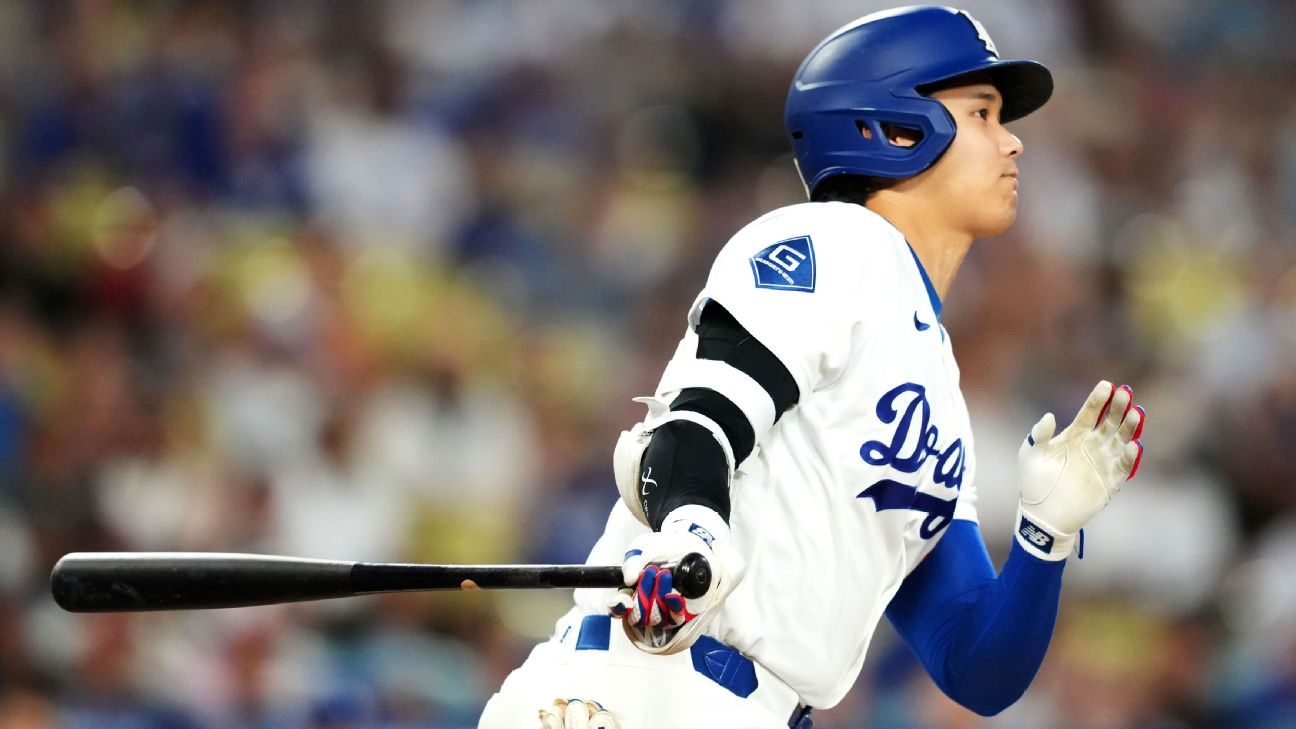
The Pitcher Is Buried. Long Live the Hitter.
Shohei Ohtani confirmed what everyone already suspected: he is not throwing another pitch in 2026. The announcement came not as a dramatic rupture but as a quiet acknowledgment—disappointing, yes, but framed as data. A learning experience. A stepping stone toward next season.
What the announcement did not register as was a turning point for the Los Angeles Dodgers’ championship calculus. In fact, stripping away the pitching dimension may be the smartest move Dodger management has made all year.
Since July 3, the Dodgers have watched their offense sink to the bottom third of the league. They rank 23rd in OPS at .701, 20th in runs per game at 4.31, and 23rd in wRC+ at 94. These are not numbers you survive with in October. Ohtani, slashing .277/.380/.522 with 30 home runs and 11 stolen bases, has been part of that struggle recently—seven hits and 20 strikeouts in 51 at-bats before his four-day break. But even in a slump, he is a force multiplier at the top of a lineup that has looked lost without direction.
The Dodgers do not need Ohtani to pitch. They need him to hit. And now, finally, the organization is treating that as the entire assignment.
The Rotation Already Has a Floor
Before July, the Dodgers were balancing something nearly impossible: keeping Ohtani healthy enough to contribute as both a hitter and a pitcher while managing a rotation that had been unpredictable all season. Now the math collapses into simplicity.
Tarik Skubal arrived in Detroit and then arrived in Los Angeles as a frontline ace. Yoshinobu Yamamoto brings elegance and a sharp breaking ball. Blake Snell brings volatility and brilliance. Tyler Glasnow brings length and stuff that makes lineups uncomfortable. That is four starters who can carry a playoff series. Add a fifth, however mediocre, and the Dodgers have a rotation that is better than most teams’ top three.
Ohtani’s 8-2 record and 1.79 ERA in 14 starts this season were historic. But they are also irrelevant to October now. What matters is whether his bat can ignite a lineup that has struggled to create consistent pressure on opposing pitchers. The Dodgers do not need him to throw 95 pitches on three days of rest. They need him to stand in the left-handed batter’s box and make opposing managers decide whether to pitch around him or risk what he does to a fastball.
The Body That Refused to Compromise
Ohtani’s injury history this season reads like a map of every compromise he refused to make. A right biceps issue flared during an Aug. 28 bullpen session and has not improved. Soreness in his left knee has persisted for months, worsening every time he steps on the mound. The neck and arm discomfort that surfaced during a 10th-inning at-bat on Wednesday night was not a new problem—it was the latest convergence of old ones.
He said Monday that his concern lies mostly with the right biceps and the left knee. He acknowledged he is not 100 percent. He called his recovery strategy simple: complete rest. “The best mode of recovery is to completely not play,” he said, which is a sentence that sounds almost radical in a sport built on performing through pain.
Manager Dave Roberts made the institutional logic explicit. Ohtani loves pitching. He loves being a two-way player. But it does not make sense to force it now. The medical staff will examine him daily. He will not go on the injured list—a move that would cost the Dodgers a roster spot for no additional benefit. Instead, he stays in the lineup as a hitter and waits to see if his body heals on its own terms.
The Slump That Was Never Just About Swings
Ohtani’s recent offensive struggles—those 20 strikeouts in 51 at-bats—invite simplistic explanations. Something is wrong with his swing. His timing is off. He is pressing.
But Ohtani offered a more disciplined reading. He has enough experience to separate mechanical issues from physical ones. The discomfort he felt Wednesday night was not an act of bad luck. It was his body sending a telegram: stop asking me to do what I cannot do.
He is 32. The kind of durability that defined his early career is not guaranteed at this stage, even for someone with his genetic and training advantages. The Dodgers are playing for a championship now. Protecting his health for the stretch run and beyond is not caution—it is strategy.
What This Means Beyond Dodger Stadium
The cultural reverberations of Ohtani abandoning his two-way role will be felt most intensely in Japan, where the ideal of the dual-threat player carries nearly mythological weight. Ohtani was never just a baseball player there—he was a symbol that the smallest market could produce the most complete athlete in the world. His Angels departure to Los Angeles was already a national conversation. The fact that he attempted topitch and hit at an elite level simultaneously was treated almost as a national project.
Korea follows Japanese baseball closely, and Ohtani’s journey has resonated there as well. The narrative of an Asian athlete redefining what is possible on a major league diamond carries special charge in markets where local stars like Ryu Hyun-jin and Jeon Ju-hyung have spent careers optimizing within narrower roles. Ohtani broke the frame entirely. Even his retreat from pitching is a story worth telling across the Pacific.
Globally, the baseball world is watching to see what happens when the most talented player of his generation accepts a limitation. Does he become a one-dimensional star? Does he return to two-way play in 2027? Or does this season become a case study in how far a single athlete can push the human body before the body says no?
The October Equation
Here is what the Dodgers are betting: Ohtani’s presence as a pure hitter changes how opposing pitching staffs construct entire games against them. Every time he steps into the box, the opposing manager loses a variable. The bullpen must be preserved. The left-handed specialist is neutralized. The game plan expands by one enormous blind spot.
The Dodgers’ offense has been mediocre. Ohtani makes it dangerous. That is not a subtle distinction. In a league where playoff races are decided by margins measured in single digits, a player who transforms a 23rd-ranked offense into a threat is worth more than a pitcher who adds one quality start per month.
Ohtani said he wants to look back on this season as a learning experience. That is the language of someone already thinking past October. But the Dodgers are not building for next year—they are building for now. And right now, the version of Ohtani that matters most is the one standing at the plate, not the one on the mound.
He may not pitch again this season. But he does not need to. The Dodgers already have enough arms. What they needed was him—fully, unapologetically, as a hitter.
That is not a consolation. It is a strategy.