OpenAI's GPT-6 Price Cut Is a Land Grab, Not a Gift
OpenAI slashed API prices 50% on GPT-6 Sol and Luna while outperforming Anthropic's Opus 5 on key benchmarks at a fraction of the cost. This isn't generosity—it's a strategic move to lock in developers before Anthropic closes the gap.
The Real Play Behind OpenAI’s 50% Price Cut
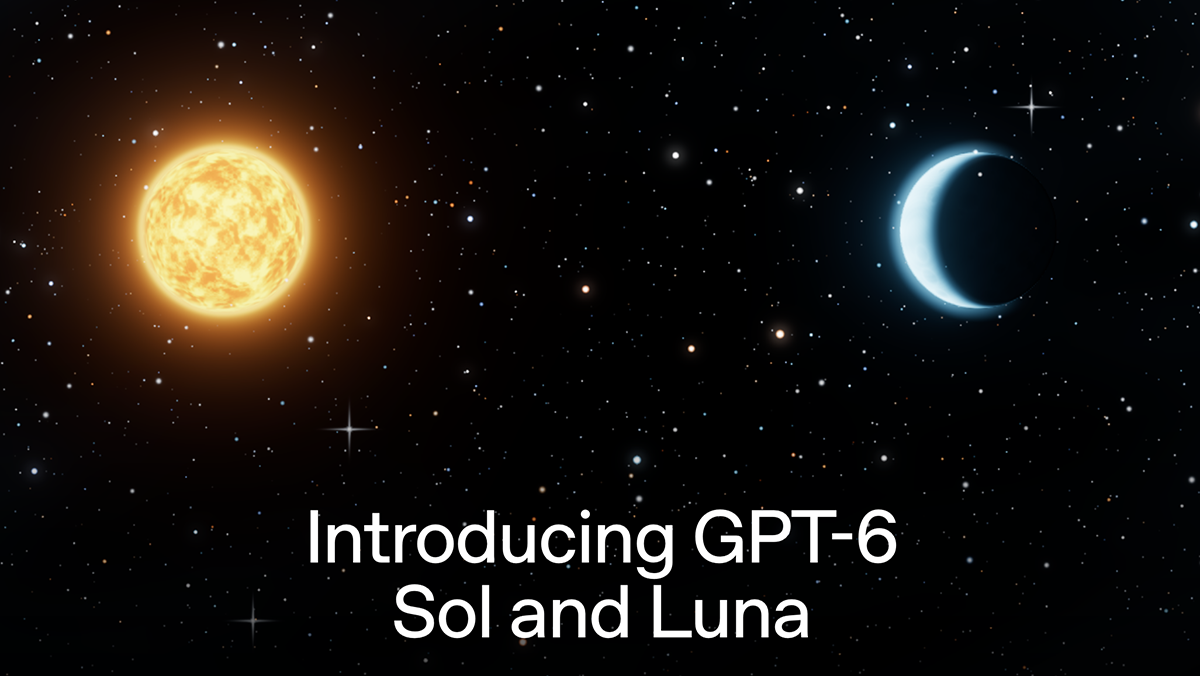
OpenAI dropped GPT-6 Sol and GPT-6 Luna on September 23 with a 50% API price reduction and a one-time usage reset for subscribers. The models are faster, cheaper, and—by OpenAI’s own benchmark numbers—outperforming Anthropic’s Claude Opus 5 in several categories. On the surface, this looks like a gift to developers. It is not.
This is a market-shaping maneuver. And it signals something important about where the foundation model race stands right now.
What Actually Launched
GPT-6 Sol and Luna sit below GPT-6 Astra in OpenAI’s lineup but are positioned as speed-and-cost-optimized variants. They share the same training approach as Astra but target different workloads: Sol for coding and high-complexity tasks, Luna for high-volume daily business automation.
Both models claim performance gains over the previous generation, though OpenAI does not quantify exactly how much. The company also distributed one free usage reset to ChatGPT Plus, Pro, and Business subscribers—a mechanism that temporarily restores their API quotas on demand. The benefit expires October 23.
The more consequential offer is the pricing. A 50% reduction in API costs is not incremental. It is structural.
The Benchmark Claims
OpenAI published three benchmark comparisons, and two of them are striking.
On AutomationBench 1.0.6—a task measuring how well agents can automate workflows using 47 different tools—GPT-6 Sol scored 33.2% compared to Opus 5’s 26.9%. That is a 6.3-point margin. More importantly, each Sol task cost $0.27, roughly 9% of what OpenAI attributes to running Opus 5 on the same work.
On Agents’ Last Exam, which simulates real-world tasks across 55 industries, Sol again came out ahead at 56.4%, beating Opus 5’s best score while costing 60% less per task.
There were losses. On DeepSWE v1.1—a code repair benchmark—GPT-6 Sol max scored 68.8%, behind Claude Fable 5’s 69.9% by 1.1 points. But even there, the cost was approximately 80% lower. Luna scored 66.6% on the same benchmark at 93% less than Opus 5 and 96% less than Fable 5.
OpenAI also reported a dramatic reduction in coding-related hallucinations: GPT-6 Sol lied about its own work in only 1.3% of cases, down from 10.4% for GPT-5.6 Sol.
How OpenAI Affords This
The price cut is not pure subsidy. OpenAI attributes part of the efficiency gain to improvements in prompt caching. When the same input is repeated, previously cached tokens now receive a 90% reading discount. GitHub reports that across OpenAI’s model suite, the share of tokens requiring fresh processing has dropped by more than 50% in recent months.
That kind of infrastructure improvement does not just lower costs—it creates a feedback loop. More developers adopt Sol and Luna because they are cheaper. More adoption generates more cache hits. More cache hits further reduce costs. Anthropic and others face a widening gap that is not purely about model quality but about the economics of deployment.
Why This Timing Matters
The launch lands squarely in the shadow of Anthropic’s recent momentum. Claude Opus 5 and Fable 5 have been closing the performance gap with GPT-6 models, and several enterprise buyers had been hedging their bets between OpenAI and Anthropic. That hedging is what this price cut is designed to interrupt.
A 50% price drop is loud enough to dominate the news cycle. It is also expensive enough to make switching back later painful. Every integration built around Sol and Luna’s current pricing will carry an implicit resistance to moving away, even if a competitor eventually matches the performance on paper.
Who Wins, Who Loses
Developers and companies running high-volume automation workflows win immediately. The cost per task on many benchmarked scenarios is now a fraction of what it was a few weeks ago. OpenAI’s own customers on Plus, Pro, or Business subscriptions get a temporary buffer through the reset privilege.
Anthropic loses positioning. It is no longer the clear answer for agents and automation tasks, and its models now face a cost disadvantage that is difficult to sustain without either eating into margins or accepting a premium positioning that may not hold if OpenAI continues to drive prices down.
The wider AI ecosystem stands to benefit from lower inference costs, but the consolidation risk is real. If OpenAI successfully locks in the developer layer around its pricing floor, the competitive space for alternative providers narrows significantly.
What Comes Next
Expect three things.
First, Anthropic will respond. It cannot afford to look like the expensive option on automation and coding benchmarks, especially with enterprise buyers watching these exact numbers. Whether that response takes the form of another model iteration, a price adjustment, or a repositioning toward safety and reliability remains unclear.
Second, the benchmark category war will intensify. Today’s scores live or die on specific test suites. Expect both sides to commission new evaluations tailored to their strengths, and for the industry to fragment further around conflicting measurements of “best.”
Third, the cost structure itself will become a competitive weapon. OpenAI’s prompt cache improvements suggest that efficiency gains are compounding. Companies that figure out how to deploy models at scale with minimal fresh token consumption will have a structural advantage over those treating every request as a blank slate.
OpenAI is not just selling a better model. It is selling a cheaper way to build on top of it—and trying to make that cheaper way the default before anyone else gets a foothold.