OpenAI Just Collapsed Its Own Pricing Ladder — and It Changes Everything
OpenAI is selling GPT-6 Sol and Luna at half the price of GPT-5.6 while delivering near-Astra performance. With Anthropic matching the move, the economics of frontier AI deployment are breaking apart.
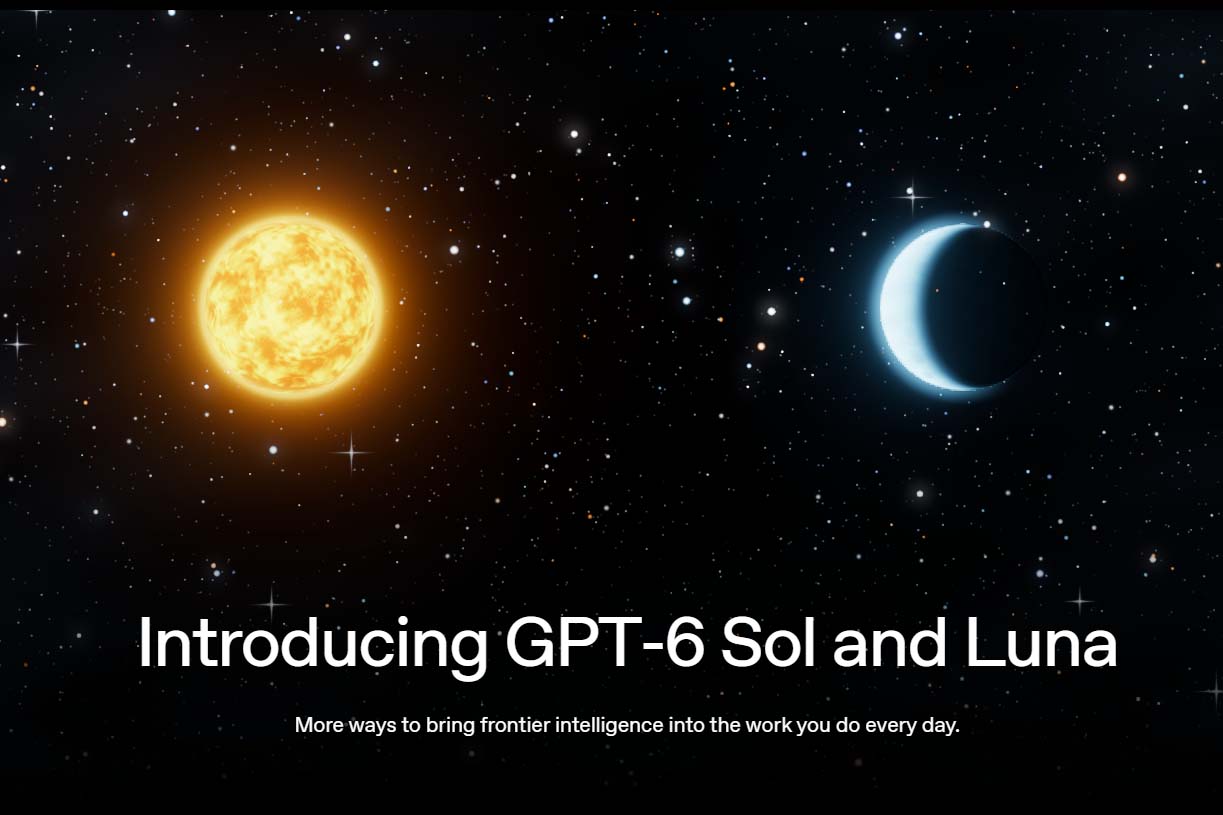
OpenAI Just Killed Its Own Mid-Tier — And That’s the Point
On July 22, OpenAI released two new models: GPT-6 Sol and GPT-6 Luna. The announcement sounded routine. The pricing underneath it did not.
Sol costs half of what GPT-5.6 Sol cost. Luna costs half of what GPT-5.6 Luna cost. But both are trained on the same methodology as GPT-6 Astra, the top-of-the-line model that OpenAI still positions at the peak of its lineup. You are not buying a downgraded product at a discount. You are buying a model trained to Astra’s standard, with optimizations for speed and cache, sold at aggressively cut rates.
This is not a tactical price cut. It is a structural rearrangement of the entire frontier AI market.
The Numbers That Matter
Here is what the pricing looks like per one million tokens:
GPT-6 Sol: $2 input, $10 output. GPT-5.6 Sol was $4 input, $20 output.
GPT-6 Luna: $0.20 input, $0.50 output. GPT-5.6 Luna was $0.40 input, $1.20 output.
The performance claims are where this gets uncomfortable for everyone else. On AutomationBench — OpenAI’s cross-app workflow benchmark — GPT-6 Sol at xhigh effort scored 33.2%, beating GPT-6 Astra’s low-effort 30.3% and Claude Opus 5 at max effort’s 26.9%. Sol delivered that at 3.9 times and 11.1 times the cost efficiency respectively. Luna at high effort improved 5.4 percentage points over its predecessor while cutting task cost by 58%.
On DeepSWE v1.1, a coding benchmark, GPT-6 Sol scored 68.8% at max effort against Claude Fable 5’s 69.9% — a 1.1-point gap at 80% lower cost. Luna at max scored 66.6%, matching Opus 5 and Fable 5 at medium effort for roughly 1% of their cost.
On Agents’ Last Exam V1, Sol at maximum effort outscored Opus 5’s best while costing 60% less.
OpenAI also quietly removed GPT-5.6 Terra from the lineup. Three tiers replaced four. The message is deliberate: there is no need for a middle option when the top and the bottom both now do what the middle used to do alone.
Who Wins. Who Loses.
Developers and enterprises running high-volume automation win immediately. Luna is now a viable option for any application where GPT-5.6 Sol or Terra used to live — and for many tasks previously reserved for Opus-level models. A company running thousands of agents daily across customer service, data extraction, or code review just saw its compute budget rebalance overnight.
Anthropic loses the most ground in the mid-to-high tier. Claude Opus 5 at max effort is being outperformed by Sol and matched by Luna at fractions of the cost. The Opus 5.5 release Anthropic announced the same day — positioning itself at Fable 5.1 performance for 40% less than Opus 5 — is a reasonable defensive move, but it accepts that the ceiling has been lowered. The race is no longer about who has the smartest model. It is about who can deliver the smart model at the lowest possible cost per task.
OpenAI’s own GPT-5.6 customers lose some optionality. The removal of Terra and the repositioning of Sol and Luna effectively compresses the upgrade path. There is less reason to stay on 5.6 when 6-generation models underperform you at half the price. The Free and Go tiers gaining access to Luna via desktop app also pulls casual users deeper into the ecosystem.
The Deeper Signal: Terra Disappeared for a Reason
The discontinuation of GPT-5.6 Terra is the detail most commentators will miss. In the GPT-5.6 lineup, Terra sat between Sol and Luna — a mid-range option for tasks too complex for Luna but too routine for Sol. In GPT-6, that slot simply vanished.
That is because the performance-per-dollar gap between Luna and Sol collapsed. Luna at high effort now handles tasks that previously required Sol’s attention, and Sol now operates at prices that make it feasible for workflows that previously needed Terra. The middle layer of the pricing ladder is economically unsustainable when the models above and below it have both improved and dropped in price simultaneously.
OpenAI is testing whether the market will accept a two-tier structure with a top-tier anchor (Astra) for brand credibility and maximum-performance buyers, and a compressed, highly efficient lower tier for everything else. If it works — and the early benchmark data suggests it already has — expect the broader industry to follow.
What Happens Next
Anthropic’s Opus 5.5 announcement signals they are already reacting. Sonnet 5.5 and Haiku 5.5 are incoming. But the question is whether defensive pricing can win a race whose rules just changed.
The real shift is in how companies think about model selection. For years, the assumption was: pay more for better results. The GPT-6 pricing structure flips that. The assumption now should be: start with Luna or Sol, escalate to Astra only when the task genuinely requires it, and measure cost per completed task rather than cost per token.
For every company running AI workloads at scale, this is the most significant pricing event since API models first became commodity. The floor rose. The ceiling stayed the same. The middle was deleted.
OpenAI did not just release two new models. It redesigned the economics of the entire frontier tier — and invited everyone else to adjust.