SpaceX Triple Launches Reshape Launch Pricing and Global Space
SpaceX's rapid-fire launches and massive AI computing contracts are rewriting the economics of space access. Korean markets see what English wire desks are just starting to catch.
The Velocity That Changes Everything
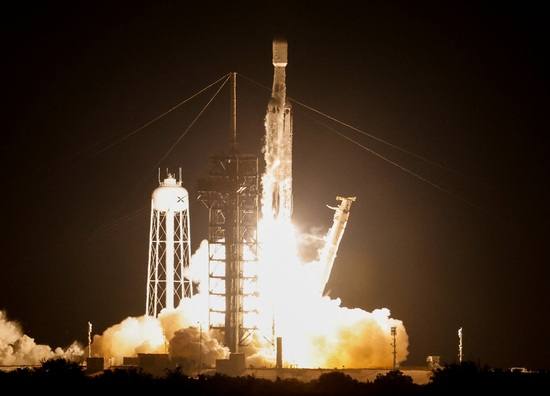
SpaceX just completed three launches in 13 hours. Not a press release spin on cadence. Three actual liftoffs across two launch sites — Cape Canaveral, Vandenberg, payloads to orbit, both Falcon Heavy side boosters recovered. The stock opened the following morning up 7.35%, trading above the $135 IPO price, and Korean financial media was already writing multibillion-dollar AI contract footnotes that hadn’t yet crossed most English-language desks.
This is worth paying attention to. Not because a single triple-launch streak is unusual — SpaceX has flirted with this kind of tempo before — but because it arrives inside a pricing environment where the margin between success and failure has never been thinner. The question hanging over every aerospace company that still counts rocket launches like they’re one-off events: what happens when cadence becomes infrastructure?
What Actually Launched
Here is the sequence on the ground. NASA’s Crew-13 mission put four astronauts aboard Dragon and delivered them to the ISS. Transporter-18 rode out of California with Google’s Project Sun Catcher embedded in its payload stack alongside roughly 130 smaller satellites. Then came NROL-97, the National Reconnaissance Office’s classified cargo, piggybacked onto a Falcon Heavy that brought both side boosters home.
All three succeeded. All three recovered hardware that is supposed to fly again. That last part is the quiet engine behind the market reaction. Every booster that touches down intact is a unit of cost that doesn’t get written off. Every successful third launch in under half a day is a signal that the vehicle isn’t a prototype anymore — it’s a production line, and production lines punish anyone slower than they are.
The Starship test flight that preceded this streak had also made orbital entry, albeit after an engine malfunction. The fact that the market absorbed both narratives together matters more than either one alone. It means SpaceX is being valued on a trajectory now, not on a single launch’s outcome.
The Contract That Changes the Valuation Frame
What pushed the stock past $158 wasn’t just the launches. It was the AI infrastructure pipeline attached to them.
Google signed a deal worth approximately $29 billion. Over 32 months, through June 2029, SpaceX delivers roughly $920 million per month in AI computing services. Anthropic is on a similar track through May 2029, averaging about $1.25 billion per month. Combined, that’s well over $2 billion a month in contracted revenue before most of the associated hardware has even reached orbit.
Project Sun Catcher is the tangible proof point here. Google’s tensor processing unit flying in space, running AI workloads in orbit — not a demo, but a production verification. If that works, it opens a model where AI training and inference aren’t limited to terrestrial data centers. It also makes SpaceX not just a launcher but a compute provider, which reframes the entire valuation multiple.
Elon Musk’s comments about Nvidia’s next-generation VR72 platform being able to run at roughly 250 kilowatts on SpaceX hardware added another layer of speculative fuel. Whether that timeline is real or aspirational, the market is pricing the possibility.
Who Loses When SpaceX Sets the Price
Let’s be direct about the competitive consequence. When one company can field three launch vehicles in half a day and attach multi-billion-dollar compute contracts to the same supply chain, every other launcher faces a new problem: you can’t compete on price without the same cadence, and you can’t build cadence overnight.
ArianeGroup, ULA, Roscosmos, ISRO, CJSC Khrunichev — none of them operate at this velocity. None of them have recovered boosters on this schedule. Most of them can’t recover boosters at all. The gap isn’t marginal. It’s structural.
The Korean press picked up on this implication quickly. Global Economy ran the story with emphasis on the Google and Anthropic contract details, the xAI synergy thesis, and the Nvidia linkage. Korean investors saw what English wire copies didn’t lead with: the revenue model has shifted. SpaceX isn’t selling lift capacity anymore. It’s selling compute uptime, and it’s using rockets as the delivery mechanism.
That distinction matters for pricing. Lift capacity is a commodity. Compute uptime at scale isn’t. Whoever controls the orbital path to the training cluster controls a different part of the stack.
What the Number Says
Thirty-seven analysts covering SpaceX. Twenty-nine with buy or better ratings. Five hold. Two sell. The 12-month average price target sits at $226.04, which implies roughly 42% upside from current levels. That upside isn’t based on more launches. It’s based on the assumption that the AI computing contracts will materialize on schedule and that orbital compute infrastructure will transition from concept to revenue stream.
If the Google and Anthropic deals hit their targets, SpaceX is looking at approximately $25 billion in annual recurring revenue from those two customers alone, before counting anything from its own Starlink operations or other government contracts. Add xAI’s compute needs on top of that, and the picture shifts from aerospace company to infrastructure monopoly in two domains at once.
The risk is obvious. Satellite deployment timelines slip. Kernel upgrades don’t land. Regulatory reviews slow orbital compute certification. Any of these would compress the thesis. But the direction of travel is clear: launch pricing will continue to drop as SpaceX’s cost per kilogram falls, and compute pricing will follow a similar curve if orbital hardware proves reliable.
The Bigger Implication
What Korean markets spotted first is the reordering of the aerospace value chain. The old model was simple: build a rocket, sell a launch, fly once, repeat. The new model ties launch cadence to compute availability, which ties compute availability to satellite constellations, which ties constellations to recurring revenue.
SpaceX is the only player operating at this integrated scale right now. That doesn’t mean others won’t catch up. It means the window for anyone else to define the pricing framework is closing fast.
The triple-launch streak isn’t the story. The story is what the streak enables: a company that can pour AI compute into orbit faster than any competitor can replicate the path to get there.