Paraguay's Bank Collapse and Impeachment Expose Regulatory Capture
Paraguay's president fell hours after his political ally's digital bank imploded, freezing millions in savings. The crisis reveals how close ties between Asunción's elite and lenders can unravel an entire financial system.
The Implosion
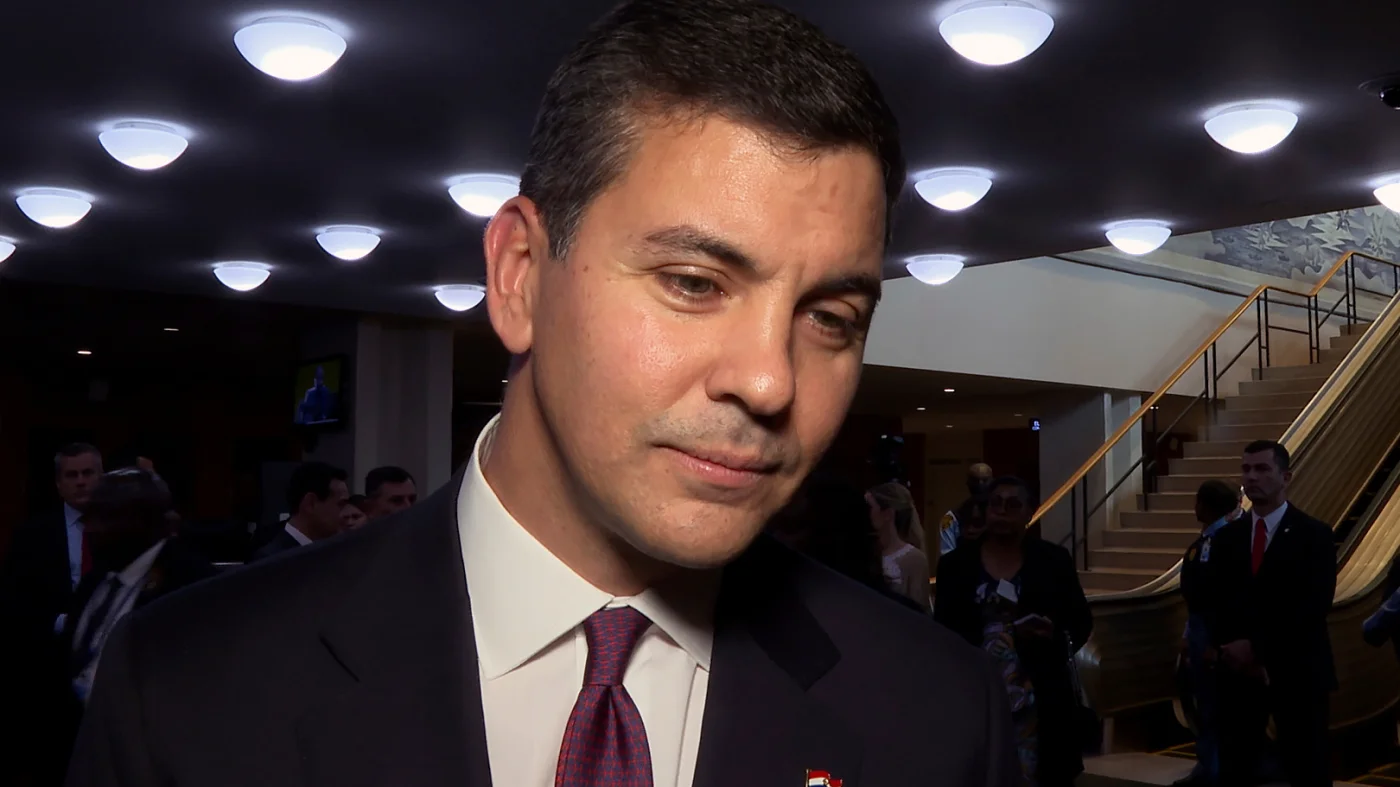
Santiago Peña resigned Thursday. Within minutes, Paraguay’s lower house voted 78-0 to impeach him. The speed tells you everything about how deeply this crisis cuts — or perhaps how superficially it runs. Four days earlier, the central bank had seized Ueno Bank, freezing the accounts of everyday citizens. By Friday morning, Peña was outside the country.
His Colorado Party — the faction that has dominated Paraguayan politics for 73 years since the fall of Alfredo Stroessner — turned on its own leader without hesitation after Ueno Bank collapsed, freezing the savings of more than 60 percent of the country’s adults. Horacio Cartes, the former president who founded Ueno’s predecessor and remains the country’s richest man, publicly backed the impeachment, declaring through a spokesman that the party would not side with the plundering of pensioners’ money. The message was clear: Cartes was drawing a boundary between himself and the wreckage, even as investigators examine whether he funneled state resources to the bank during his presidency.
Vice President Pedro Alliana, Peña’s political relative, is expected to take office immediately without waiting for a Senate trial, though opposition senators are pushing for proceedings anyway. They want to strip Peña of the legal protections that would let him run for the lifetime Senate seat reserved for former presidents — a maneuver that signals how much more this conflict has than a single resignation.
This is not just political theater. It is a financial disaster with regional implications that extend well beyond Paraguay’s borders.
How a Digital Bank Became Too Big to Ignore
Ueno Bank grew from obscurity to national institution in under five years. It rebranded from a decades-old finance company, Financiera Ueno, and moved aggressively into consumer lending, offering cash-back rewards on groceries, financing stadium names, and establishing more than 70 branches across the country. The bank made itself impossible to look away from — a digital-first proposition wrapped in the trappings of physical permanence.
By September, Ueno held roughly $800 million in public deposits. That included money from the state pension fund, the health system, and operators of Paraguay’s hydroelectric dams — the very engines that power one of South America’s most stable economies. A quarter of the bank’s total deposits came from government accounts, meaning taxpayers were effectively insuring money lent to friends of the people who owned the institution.
The Central Bank of Paraguay, the institution supposed to oversee Ueno’s safety, was led by Carlos Carvallo — the same man who ran Financiera Ueno before it became a bank. He had overseen the institution’s transition from lender to regulator and never faced meaningful challenge during the process.
That is not a coincidence. It is the structural flaw at the heart of this crisis: the regulator and the regulated were the same people, wearing different hats on different days.
The Warnings Were Ignored
In June, central bank inspectors found a pattern of risky lending to insiders. Ueno had extended large sums to companies tied to its owners, beyond legal limits and without sufficient collateral. ABC Color, Paraguay’s leading newspaper, reported the findings with specific figures: related-party loans exceeded the regulatory ceiling by nearly 40 percent, a gap that would be alarming in any financial system but is extraordinary when the ceiling is enforced by the former boss of the institution being measured.
A month later, Peña dismissed the concerns as a smear campaign designed to spook the public. He defended both the bank and his central bank chief, calling the investigations politically motivated and urging citizens to maintain confidence in the financial system. The message seemed calculated — and may have been. Early signs of distress tend to become self-fulfilling if amplified by those in power.
Then the books were corrected. Ueno’s capital fell to less than half the legal minimum when auditors applied stricter standards in early November. Regulators seized the bank Tuesday. The app went dark. Cards stopped working. Branches locked their doors. The guaraní fell nearly 7 percent against the dollar over the following days, and other banks’ mobile apps crashed as panicked customers attempted to move their money elsewhere.
The Human Cost
About 7,000 jobs at Ueno and related businesses are affected, according to the Labor Ministry. Many workers remain in Ueno uniforms outside closed branches, demanding unpaid wages and severance. Social media footage showed lines of retirees and market vendors pressing against bank gates, some shouting, some weeping — the kind of scenes that rarely make it into glossy investment reports.
Retirees with life savings tied to the bank face the longest wait. A state guarantee fund will repay small accounts up to roughly $1,600 within five business days. Larger deposits are insured up to about $36,000 per customer — which the central bank says covers 97 percent of clients, but not all of them. Those with balances above that threshold will wait, and in a country where the formal banking sector already commands relatively low trust, the delay itself is a form of punishment.
A judge ordered six Ueno executives jailed, including founder Miguel Vázquez and bank president Juan Manuel Gustale. Twenty-seven officials and associates face charges of breach of trust and attempted fraud. Prosecutors allege Ueno diverted loan money to other businesses owned by its founders — a pattern that echoes similar schemes across the region, from Venezuela’s PDVSA-era lending to Brazil’s Banco Central corruption investigations.
Gustale’s lawyer argued that senior executives did not make individual lending decisions, attempting to separate the boardroom from the back office in a distinction that may not matter to depositors who cannot access their money. The defense strategy is familiar in Latin American financial cases: fragment culpability until no single actor appears responsible for the whole.
Second-Order Effects: What Comes Next
The immediate shock is political, but the secondary waves are spreading through markets that rarely pay attention to Paraguay. Credit default swap spreads on Paraguayan sovereign debt widened sharply in the days after the seizure, reflecting investor recalibration rather than pure panic. Regional analysts note that several smaller South American banks — none as exposed as Ueno — have quietly increased liquidity buffers, a sign that prudence is winning out over complacency across the corridor.
Foreign lenders pricing Paraguayan debt will demand higher yields, and the cost of borrowing for both government and private sector will rise accordingly. The International Monetary Fund and World Bank are likely to slow disbursements until structural reforms are in place, which means fiscal pressure on the new administration before it has had a chance to establish itself. Rating agencies are reviewing Paraguay’s investment-grade designation, and a downgrade — even to BBB status — would trigger mandatory selling by certain institutional investors.
There are also political second-order effects. The Colorado Party’s reputation for patronage and stability has been a selling point for foreign investors for decades. The Ueno collapse reopens old narratives about Paraguay as a behind-closed-doors democracy, where formal institutions coexist with informal power structures. Alliana’s transition, however orderly, carries the taint of its origins. Every policy initiative he proposes will be measured against the question of whether another Ueno is waiting in the wings.
What This Means for Latin America
Paraguay has recently earned investment-grade credit ratings, praised for steady economic management anchored by hydroelectric revenues and agricultural exports. The Ueno collapse undermines that reputation overnight. It also raises uncomfortable questions for investors watching the region, particularly those who compartmentalize risk by classifying Paraguay as a safe harbor relative to its neighbors.
When a central bank governor was previously running the institution he supervised, it suggests a pattern of regulatory capture that goes beyond one bank. Several Latin American countries have experienced banking crises in recent decades — Argentina, Venezuela, Ecuador — but none so recently linked to the highest levels of government. The difference is not merely scale; it is the speed of escalation and the transparency of the unraveling.
The crisis exposes how quickly emerging-market financial systems can unravel when political connections override prudential oversight. Paraguay’s case is extreme, but the mechanics are familiar: a lender grows too fast, regulators look away, and when the music stops, everyone is left holding frozen accounts. The lesson for other countries is less about vigilance — they already know the risks — and more about enforcement. Regulation without consequence is just theater with paperwork.
Who Wins, Who Loses
The immediate winners are Vice President Pedro Alliana and whatever faction of the Colorado Party can claim reformist credibility — a label that requires neither consistency nor conviction in Paraguayan politics. The immediate losers are Paraguay’s depositors, retirees, and workers — the people whose savings vanished overnight, regardless of how insurance funds eventually sort through the remainder.
Internationally, credit rating agencies will reassess Paraguay’s outlook. The IMF and World Bank may slow disbursements until regulatory reforms are in place. Foreign lenders pricing Paraguayan debt will demand higher yields. Ueno’s former executives face prison. Peña faces impeachment and potentially prosecution. But the real question is whether Paraguay’s financial system can recover trust before the next crisis hits — and whether the institutional changes required to prevent that next crisis are politically feasible given the very networks that enabled this one.
The protesters outside Congress say trust has already broken. They are not wrong. But the harder truth is that trust is the first casualty and the last resource. Paraguay will need both to rebuild what was lost.