The Pentagon Purge Continues as Army Secretary Resigns
Army Secretary Dan Driscoll's resignation marks the third senior defense official to leave under Trump's second term amid escalating friction with Defense Secretary Pete Hegseth. The pattern reveals a systematic dismantling of institutional military leadership in favor of political loyalists.
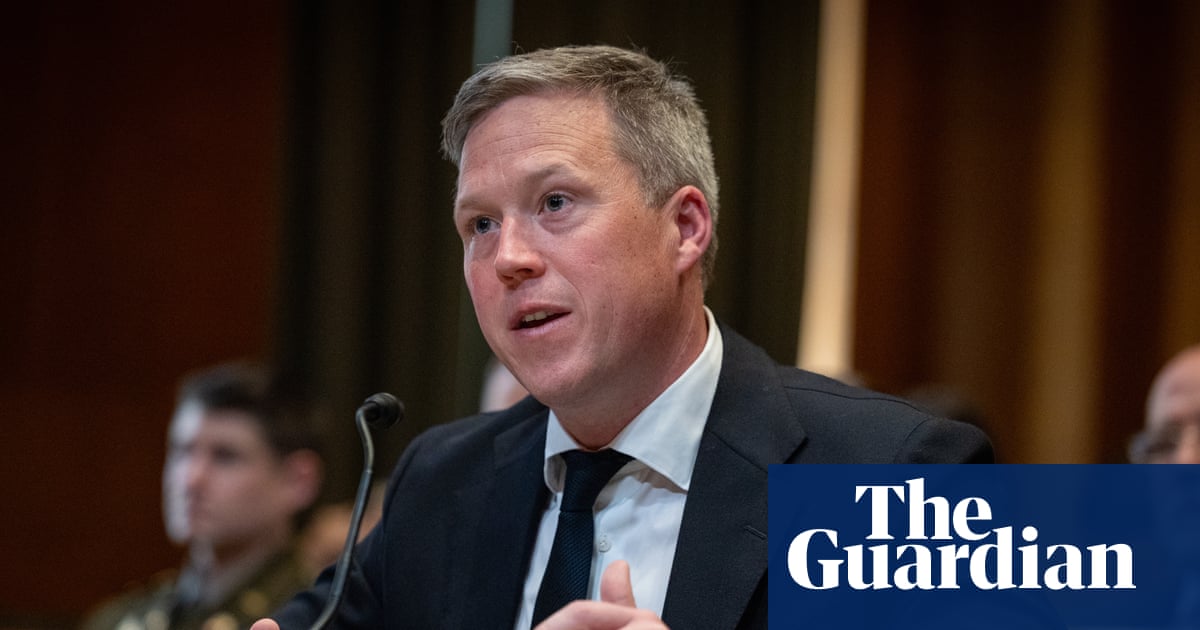
The Third Exit
The Defense Department has lost another senior leader. Army Secretary Dan Driscoll resigned on Monday, becoming the third high-profile defense official to depart Donald Trump’s second term since April. The resignation confirms what The Wall Street Journal reported weeks ago: tensions between Driscoll and Defense Secretary Pete Hegseth had become unsustainable. Sources familiar with the matter described months of private friction over budget priorities, appointment authority, and the pace of organizational overhaul — friction that ultimately made Driscoll’s position untenable.
The White House attempted to spin the departure as a routine transition. Spokesperson Anna Kelly praised Driscoll as “highly effective” in advancing Trump’s agenda, citing his work on Ukraine negotiations and military modernization. But the context tells a different story — one of a defense establishment in rapid fragmentation, where the gap between public narrative and internal reality continues to widen with each departure.
Who Leaves Next?
The pattern is clear and deliberate. Army Chief of Staff Randy George resigned in April after publicly criticizing the administration’s handling of military affairs, a move that sent shockwaves through the officer corps. General Christopher Donahue, commander of Army Forces in Europe and Africa, stepped down unexpectedly in June under circumstances that still have not been fully explained. Driscoll was George’s closest ally in the civilian leadership. He attended George’s final dinner with family and friends after the general’s departure — a gesture that, in retrospect, read less as friendship and more as a vigil.
“The civilian leadership, the design of our system, is that they get to pick the leaders that they want,” Driscoll told Congress in April. He was trying to accept the reality of the new order. It was not working.
What remains of the professional military leadership is shrinking by the month. Each exit concentrates more power in Hegseth’s office and those who owe their positions to political loyalty rather than merit, experience, or institutional knowledge. The Army’s senior leadership roster, once a carefully calibrated balance of career officers and civilian appointees, now reads as a list of interim names and political placements.
The Hegseth Factor
Pete Hegseth has emerged as the dominant figure at the Pentagon, consolidating authority over appointments, budgets, and policy direction with increasing speed. Driscoll, technically second in line for Army affairs, operated increasingly in his shadow. The friction between them likely centered on control — of the Army’s modernization priorities, of how quickly the department should be restructured, and of who ultimately answered to whom when their priorities diverged.
Trump appointed Driscoll as a “disruptor and change agent” in January 2025. The implication was always that disruption would come from above, not from within the institution itself. Hegseth now occupies the same role, and disruptors do not share power. The two men’s overlap was structurally designed to produce conflict. Driscoll’s departure resolves it — and removes the last significant check on Hegseth’s authority over Army affairs.
Why This Matters Beyond America
The implications extend far beyond Washington. Driscoll served as a key negotiator in Russia-Ukraine peace talks, cultivating relationships with European counterparts that are not easily replicated. His departure creates uncertainty in a process that has already seen repeated setbacks, diplomatic missteps, and a growing skepticism among NATO allies about American reliability. The Army’s European command, still reeling from Donahue’s exit, now loses its civilian leadership at a moment when Russian military activity along the flank has intensified.
More broadly, the purging of career military leaders signals where Trump’s second term is heading. The administration has made clear it prefers commanders who will implement policy without challenging assumptions, who will frame decisions as strategic genius rather than question their feasibility. That approach works for loyalists. It does not work well for institutions that require expertise, continuity, and institutional memory — especially one tasked with nuclear deterrence, power projection, and alliance management across multiple theaters.
The Confirmation That Wasn’t a Warning
Senate confirmation of Driscoll in February 2025 passed comfortably, 66-28. The hearing focused on modernization, recruiting crises, and industrial base expansion — the same topics Hegseth now controls unchallenged. Nothing in the confirmation process suggested future conflict. Senators from both parties spoke of Driscoll’s veteran credentials and private-sector experience. That the two are now incompatible speaks to how rapidly the center has shifted at the Pentagon, and how quickly institutional guardrails can erode when those guardrails are designed by people who view them as obstacles.
Driscoll’s background — Iraq war veteran, tech investor, former JD Vance adviser — fit the administration’s profile precisely. He was never expected to last. His tenure lasted less than a year, making him the shortest-serving Army secretary in decades. The speed of his departure suggests the conflict was not about policy disagreement but about power — and power, in this administration, is not shared.
Second-Order Effects
The turnover is producing consequences that go well beyond personnel. Defense contractors watching the leadership churn are reassessing long-term commitments. Drone development programs that required sustained engagement with Army leadership have stalled, their points of contact disappearing faster than the organizations they served. Counter-drone initiatives, already behind schedule, face further delays as review processes buckle under uncertainty. Procurement pipelines that depend on stable civilian leadership are experiencing friction — not from lack of interest, but from lack of authority to move.
Within the ranks, morale among career officers is deteriorating. Junior officers are watching senior leaders exit under murky circumstances and recalibrating their own commitments. Some are extending their service, hoping to weather the storm. Others are submitting retirement papers early, unwilling to invest a decades-long career in an institution whose leadership can be discarded in months. The Army’s recruiting crisis, already the worst in decades, is likely to worsen as the public narrative around Pentagon instability spreads.
European allies are taking note. NATO partners who relied on Driscoll as a counterweight to more erratic impulses within the administration are now without their liaison. German and Polish officials have reportedly requested briefings from remaining career officers, seeking assurance that institutional knowledge has not been entirely evacuated from the building. The answer, so far, is uncomfortably unclear.
What Happens Next
The question is no longer who leaves. It is who remains willing to stay — and on what terms. Career officers face a choice that did not exist a year ago: comply or exit. Each departure weakens the institutional knowledge base. Each appointment strengthens the political command structure. The Army’s ability to plan for contested environments, to maintain readiness across multiple theaters, to negotiate with allies and adversaries alike, depends on leaders who understand that expertise is accumulated, not appointed.
The third resignation from the Pentagon in four months suggests the department is entering a period of acute instability that will test the resilience of American military institutions. Hegseth’s authority is growing. The professionals who once shaped policy are leaving. What replaces them will depend on loyalty, not experience.
That distinction matters — to American security, to allies who have come to rely on the predictability of U.S. military leadership, and to the institutions that held together a military that once prided itself on professionalism above politics. The Pentagon is not broken. But it is being remade, and the shape it is taking will determine not only who commands American forces, but what those forces are commanded to do — and whom they answer to.