Persona 4 Revival Lands on Switch 2 — And That Says Everything About Third-Party Support
Atlus confirmed a Switch 2 version of Persona 4 Revival arriving May 20, 2027. The timing and platform choice reveal how Nintendo is approaching its hardware transition.
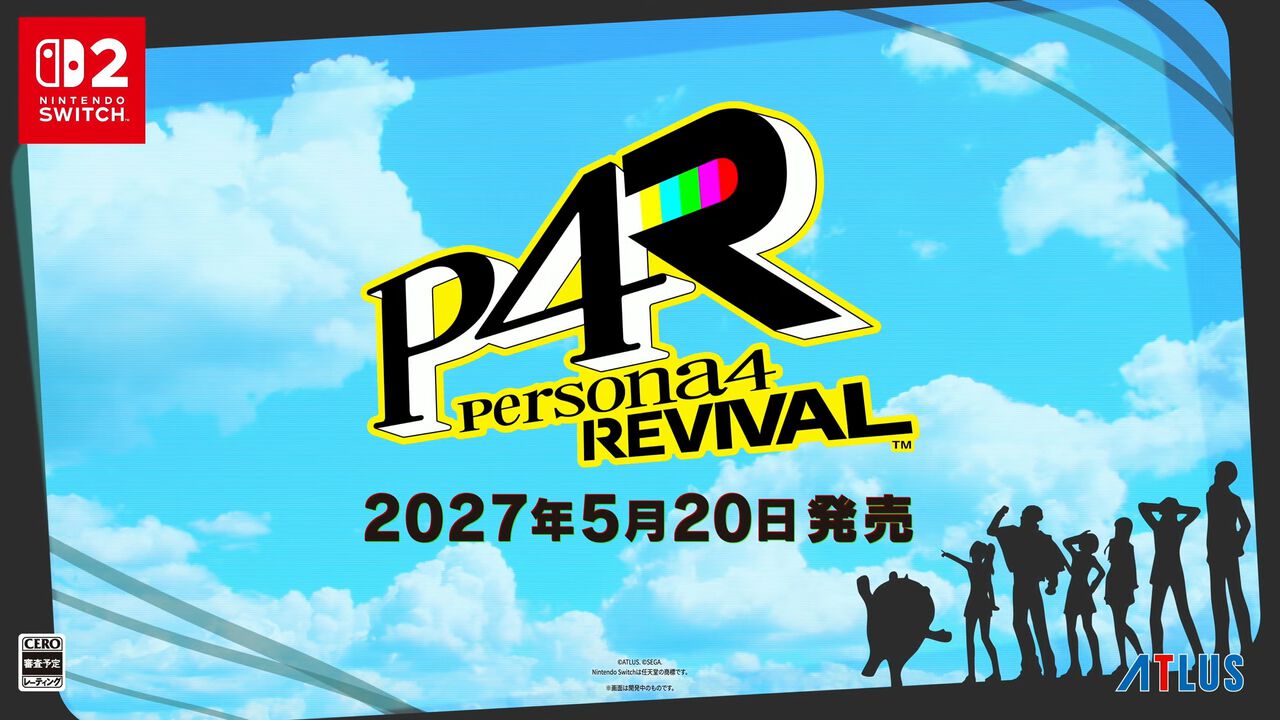
The Persona 4 Revival announcement should tell you something most English-language coverage will miss.
Nintendo announced on September 9, 2026, that Persona 4 Revival — a full remake of Persona 4 Golden — will arrive on Switch 2 on May 20, 2027. The PlayStation 5, Xbox Series X|S, and Windows/Steam versions ship first on February 18, 2027, with Xbox Game Pass inclusion. A multi-platform JRPG from Atlus lands on Switch 2 at all. That sequence alone is the story.
This is not a first-party Nintendo property. This is not a Nintendo-published title. This is Sega-owned Atlus bringing an established Japanese RPG franchise to Nintendo hardware in a period where the company has historically treated third-party JRPG support as secondary. The fact that it happened at all on a system still months away from launch tells you everything about the strategy forming inside Marunouchi.
Why this matters for the Switch 2 ecosystem
Nintendo’s previous console transition was defined by a long gap between announcement and actual third-party support. The Switch’s early years ran on first-party momentum and indies. AAA Western titles arrived slowly. Japanese publishers were even slower — Square Enix and Bandai Namco came to the original Switch years after launch, not before it.
The Switch 2 is approaching the opposite direction. The Persona 4 Revival announcement is a bellwether because it confirms Atlus is treating the new hardware as a launch-relevant platform, not a post-launch afterthought. May 2027 places this title squarely in the Switch 2’s first six months of life, which is the period that determines whether a console transition succeeds or stalls.
The timing is deliberate. Persona 4 Golden sold roughly 1.7 million copies across its lifetime on PS3, PS4, and PC. That is not a casual-player gateway franchise — it is a dedicated, niche audience with deep spending habits and long play sessions. Those are exactly the demographics a new Nintendo hardware launch needs to convert system sellers.
Who wins, who loses
The obvious winner is Atlus. Persona 3 Revival is already a confirmed Switch 2 title. With Persona 4 Revival now locking in a May 2027 release, the studio is securing two major entries in Nintendo’s first-year software lineup. Both titles carry the kind of replay value and completionist culture that drives engagement metrics — the exact numbers publishers report to platform holders during negotiation.
Nintendo wins too, though less visibly. A Switch 2 launch window that includes two Persona titles alongside first-party IP softens the risk profile. It signals to other Japanese publishers that Atlus found a viable path to the platform, and a path is easier to replicate than a guarantee.
The loser here is harder to name but real. Xbox Games Studios faces a second consecutive year of losing major third-party JRPG reveals to rival hardware. The Persona 4 Revival Switch 2 announcement came during a Direct presentation that was largely focused on confirming platform availability rather than generating unique reveals. The Xbox Game Pass inclusion for the PC/console release is notable precisely because it suggests Microsoft’s presence on this particular launch is limited to subscription access rather than exclusivity leverage.
The English-language blind spot
Western gaming media tends to cover Persona announcements as franchise milestones. They discuss the remake’s visual upgrades, the battle system changes, the voice work. They rarely examine what the platform rollout schedule implies about the hardware market itself.
The February 18, 2027 multi-platform launch followed by a May 20, 2027 Switch 2 date is a staggered release strategy. It gives Atlus time to finalize the Nintendo build while maintaining the broader market presence on day one. For English readers used to simultaneous global releases, this delay looks like a compromise. It is actually a sign of respect — Atlus is ensuring the Switch 2 port meets Nintendo’s certification standards rather than rushing a second-class version to market.
The original Persona 4 Golden carried a cultural specificity that Western audiences struggled to fully absorb: the rural Japanese setting of Inaba, the high school social simulation framework, the specific brand of supernatural mystery that blends Shinto sensibility with pop-culture urban legend. The Revival’s broad release across all major platforms indicates that the franchise has crossed a threshold — it is now treated as global IP rather than a regional specialty. The Switch 2 inclusion is part of that same trajectory.
What happens next
If Persona 4 Revival performs in line with franchise projections on Switch 2, expect Atlus to accelerate its Nintendo relationship. Persona 5 is the next logical title, and speculation around a Revival or Definitive Edition for Switch 2 has circulated for years. A successful run on this hardware makes that release not just likely but strategically urgent.
Beyond Persona, the pattern suggests other Japanese publishers will follow. Bandai Namco’s Tales series, Koei Tecmo’s Dynasty Warriors entries, and even Capcom’s catalog all have titles that fit the Switch 2’s hybrid lifestyle positioning. The question is no longer whether they will port to Switch 2 but whether they will prioritize it or relegate it to a secondary release schedule.
The May 20, 2027 date also sets a benchmark. Any third-party JRPG targeting the Switch 2’s first-year lineup now has a competitor for attention that shares its demographic. Persona players are not casual mobile gamers — they are 200-hour completists who buy soundtrack collections and figure merchandise. Convincing that audience to upgrade hardware is a different pitch than selling a system to someone who plays mobile puzzle games on the commute.
The real bet
Nintendo’s Switch 2 strategy is betting that established Japanese RPG IP can do what first-party exclusives have always done: give people a reason to upgrade. Persona is a franchise with a devoted following, a proven remake pedigree, and a release window that overlaps the console’s critical early months. Its inclusion in the launch lineup is not a concession — it is a calculation.
The calculation assumes that the audience for long-form JRPG is large enough and loyal enough to move hardware. If Persona 4 Revival delivers on that assumption, the door opens wider for every Japanese publisher that has hesitated to invest in the Switch 2 platform. If it underwhelms, Nintendo gets another cautionary tale about third-party adoption curves.
Either way, the announcement on September 9, 2026, was about far more than a game coming to a new console. It was about what kind of ecosystem Nintendo is building for the next generation.