The Philippines' Crumbling Alliance and What It Means for Washington
The arrest of Vice President Sara Duterte marks the violent unraveling of the Marcos-Duterte political alliance, a rupture that could redraw Southeast Asia's strategic alliances and test the resilience of US defense commitments in the South China Sea.
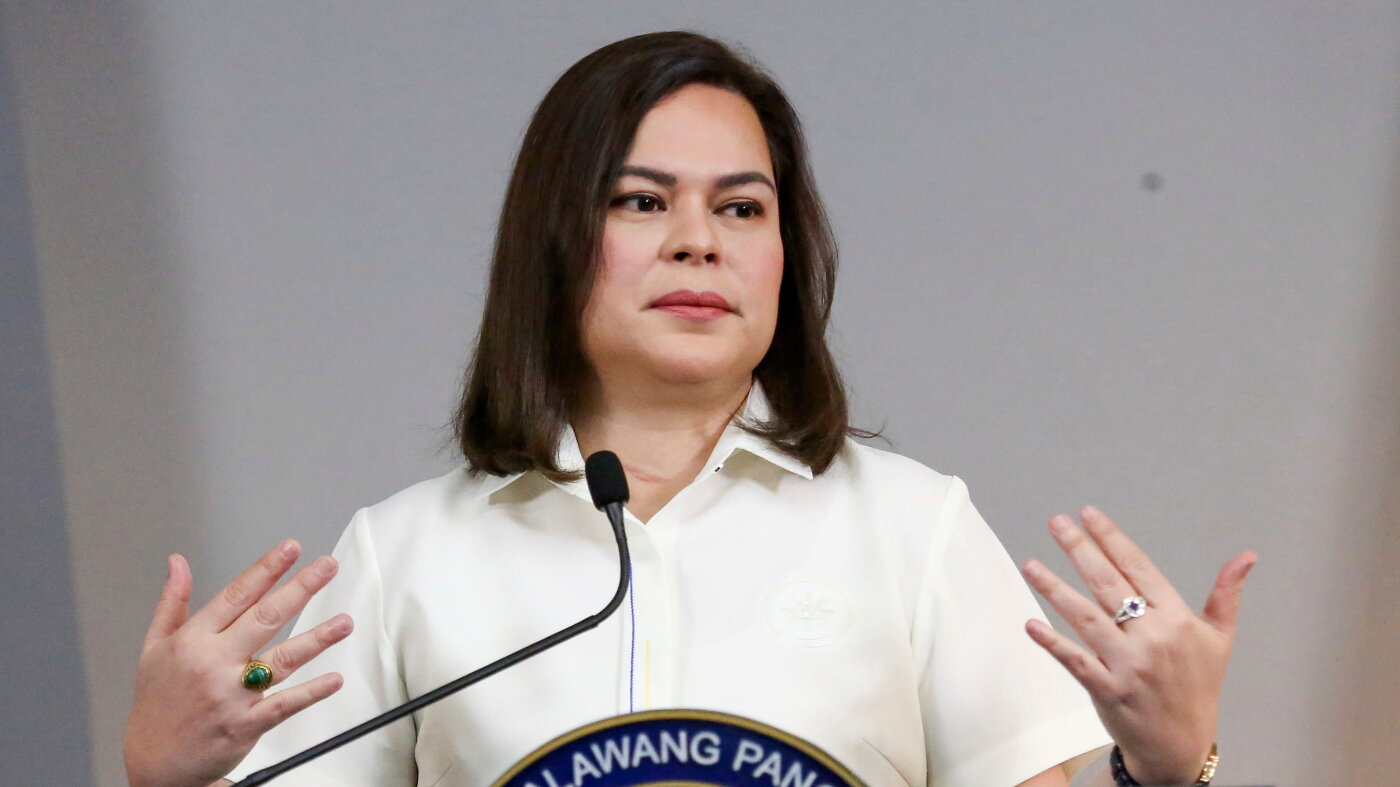
The Fracture That Could Redraw Asia’s Alliances
A court order for the arrest of Philippine Vice President Sara Duterte is not just a legal proceeding. It is the most visible symptom of a political divorce that is tearing apart one of Southeast Asia’s most consequential power alliances—and the fallout is already rippling across the Pacific.
Duterte faces charges of threatening to assassinate President Ferdinand Marcos Jr., his wife, and former House Speaker Martin Romualdez. The threat originated in a 2024 online press conference, where Duterte warned that if she were killed, those three should be killed by an assassin in return. She later walked back the statement, claiming it was a concern for her own safety rather than a literal threat. A lawyer confirmed she intends to post bail and fight the charges through the legal system.
But the stakes extend far beyond criminal law. Duterte was already impeached by the House in May on the same charges plus allegations of unexplained wealth and misuse of confidential state funds. Her Senate trial, which began in July, could end her political career entirely. A conviction would permanently bar her from public office—including the 2028 presidential race, where she has long been expected to run.
The Alliance That Wasn’t Meant to Last
Marcos and Duterte entered the 2022 election as running mates in what analysts called a whirlwind merger of two of the country’s most formidable political dynasties. Marcos brought the political machinery of the Liberal Party establishment and the Marcos family’s deep northern base. Duterte brought the Southern Philippines—her father, former President Rodrigo Duterte, had ruled the south with an iron fist for six years and commanded a loyal, mobilized electorate.
The alliance was always uneasy. Rodrigo Duterte had positioned himself as an anti-Western populist who frequently threatened to sever ties with the United States and pivot toward China and Russia. Marcos, by contrast, inherited a more cautious foreign policy and quickly moved to recalibrate toward Washington after taking office.
By late 2023, the rift was public and brutal. Duterte accused Marcos of failing to deliver on campaign promises. Marcos responded by purging Duterte allies from his cabinet. The vice president’s refusal to condemn Chinese aggression against Filipino vessels and fishermen in the disputed South China Sea became a symbolic flashpoint—a quiet but deliberate divergence from the administration’s pro-US stance.
What This Means for Washington
The Marcos-Duterte alliance was always a balancing act between two irreconcilable visions for the Philippines’ place in the world. Marcos has spent his presidency deepening defense cooperation with the United States, expanding access to Philippine bases under the Enhanced Defense Cooperation Agreement, and publicly standing up to China’s increasingly assertive maritime claims. His predecessor’s father, Rodrigo Duterte, cultivated cozy relationships with Xi Jinping and Vladimir Putin while periodically threatening to abrogate the Philippines-U.S. Mutual Defense Treaty.
Duterte’s arrest puts Washington in a difficult position. On one hand, the current administration’s alignment with US strategic interests is a relief. On the other, a convicted Duterte—or even a politically devastated but legally vindicated one—could reshape the 2028 election in ways that pull the Philippines out of Washington’s orbit again. The question is no longer whether the alliance will fracture. It is who inherits the wreckage and what they do with it.
The Bigger Picture: A Region Watching
The Philippines is not an isolated case. Across Southeast Asia, democratic institutions are being tested by charismatic strongmen, legal weaponization, and the tension between economic ties with China and security ties with the United States. Thailand, Myanmar, and Cambodia have all seen moments where legal proceedings against political rivals became instruments of regime consolidation. The Philippines’ impeachment and arrest proceedings are being watched closely by capitals from Beijing to Tokyo to Canberra.
China’s behavior in the South China Sea has grown more aggressive under Marcos, with repeated water cannon attacks on Filipino resupply vessels and fishermen near Scarborough Shoal and the Second Thomas Shoal. The Duterte camp’s reluctance to condemn those actions has been interpreted abroad as a signal that a return to the Rodrigo Duterte era would mean a significant cooling of Manila’s defense relationship with Washington.
Who Wins, Who Loses
Right now, Marcos and his allies hold the institutional advantage. They control the House, they have set the impeachment timeline, and the courts appear willing to entertain the charges. But political victories are rarely permanent in the Philippines. Duterte still commands a loyal voter base in the south, and her father remains a potent symbolic figure—even from a detention cell in The Hague, where he faces ICC trial on charges of crimes against humanity related to the extrajudicial killings carried out during his drug war.
If Duterte is convicted and barred from office, Marcos gains a clear path to a friendly vice president and potentially a more unified ruling coalition. If she is acquitted or escapes conviction through legal technicalities, she emerges as a martyr-figure with a clear runway to 2028—and the Philippines’ foreign policy pivots sharply again.
What Comes Next
The immediate future is uncertain. Duterte’s legal team has signaled she will post bail and continue fighting the charges. The Senate impeachment trial is expected to continue through the year. Meanwhile, Rodrigo Duterte’s ICC trial is scheduled for November 30, adding another layer of drama to an already volatile political landscape.
For Washington, the arithmetic is simple but uncomfortable: a stable Philippines is a reliable partner. A Philippines consumed by internal political warfare is a partner that may or may not honor its commitments when it matters most. The arrest of Sara Duterte is not the end of a political dispute. It is the opening move in a contest that will define the Philippines’ direction for the next decade—and the strategic map of the Indo-Pacific along with it.