Pokémon Bets Big on Mimikyu and Card Games in 2027 Film
The next Pokémon theatrical film shifts focus from legendary creatures to a human player and Mimikyu, drawing on the Pokémon Card Game — a move that signals Nintendo is chasing fan passion over safe defaults.
A Card Game Movie With No Legendary in Sight
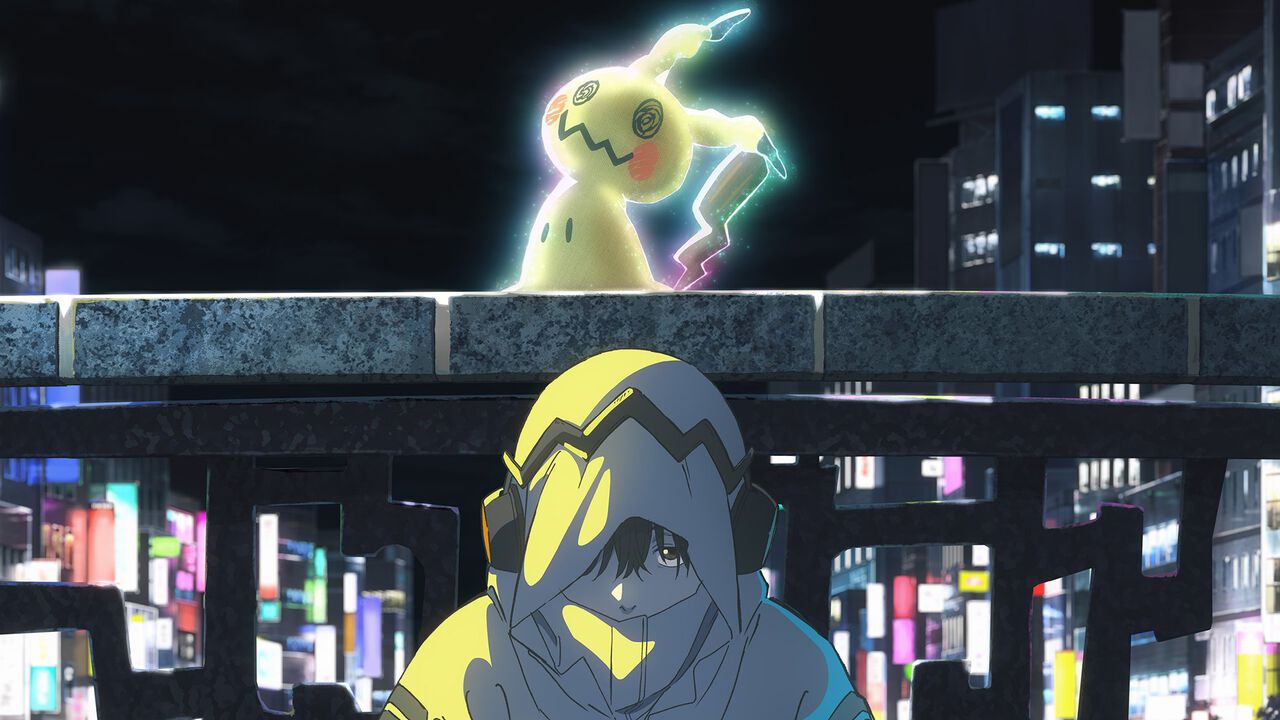
The next Pokémon theatrical film arrives in 2027 with a cast that would have looked impossible even a decade ago. No legendary beast. No regional hero. The protagonists are a human player and Mimikyu — a Ghost-type introduced in Generation 7 whose entire gimmick is a child wearing a sheet to pretend to be a more popular Pokémon.
The title is Pokémon: Wild Card. The subject is the Pokémon Card Game. The studio is CloverWorks. The director is Katsuhiko Kitada, and the character designer is Akemi Hayashi — both names carrying weight outside the Pokémon universe.
This is the first Pokémon feature-length film in roughly seven years since Pokémon the Movie: The Power of Us (2018), and it reads like a deliberate course correction.
The gap between films is telling. While the anime television series continued — first under Ash Ketchum, then with the Horizons reboot — the theatrical release schedule went quiet. Theatrical Pokémon films once arrived with clockwork regularity, often tying into the latest game launch or regional celebration. That rhythm has broken. What replaces it is not a hiatus but a recalibration. Nintendo and The Pokémon Company appear to be asking whether audiences will follow a new kind of story, one that does not rely on the gravitational pull of a shadowy legendary threat or the nostalgia of a traveling protagonist whose arc has already filled twenty-five years of broadcast time.
Why Mimikyu Matters
Mimikyu has never headlined a major Pokémon release. It is not a legendary, not a starter, not even particularly powerful in battle. Its lore is simple and strange: it wraps itself in a torn costume because its true form is so unsettling that anyone who sees it falls strangely ill. It became a fan favorite precisely because it was odd — an ugly-cute outlier in a franchise built around collectible charisma.
By making Mimikyu the emotional center of a theatrical film, the producers are signaling something about what they believe connects with audiences now. The old formula — a mysterious, world-threatening Pokémon paired with Ash and companions on a journey — has produced box office returns that declined steadily through the 2020s. Secrets of the Jungle (2020) grossed significantly less than its predecessors. The franchise needed a reset, and a reset built around Pikachu alone is no longer sufficient.
Mimikyu is a bet that nostalgia and internet-era fandom can carry a film where spectacle once did. The creature has cultivated a devoted online following, sustained by meme culture, fan art, and the kind of earnest devotion that flourishes among niche communities. Its appeal is not derived from canonical importance but from cultural resonance — exactly the kind of organic engagement that a franchise facing diminishing returns needs to recapture attention.
The choice also carries thematic weight. Mimikyu’s entire existence is about longing — the desire to be seen, to be loved, to be accepted for what it is rather than what it pretends to be. A film centered on such a character risks being interpreted as allegory for the franchise itself: something beloved that must reinvent its costume to remain relevant.
The Card Game as Narrative Engine
Anchoring the story in the Pokémon Card Game is equally strategic. The TCG has experienced a renaissance driven by social media, celebrity endorsements, and a younger generation discovering it through YouTube and TikTok. The 2022 animated series Pokémon Horizons already leaned into competitive play, and the card game’s cultural footprint now extends well beyond Nintendo’s traditional audience.
A film about a player navigating the card game world taps into an existing, engaged community without requiring them to care about canon continuity. You do not need to have watched 1,200 episodes of the anime to invest in a story about someone who loves cards. That is a lower barrier to entry and a wider funnel. More importantly, it positions the film as an invitation rather than a continuation — something newcomers can enter without feeling behind.
The English title Wild Card works on two levels — it references both the card game mechanic and the narrative role of an unpredictable element, which in this case is clearly Mimikyu itself. The double meaning suggests a script that intends to play with expectation, both structurally and thematically.
Second-order effects of this decision are already visible. Card manufacturers have intensified production schedules. Retailers report sustained demand for vintage and rare cards. The TCG’s financial contribution to the franchise now rivals — and in some quarters exceeds — video game software sales. A theatrical film centered on the card game is not merely promotional collateral; it is an acknowledgment of where the franchise’s economic gravity has shifted.
CloverWorks and the Anime Credibility Play
Hiring CloverWorks — the studio behind My Hero Academia seasons 3 through 6, Vinland Saga season 2, and Lycoris Recoil — is another signal. This is not the team behind the long-running TV anime. This is a studio known for cinematic pacing and higher production values on limited episodes. The choice suggests the producers want this film to feel like an event rather than an extension of the TV series.
Akemi Hayashi’s involvement is notable as well. She has worked extensively in character design across multiple franchises and brings a visual sensibility that differs from the home anime’s established look. That matters when you are asking audiences to take a non-canonical protagonist seriously. A distinct art direction signals to viewers that this story exists outside the routine of the weekly series — that it deserves a different standard of attention.
Director Katsuhiko Kitada’s background is less widely documented in English-language sources, but his appointment alongside Hayashi and CloverWorks points to a production stack treating this as a prestige project rather than a cash-in. The staffing choices collectively communicate that the people responsible for execution understand this is a chance to redefine what a Pokémon film can be.
What This Means for the Franchise
The Pokémon franchise is the highest-grossing media property in history, yet it has been drifting. The anime reboot with Horizons replaced Ash Ketchum after 25 years — a move some fans accepted and others resisted. The games continue to cycle through regional formulas. Merchandise dominates revenue, but the core storytelling has struggled to find fresh ground.
A Mimikyu-led card game film is not a safe bet. It is a bet on the idea that the franchise’s strength lies not in its most iconic characters but in the passion of its niche communities. If it works, it opens the door for future films to explore other corners of the Pokémon ecosystem — regional subcultures, competitive scenes, lesser-known Pokémon with devoted followings. It could establish a new model: anthology-style theatrical releases, each anchored to a different facet of the franchise’s sprawling universe.
If it fails, it will likely trigger a return to the familiar. Pikachu and a legendary monster will head the next project, and the experiment will be filed under “risky.” The franchise’s commercial scale makes failure costly, and corporate inertia tends to reward predictability.
But the fact that this film is being made at all suggests leadership within The Pokémon Company believes there is room to breathe outside the established lane. The 2027 release date gives the production roughly a year and a half from announcement. Trailer drops, casting announcements, and card game tie-ins will follow. What is already clear is that Nintendo and The Pokémon Company are willing to test whether the franchise can evolve beyond its safest instincts — and that Mimikyu, the shy creature in a paper costume, is the one they chose to lead the way.
The risk itself is the story. Whether Mimikyu carries the film or not, the attempt marks a moment of honesty: the franchise knows it cannot coast on legacy alone, and it is choosing to gamble on something stranger than a legendary apocalypse.