Putin Opens Pandora's Box — And Europe Answers With Missiles
Putin's threat to target Ukraine's most sensitive economic sectors marks a calibrated escalation. France's response—new interceptor missiles—reveals a narrowing gap between Russian red lines and Western arms-redline calculus.
The Rhetoric Is the Weapon
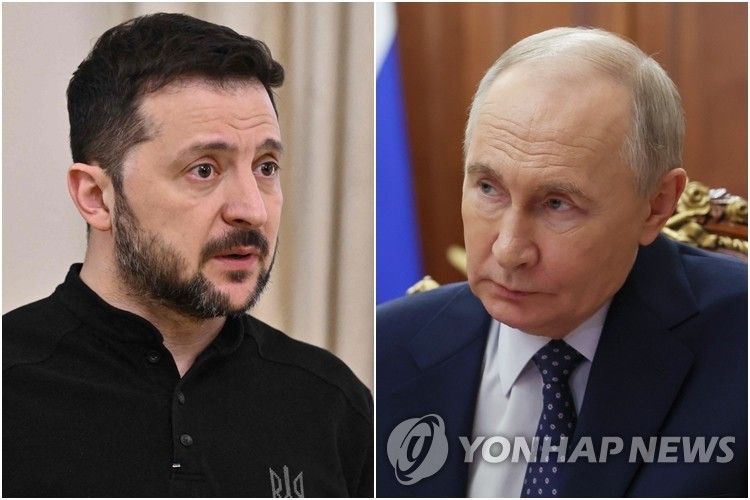
Vladimir Putin called it Pandora’s box. On Aug. 22, he told Russian state media that Kyiv’s decision to strike Russia’s economic infrastructure had unlocked consequences Russia itself would control — and that Ukraine should prepare for retaliation against its most sensitive economic sectors.
The language is deliberate. It is not the first time Putin has used apocalyptic imagery to frame Ukrainian counterstrikes as a violation of some unwritten rule. But the specificity this time is notable. He did not merely threaten military escalation. He targeted Ukraine’s economy — its energy grids, its ports, its grain exports — with the explicit claim that Russia could absorb any disruption to its own supply chains while leaving Kyiv facing total collapse.
“If our agricultural exports are blocked, the world will not face a shortage,” Putin said. “Russia can replace Ukraine’s output.”
That line is worth sitting with. It is a statement of economic self-confidence designed to break Ukrainian morale and signal to Western capitals that their support is fighting a losing battle against a country that controls more of the global food pipeline than its critics acknowledge. Russia is the world’s largest wheat exporter. It dominates fertilizer supplies. Kyiv’s Black Sea grain corridor remains a contested prize, and every Russian strike on Ukrainian port infrastructure is a calculated reminder: we can choke this off at will.
The “40-day operation” Putin referenced is Ukraine’s recent offensive campaign against Russian targets inside its own territory — strikes on airfields, logistics hubs, and command centers that have pushed Russian forces back from parts of the Kharkiv region. Putin framed it as a desperate gamble by Kyiv and its Western backers to force a strategic defeat of Russia. Whether it amounts to one is still unclear. What is clear is that Moscow has responded by broadening its own targeting list.
France Answers Before the Meeting
On the same day, Emmanuel Macron announced that France would send additional interceptor missiles to Ukraine. The details are sparse but the timing is not accidental.
Macron cited two specific benchmarks: the July 13, 2025 launch of the Missile Defense Coalition in Paris and the November 17, 2025 memorandum of understanding between France and Ukraine. Both were designed to institutionalize European air-defense support beyond ad hoc bilateral deals. France is now treating those commitments as actionable, not ceremonial.
The announcement came ahead of a meeting on Aug. 24 of the so-called Coalition of the Willing — the loose umbrella that has replaced the stalled Geneva-style peace framework. The group’s purpose is simple: coordinate pressure on Russia while Kyiv holds the line. What Macron’s delivery signals is that the coalition is shifting from defensive posture to active reinforcement. Interceptor missiles are not offensive weapons. They do not cross the threshold NATO has drawn around strikes on Russian territory. But they do change the calculus of every Russian drone or ballistic missile launch — because each one now has a better chance of being shot down, and a worse chance of achieving its intended effect.
Second-Order Effects: Energy Markets and Alliance Fractures
The escalation has already rippled beyond the battlefield. Global wheat futures ticked up 3.2% on Monday morning, driven not by actual supply disruptions but by the psychological impact of Putin’s threat — a reminder that the specter of weaponized food exports is still alive. Traders who spent two years de-risking from Russian grain are rethinking their assumptions. The EU’s alternative sourcing agreements with Kenya, Argentina, and Canada look thinner than they did before Putin’s speech.
Within Europe, the announcement has exposed existing fault lines. Germany’s coalition government issued a measured statement expressing “solidarity” with France while emphasizing that the interceptors are “defensive in nature.” Berlin’s caution reflects a domestic political calculation: Chancellor Olaf Scholz faces a challenging federal election cycle, and any perception that Germany is enabling deeper involvement in the conflict could cost him the Christian Democratic vote. Meanwhile, Poland’s prime minister was conspicuously absent from Macron’s press conference, a silence that diplomats read as Warsaw’s frustration that France is leading the missile conversation without consulting the frontline states most directly affected by Russian escalation.
The economic dimension of Putin’s threat has also triggered quiet diplomatic maneuvering in global South capitals. India’s foreign secretary held closed-door talks with Egyptian and Turkish counterparts on Aug. 23 to explore contingency scenarios for Black Sea grain shipping if Russian strikes on Ukrainian ports intensify. Egypt’s Suez Canal Authority, already managing increased rerouting of commercial traffic away from the Mediterranean, warned that further disruption could force additional toll increases — a move that would punish the very developing nations Russia claims to be protecting with its food-export assurances.
Who Wins, Who Loses
On paper, Putin wins the escalation game. His rhetoric is sharp, his threats are concrete, and his economic arguments carry weight in a world still recovering from supply shocks. He has reframed Ukraine’s defensive strikes as the opening move in a wider conflict — which, in a sense, they are.
But Putin also exposes himself. By explicitly threatening Ukraine’s economic infrastructure, he gives Western governments a clearer justification for deeper intervention. If Russia is targeting Ukrainian factories, power plants, and grain silos, then sending air-defense systems to protect them stops being a generous gesture and starts looking like basic damage control. That is the framing Macron is building toward.
The real loser here may be the peace process. Putin called Ukraine’s negotiation proposals “unrealistic and unacceptable” — a dismissal that leaves no room for the kind of compromise settlements that have ended every other major European war in the post-Cold War era. His demand for “realistic” talks means talks on Moscow’s terms: territorial concessions, demilitarization, neutrality. Kyiv will not accept that. The West will not fund that. And so the window for diplomacy narrows further with each passing week.
What Happens Next
The Aug. 24 coalition meeting will be the first test of whether Macron’s missile commitment translates into coordinated action or remains a unilateral statement. Russia will continue its economic strikes. Ukraine will continue its 40-day offensive. The gap between what Putin warns will happen and what actually happens next is where this conflict moves from stalemate to something sharper.
One detail Western observers should track: whether France’s interceptor missiles are short-range systems like Patriots or longer-range platforms. The difference determines whether they protect Ukrainian cities from drone swarms or whether they extend the umbrella over contested airspace near the front lines. Either way, they raise the cost of every Russian attack — and that is exactly what Putin’s Pandora metaphor was designed to prevent.
Behind closed doors, intelligence agencies in NATO capitals are already running scenarios for what happens if Russia follows through on its threat and strikes a major Ukrainian energy facility with sufficient force to cause prolonged blackouts. The question is no longer whether Putin will order such a strike — his own rhetoric suggests he feels cornered into demonstrating resolve — but when. And when it comes, the interceptor missiles France is sending may determine whether Ukraine’s winter grid holds or buckles under a sustained campaign of infrastructure warfare.
The box is open. The missiles are on their way. The next move belongs to whoever blinks first.