The Reaper Is Bleeding Out in the Middle East
Iran losses have stripped a quarter of the Reaper fleet, forcing the Air Force to abandon its slow succession plan. A cheaper, mass-producible drone program is being rushed forward — and the implications extend far beyond one aging airframe.
The Number That Changes Everything
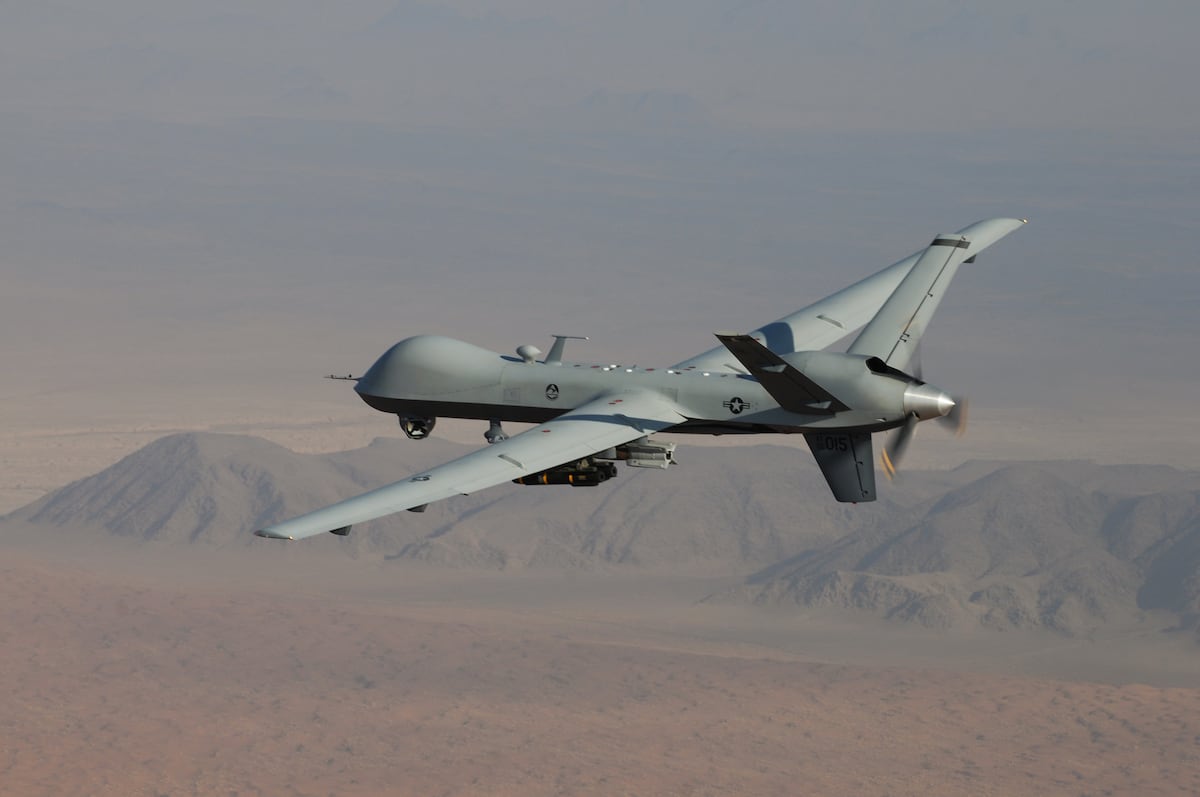
Twenty-five percent. That is roughly what the MQ-9 Reaper fleet has lost to Iranian air defenses since operations began in February, according to multiple Pentagon accounts reviewed by The Washington Post and Congressional researchers. Four dozen Reapers now sit in craters or hangars they were not designed to end up in. The Air Force cannot replace them fast enough — General Atomics shut down MQ-9A production in 2025 — and the service is doing something it has not done since the early days of its drone campaign: rewriting its procurement playbook under fire.
Lt. Gen. Christopher Niemi, the Air Force’s chief modernization officer, made the pivot explicit on September 3 at the Pentagon. The fiscal 2031 target of 20 mission-ready aircraft for the Reaper successor could arrive two years earlier, pulled forward by a directive from Air Force Secretary Troy Meink. The program behind that acceleration is the Massed Modular Aircraft initiative, or MMA, a competition launched through the Defense Innovation Unit in July and closed weeks later. It is the most concrete signal yet that the Pentagon is treating attrition as a design requirement, not an outlier risk.
Who the Reaper Actually Is
Niemi did not mince words about what makes the MQ-9 expensive. The airframe itself is not the value. The speed, altitude, range and sensor suite — many of them inherited from Cold War-era technology packages — are what make the platform special, and those systems are what inflate the price tag. A fully missionized Reaper can cost up to $50 million, Niemi told senators in May. The MMA program is explicitly designed to decouple the mission from the price.
The July solicitation asked for an aircraft that could absorb losses while still punching above its weight. Two thousand eight hundred pounds of payload. Eight thousand nautical miles of one-way ferry range. The ability to carry out strike, intelligence, surveillance, reconnaissance, electronic warfare and communications-relay missions — all at roughly half the cost of the Collaborative Combat Aircraft, or CCA, program that Niemi has been running in parallel. CCA air vehicles are priced near $20 million each. MMA targets roughly $10 million for the air vehicle alone, though officials cautioned that figure does not include the sensor and weapons packages that turn a bare airframe into a weapon system.
That distinction matters. Niemi described initial MMA versions as relying on proven technology rather than cutting-edge systems, a turboprop with a long aspect wing in the 4,000-mile-type class — farther and heavier than a CCA but slower. The gap between that description and the 8,000-nautical-mile ferry range in the solicitation has not been explained. But the direction is clear: the Air Force wants something it can lose without losing the mission.
The Backfill Problem
The fleet is already below its authorized floor. In May, Lt. Gen. David Tabor told the Senate Armed Services Subcommittee on Airland that the MQ-9 force sat at about 135 aircraft, some 54 short of the 189-aircraft minimum the service had set for itself. Niemi did not offer an updated tally at the September briefing, which suggests the number has not improved — and may have worsened since the May testimony.
General Atomics is working around the problem. The company submitted a design called Wildfire for the MMA competition, first reported by Aviation Week in August. C. Mark Brinkley, a company spokesman, told Air & Space Forces Magazine that Wildfire meets every requirement on the MMA list and exceeds most of them. He declined to share capabilities or cost. The War Zone reported in August that Brinkley framed Wildfire’s design targets as considerations rather than hard specs, including a 10,000-nautical-mile ferry range, capacity for four Long Range Anti-Ship Missiles and the ability to run 100 aircraft under semi-autonomous control.
Brinkley also made a point that cuts against the prevailing narrative: treating MMA purely as a Reaper replacement misses the immediate need for a backfill. Wildfire, he said, does not depend on winning the competition, and General Atomics can deliver aircraft years earlier than the current schedule. That is a quiet indictment of the Air Force’s own timeline — and a reminder that the company that built the Reaper has no incentive to let its replacement be delayed by procurement bureaucracy.
The CCA Shadow
The MMA program does not exist in isolation. It competes for attention, budget and political capital with the Collaborative Combat Aircraft effort, which has become one of the Pentagon’s flagship programs for autonomous warfare. CCA is designed around autonomy, networking and distributed operations — a swarm of cheaper drones operating alongside manned fighters. The Air Force is betting that this is the future of air combat, and the funding reflects that bet.
But the Iran losses have forced a reckoning. The Reapers that have fallen were not lost to a peer adversary’s air force. They were shot down by systems that any regional power can buy or build. If the MMA program produces a drone that can survive that environment — not by being harder to kill, but by being cheap enough to field in numbers that make individual losses tolerable — it could reshape the balance between the two programs.
Niemi’s framing suggests the Air Force is already moving in that direction. He is pricing MMA against CCA directly, and he has signaled that the service will probably field at least 180 MMA drones. That is a quantity commitment, not a qualitative one. The difference is significant: it says the Air Force now views mass as a feature, not a compromise.
What Comes Next
The MMA competition awards for concept refinement are expected in the first quarter of fiscal 2027, according to Col. Todd Dye, the Air Force’s senior materiel leader for medium-altitude ISR. No new date was announced at the September briefing, which means the current timeline stands — but it also means the program is not yet immune to the delays that have plagued every major defense acquisition in recent memory.
The more immediate question is how the Air Force fills the gap between now and then. The service is pursuing a short-term buy of existing MQ-9A airframes in fiscal 2026, as Tabor confirmed in May. Niemi said budget constraints make a large purchase of upgraded MQ-9B SkyGuardians unrealistic. That is a admission that the Air Force cannot simply write a check and restore the fleet — a direct rebuke to the assumption that pliability and funding are always interchangeable.
The losses against Iran are unlikely to stay contained in the drone domain. They will reshape how the Air Force thinks about every platform it fields in contested airspace — not just Reapers, but the broader ecosystem of unmanned systems that the Pentagon has been building for a decade. The question is whether that reckoning arrives fast enough to matter.
The answer depends on whether Congress approves the money, whether the service sticks to the accelerated timeline, and whether the MMA program delivers something that actually works at scale. General Atomics thinks it can. The Air Force seems to believe it should try faster than it originally planned. The only thing certain is that the Reaper is no longer the platform it was — and the successor will have to be something different to survive what Iran has already proven it can do.